
 Security+
 CySA+
 PenTest+
 SecAI+
 Network+
 A+
 Cloud+
 Linux+
CompTIA Security+ Practice Questions with Answers (SY0-701)
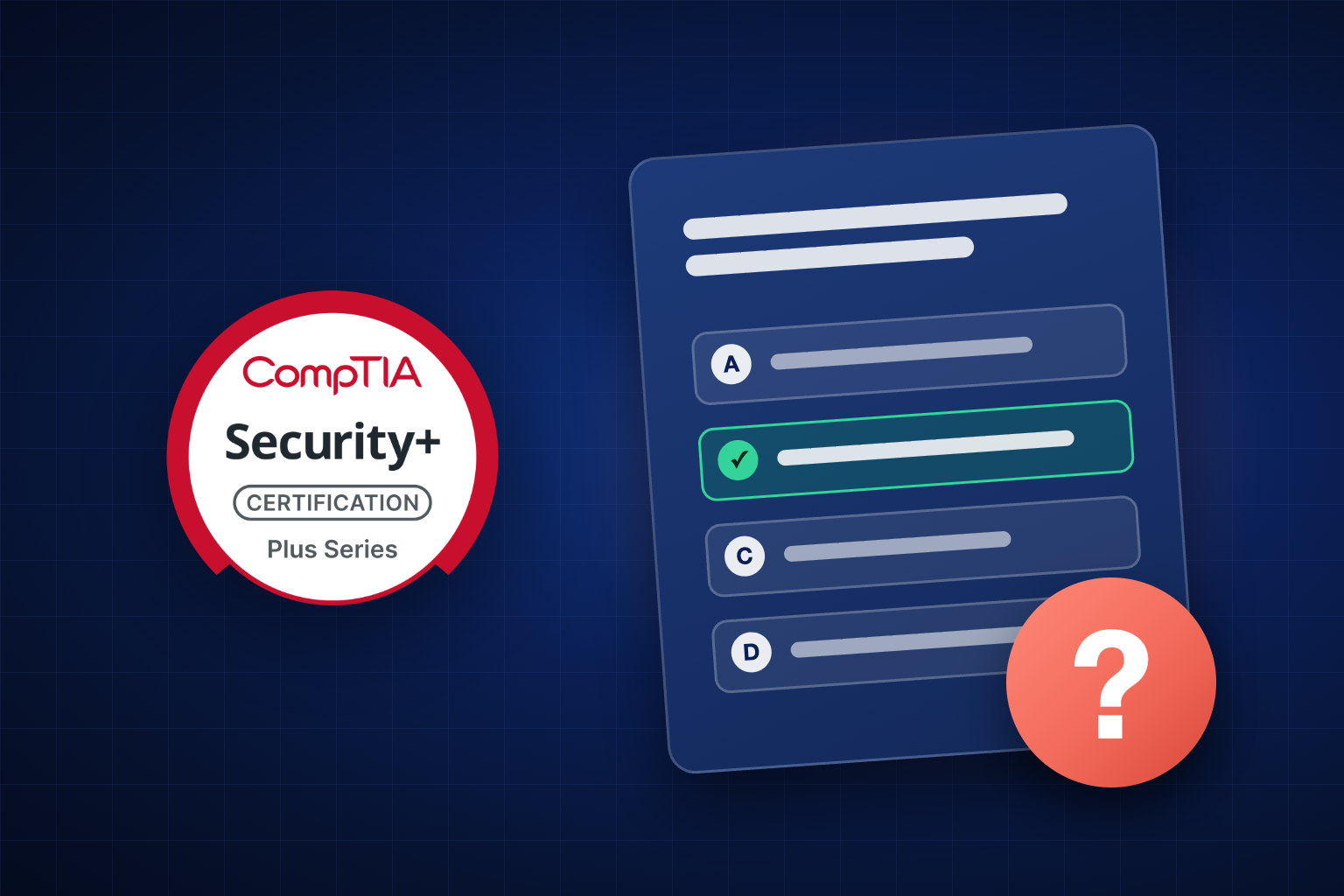
The CompTIA Security+ exam tests your cyber security knowledge across a wide range of topics to ensure you are ready for an entry-level role. The best way to prepare for this exam is by studying and answering CompTIA Security+ practice questions.
Security+ SY0-701 or SY0-801? (updated November 2026)
CompTIA launched Security+ SY0-801 on 17 November 2026. We recommend SY0-701 for now: it’s valid until 11 June 2027, 801 is brand new with very little training available yet, and employers only ask whether you have Security+, not which version. Our free Security+ cheat sheet covers both.
Practice questions help you assess your current knowledge, allow you to identify areas that need improving, and let you accurately determine if you are ready to take the real exam. They are an essential piece of preparing for your Security+ exam.
This article gives you a taste of what to expect on the real exam by providing multiple-choice and performance-based (PBQ) practice questions. You can interactively test your knowledge using these questions across all five of the Security+ domains. This is not an exhaustive list of everything you will be tested on in the Security+ exam. Just a glimpse of what to expect.
CompTIA Security+ Exam Domains
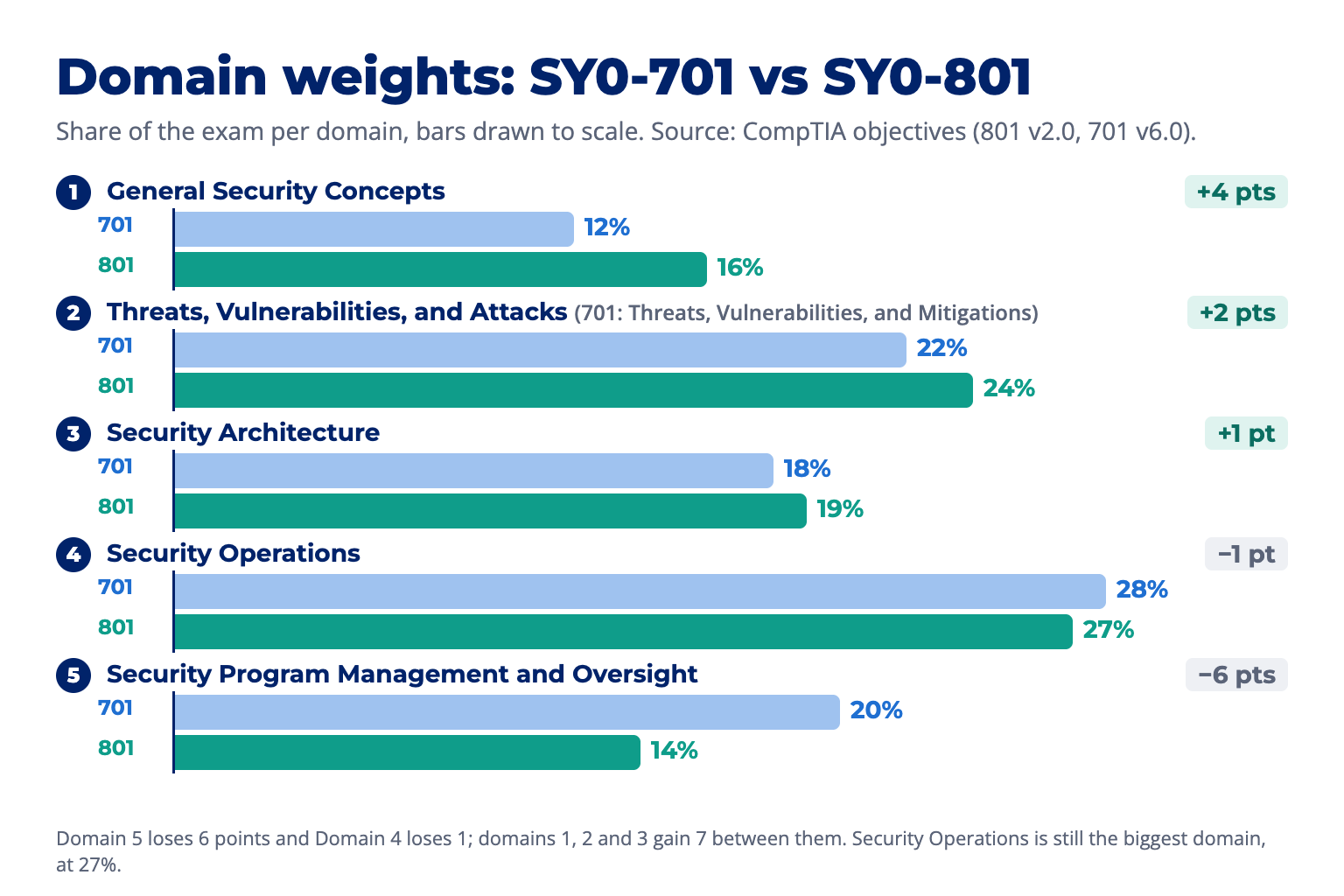
Two versions of the Security+ exam are live right now: SY0-701 and the new SY0-801, which launched on 17 November 2026. Both have five domains. These domains are designed to assess your cyber security knowledge and readiness to enter the industry. The SY0-701 domains include:
- General Security Concepts (12%)
- Threats, Vulnerabilities, and Mitigations (22%)
- Security Architecture (18%)
- Security Operations (28%)
- Security Program Management and Oversight (20%)
The SY0-801 domains are:
- General Security Concepts (16%)
- Threats, Vulnerabilities, and Attacks (24%)
- Security Architecture (19%)
- Security Operations (27%)
- Security Program Management and Oversight (14%)
Our advice right now is to take SY0-701, because its training is mature and SY0-801 training is still thin everywhere. Take SY0-801 only if you can’t sit the exam before SY0-701 retires in English on 11 June 2027. Both versions earn the same Security+ certification, and employers don’t ask which version you passed. We’ll switch our recommendation to SY0-801 once its training is established. See SY0-701 vs SY0-801 for what changed.
To assess your knowledge, each version of the Security+ exam comprises no more than 90 questions that must be completed in 90 minutes. These questions are a mixture of multiple-choice and performance-based questions (PBQs). Let’s take a look at the kinds of questions you can expect to see on the exam.
Free Security+ cheat sheet
Download our CompTIA Security+ cheat sheet: SY0-801 and SY0-701 side by side, with ports, cryptography, attacks, risk maths and mnemonics, plus a free PDF.

CompTIA Security+ Practice Questions
It is key that you prepare for the CompTIA Security+ exam by testing yourself using mock exam questions. Practice exams allow you to test your current knowledge, identify areas where you need to improve, and assess if you are ready to take the real exam.
Below are some CompTIA Security+ practice questions you can expect to see on the exam. This includes a mixture of multiple-choice and performance-based questions split into each Security+ domain. The questions follow the SY0-701 domains and weights.
To learn more ways to prepare for the Security+ exam, check out The Ultimate CompTIA Security+ Study Guide for Exam Prep.
- ✓A step-by-step Security+ roadmap: every exam domain in order, so you always know what to study next
- ✓Free video lessons, guides and cheat sheets from our Security+ courses
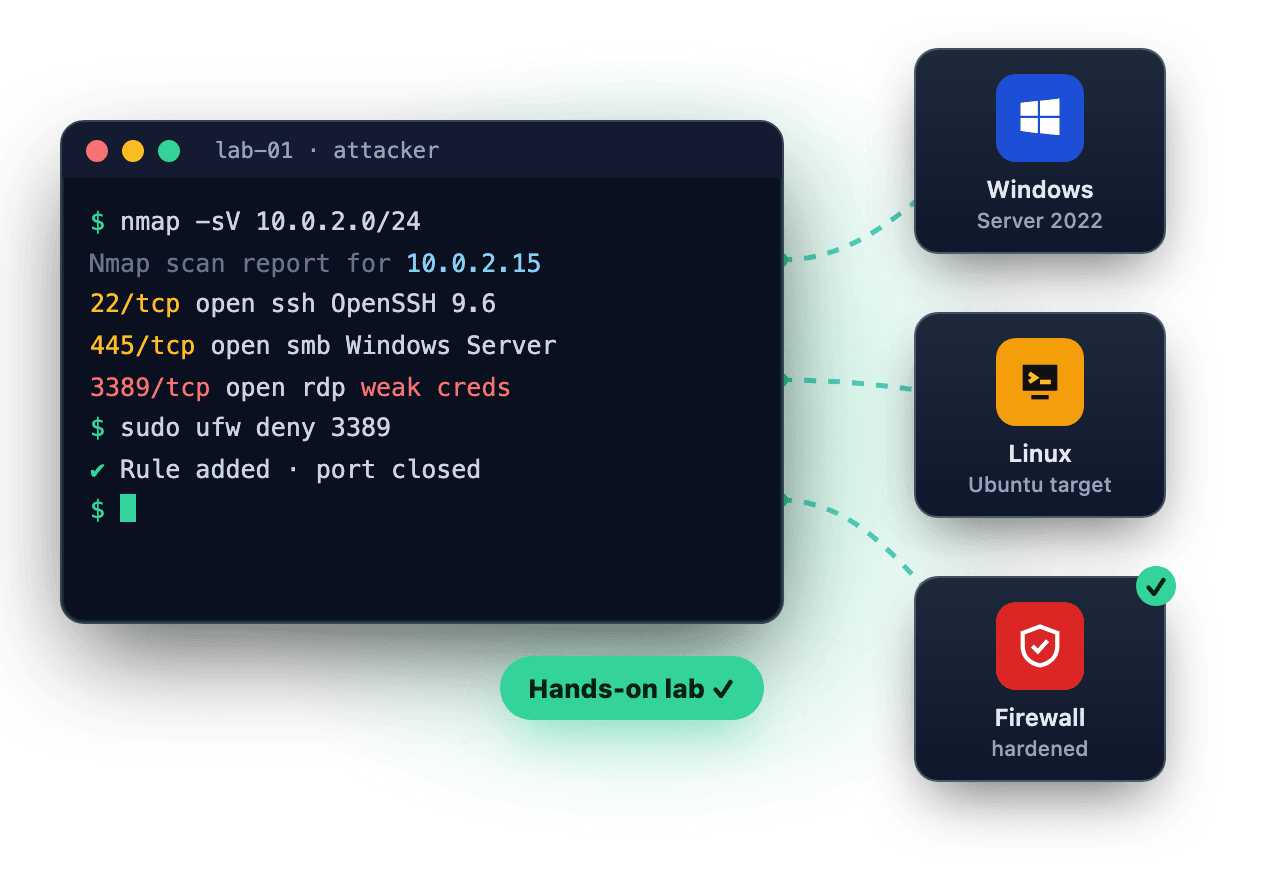
- ✓Hands-on labs in your browser: nothing to install, try one free
- ✓All your progress in one place, ready for exam day
Built for SY0-701; our SY0-801 roadmap is coming soon.
General Security Concepts (12%)
The first domain you will be tested on focuses on foundational aspects of cyber security, such as the CIA triad, key terminology (e.g., gap analysis, honeytoken, zero trust), and security controls. This domain ensures you understand the fundamentals and know the common language cyber security professionals use.
Things you must remember:
- Security models like Zero Trust.
- Change management processes.
- Confidentiality, Integrity, and Availability.
- Common acronyms (e.g., CVE, STIX, OSINT, TAXII, IOC, and ISO).
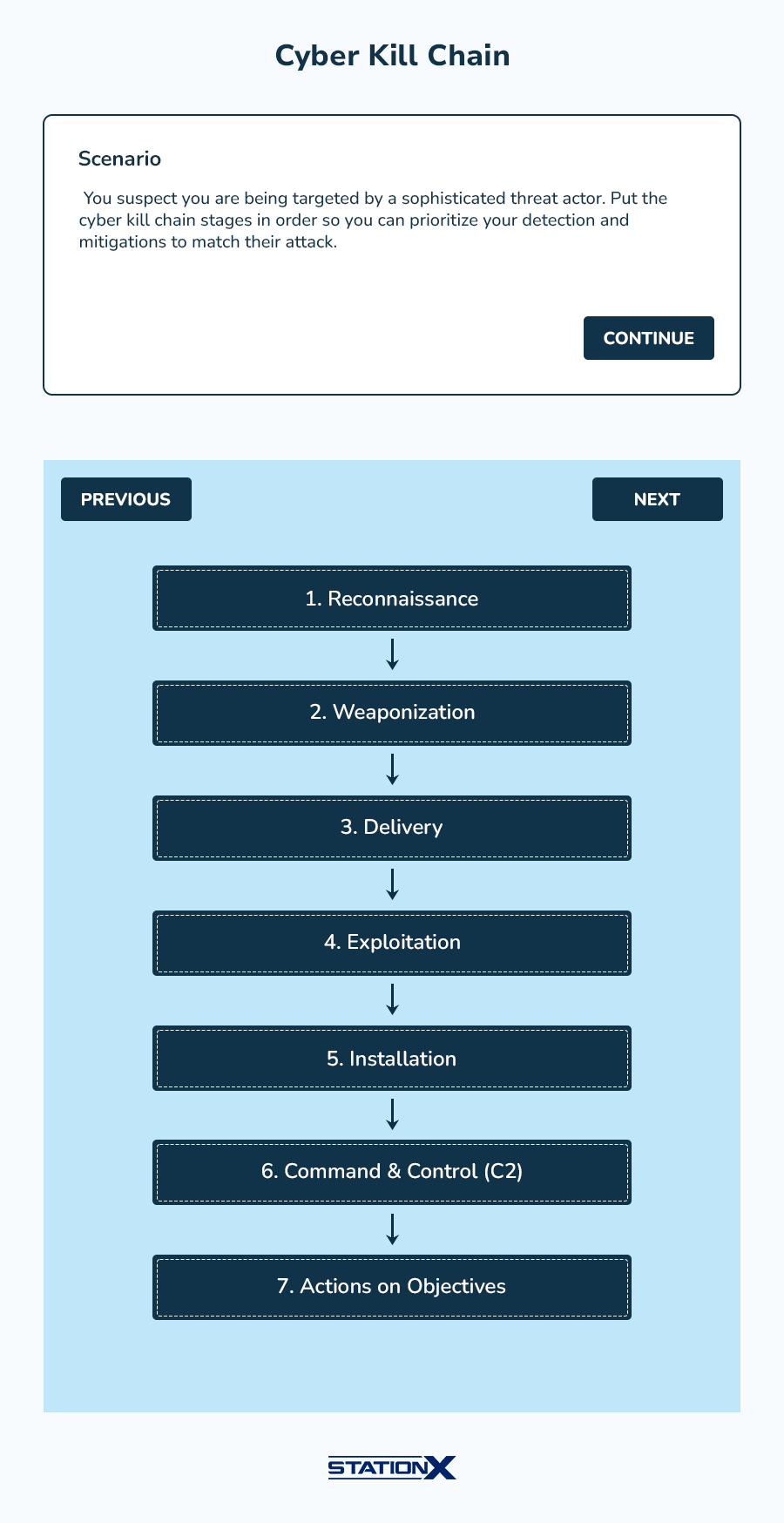
- The cyber kill chain.
- The diamond model.
Note: the cyber kill chain and the diamond model are SY0-801 topics (objective 5.5), not in the SY0-701 objectives. They are worth knowing because SY0-801 covers them.
Sample Question 1:
What does CVE stand for?
a) Common Vulnerability Expectation
b) Common Vulnerabilities and Exposures
c) Causal Vulnerability and Exposure
d) Correct Vulnerability in Essence
Click for answer
b) Common Vulnerabilities and Exposures
Sample Question 2:
What is an Advanced Persistent Threat (APT)?
a) An advanced monitoring tool that tracks persistent threats
b) A script kiddie that won’t go away
c) A persistent vulnerability that is not getting patched
d) A sophisticated, persistent, and targeted cyber attack
Click for answer
d) A sophisticated, persistent, and targeted cyber attack
Sample PBQ:
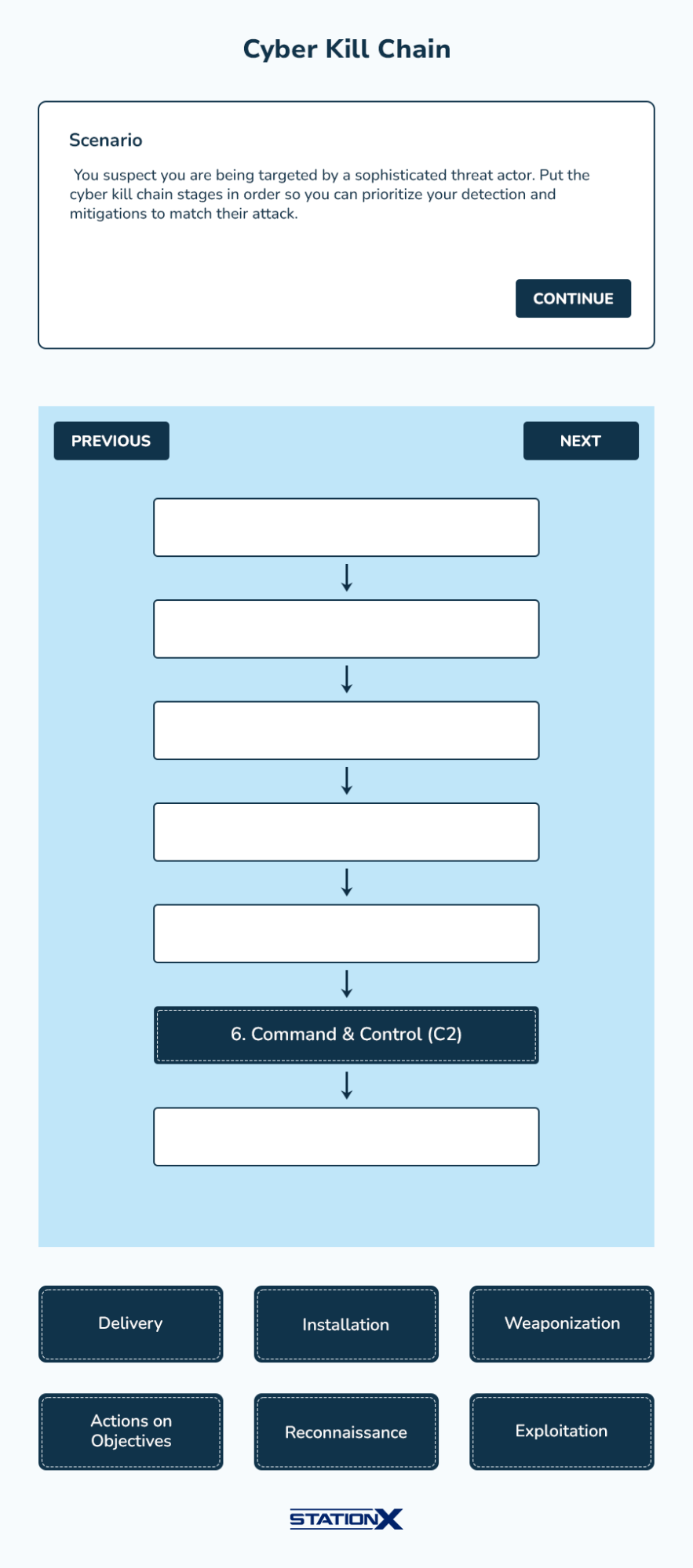
Click for answer
For Less.
StationX is a CompTIA Authorized Partner. The same official exam vouchers you'd buy from CompTIA, for less.
CompTIA price USD 878.00
Your exam voucher plus a free second attempt if you don't pass first time.
Today's US prices against CompTIA's US list price. Prices change and vary by country; the voucher page shows yours.
Threats, Vulnerabilities, and Mitigations (22%)
A key area of cyber security is understanding threats and how to defend against them. This domain focuses on how to identify threat actors, understand their motivations, and mitigations you can use to defend against them.
Things you must remember:
- The different types of threat actors and their motivations.
- Adversary tactics, techniques, and procedures.
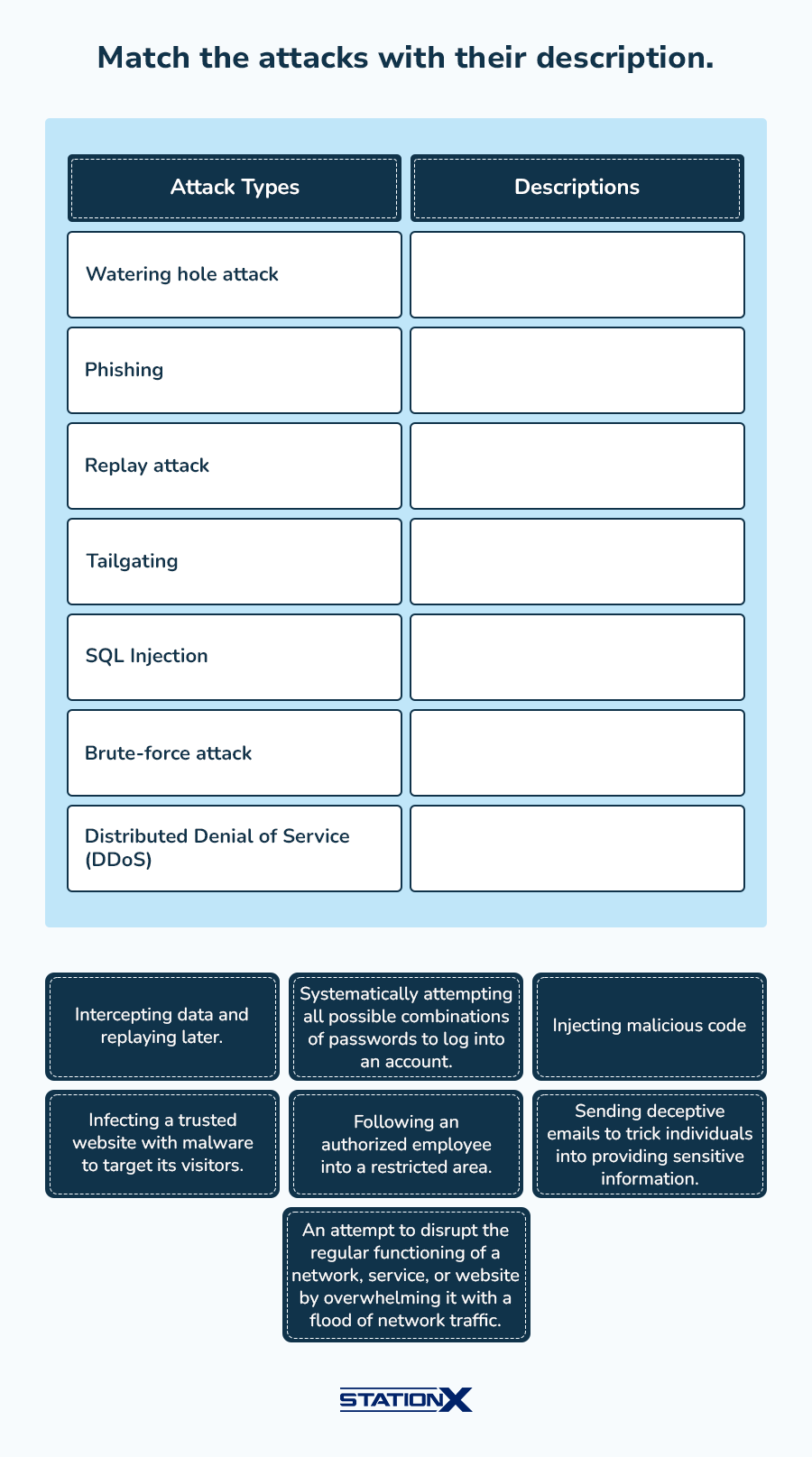
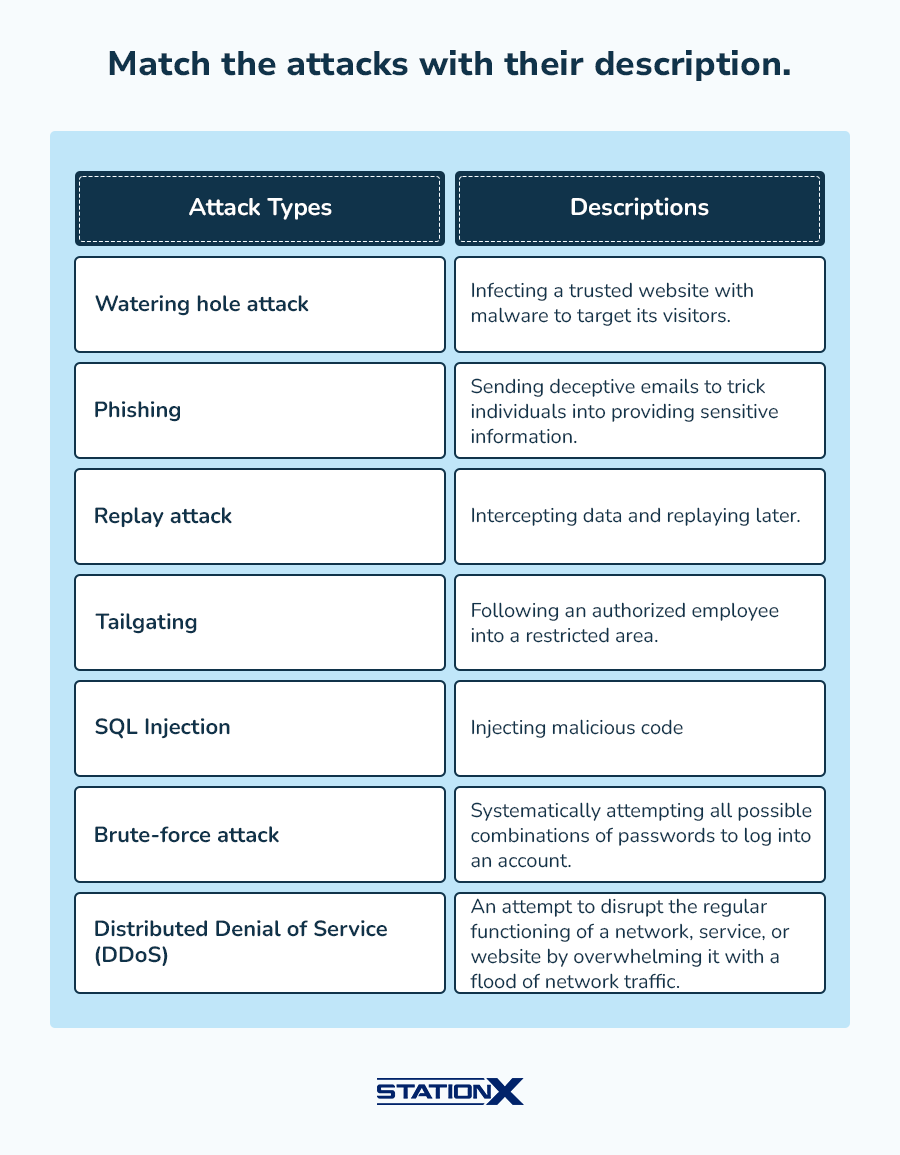
- Types of attack (e.g., social engineering, SQL injection, phishing, replay attack, etc.)
- Supply chain vulnerabilities.
- Indicators of malicious activity.
- The different types of malware.
- The software development lifecycle and secure coding practices.
Sample Question 1:
Which of the following are NOT recognized as threat actors?
a) State actor
b) Criminal syndicate (organized crime)
c) Script Kiddie
d) Office Worker
Click for answer
d) Office Worker
Sample Question 2:
Which of the following are ways to defend against SQL injection?
a) Using a modern database
b) Not using web forms
c) Input validation and sanitization
d) Using a secure programming language
Click for answer
c) Input validation and sanitization
Sample PBQ:
Click for answer
Security Architecture (18%)
Systems need to have a secure architecture to be resilient to attacks. This domain delves into what secure system architecture looks like by discussing data types, classifications, and methods to secure data. It also focuses on how data is made available using things like load balancing and site considerations.
Things you must remember:
- Failure modes like “Fail-open” and “Fail-closed.”
- Data types and classifications.
- New considerations for cloud and multi-cloud environments.
- Physical security (e.g., the importance of geographic dispersion for site considerations).
- Cryptographic topics like symmetric ciphers (e.g., streaming vs block ciphers and key considerations), asymmetric ciphers, hashing, salting, steganography, and quantum.
- SSL certificates, stapling, pinning, digital signatures, and certificate chaining.
- Multi-factor authentication (MFA).
- Redundancy (e.g., RAID, NAS, UPS, backup types).
Sample Question 1:
What does it mean to air gap a system?
a) Physically isolate a secure computer network from unsecured networks.
b) Set up a demilitarized zone (DMZ) that traffic has to pass through before reaching a secure computer network.
c) Create a subnet for different computer networks to secure them.
d) Use only wireless network connections.
Click for answer
a) Physically isolate a secure computer network from unsecured networks.
Sample Question 2:
Which of the following are key considerations when choosing a secure symmetric cipher?
a) Key length, age, and block size.
b) Popularity, speed, and key length.
c) Key length, block size, and number of rounds.
d) Key exchange, hashing, and salting.
Click for answer
c) Key length, block size, and number of rounds.
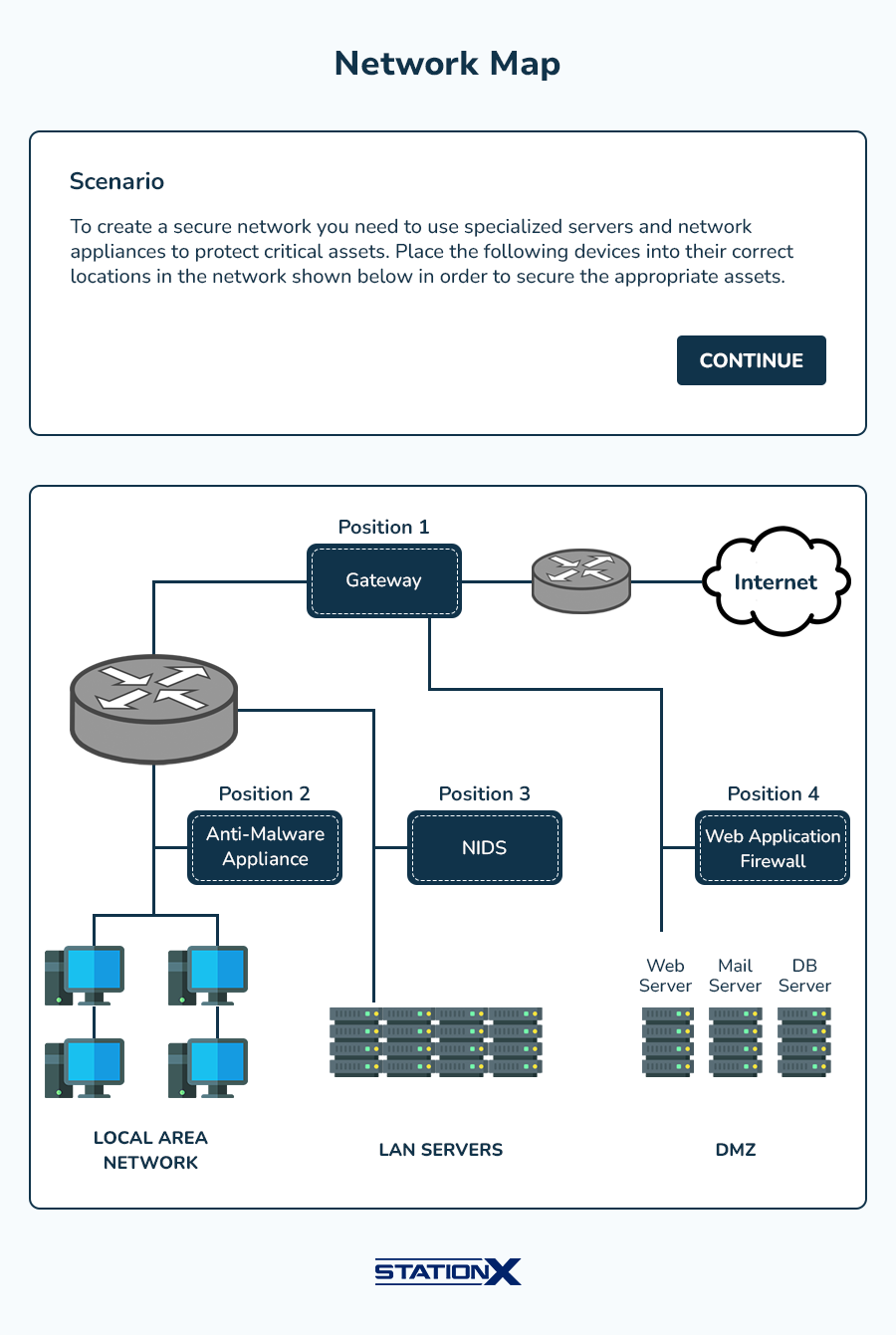
Sample PBQ:
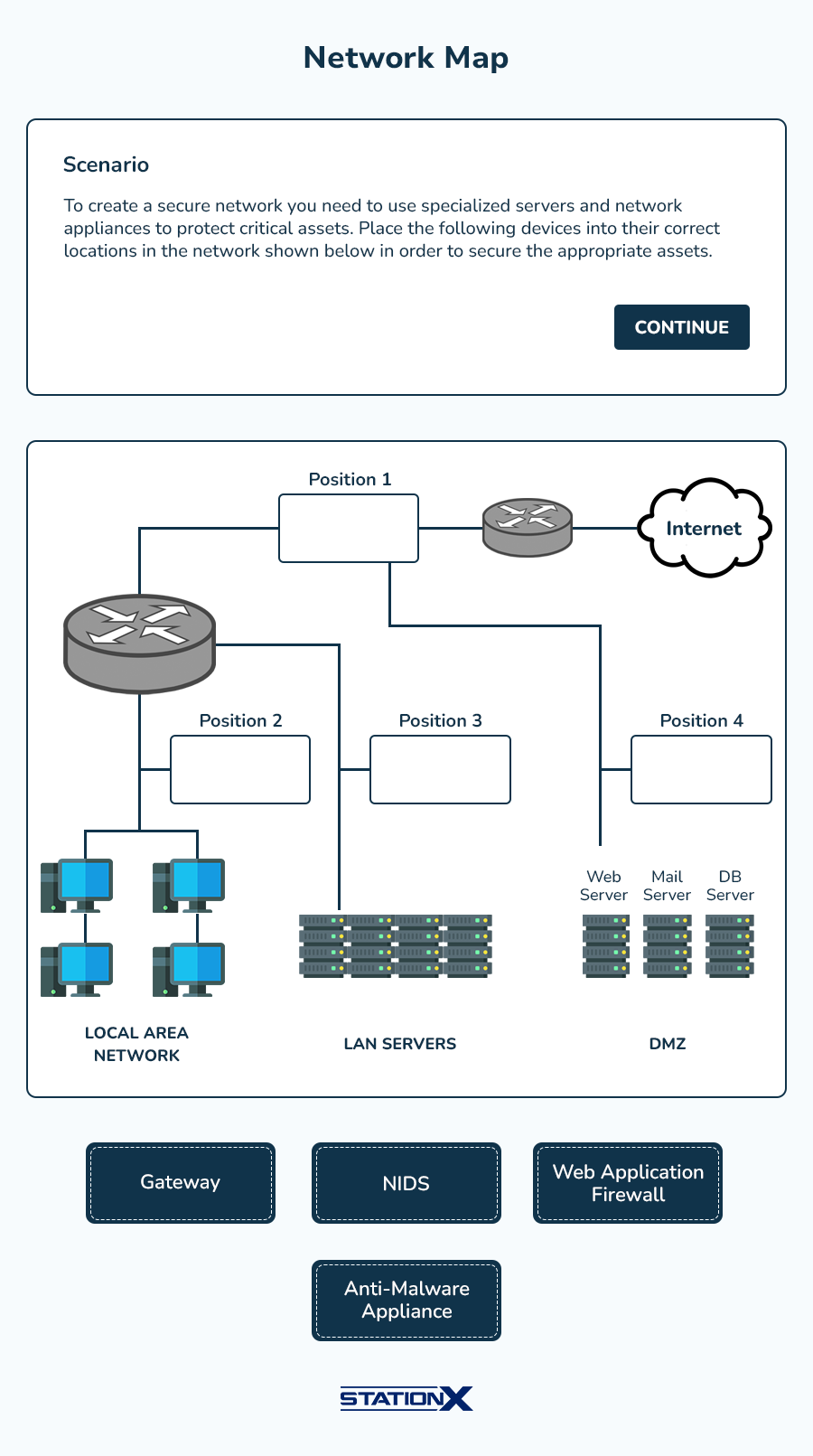
Click for answer
Security Operations (28%)
This is the most heavily weighted domain. It covers the practical day-to-day work you will likely be doing as a security professional, including incident triage and response, security investigations, the importance of automation and orchestration, using data sources effectively (e.g., log management), and performing vulnerability scans.
Things you must remember:
- Establishing, deploying, and maintaining “Secure baselines.”
- Hardening Internet of Things (IoT) devices and cloud infrastructure.
- Alerting and monitoring tools like SCAP, SNMP traps, and SIEM.
- Identity and access management topics like privileged access management, passwordless authentication, and multifactor authentication implementations.
- The importance of automation, orchestration, and scripting for security operations.
Sample Question 1:
Why is Security Orchestration, Automation, and Response (SOAR) important?
a) Helps automate response and reduce overall response time.
b) Allows you to see more incidents.
c) Adds another layer of security to a system.
d) Gives pretty graphics for SOC analysts to visualize attacks.
Click for answer
a) Helps automate response and reduce overall response time.
Sample Question 2:
Which of the following is NOT a method for implementing identity and access management?
a) Attribute-based access control (ABAC)
b) Multi-factor authentication
c) Role-based access control (RBAC)
d) Using a web application firewall (WAF)
Click for answer
d) Using a web application firewall (WAF)
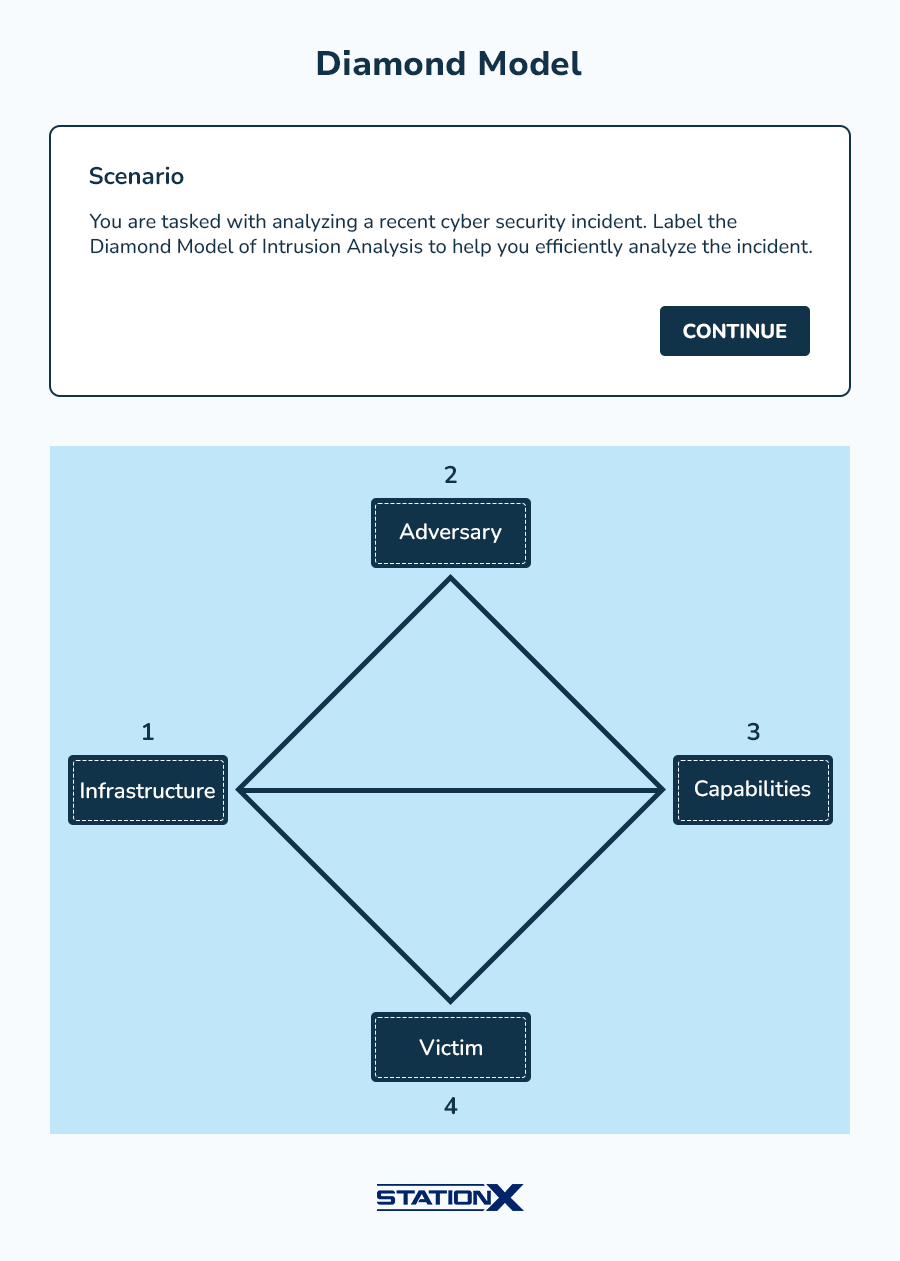
Note: this PBQ uses the diamond model, an SY0-801 topic (objective 5.5) that is not in the SY0-701 objectives. It is worth knowing because SY0-801 covers it.
Sample PBQ:
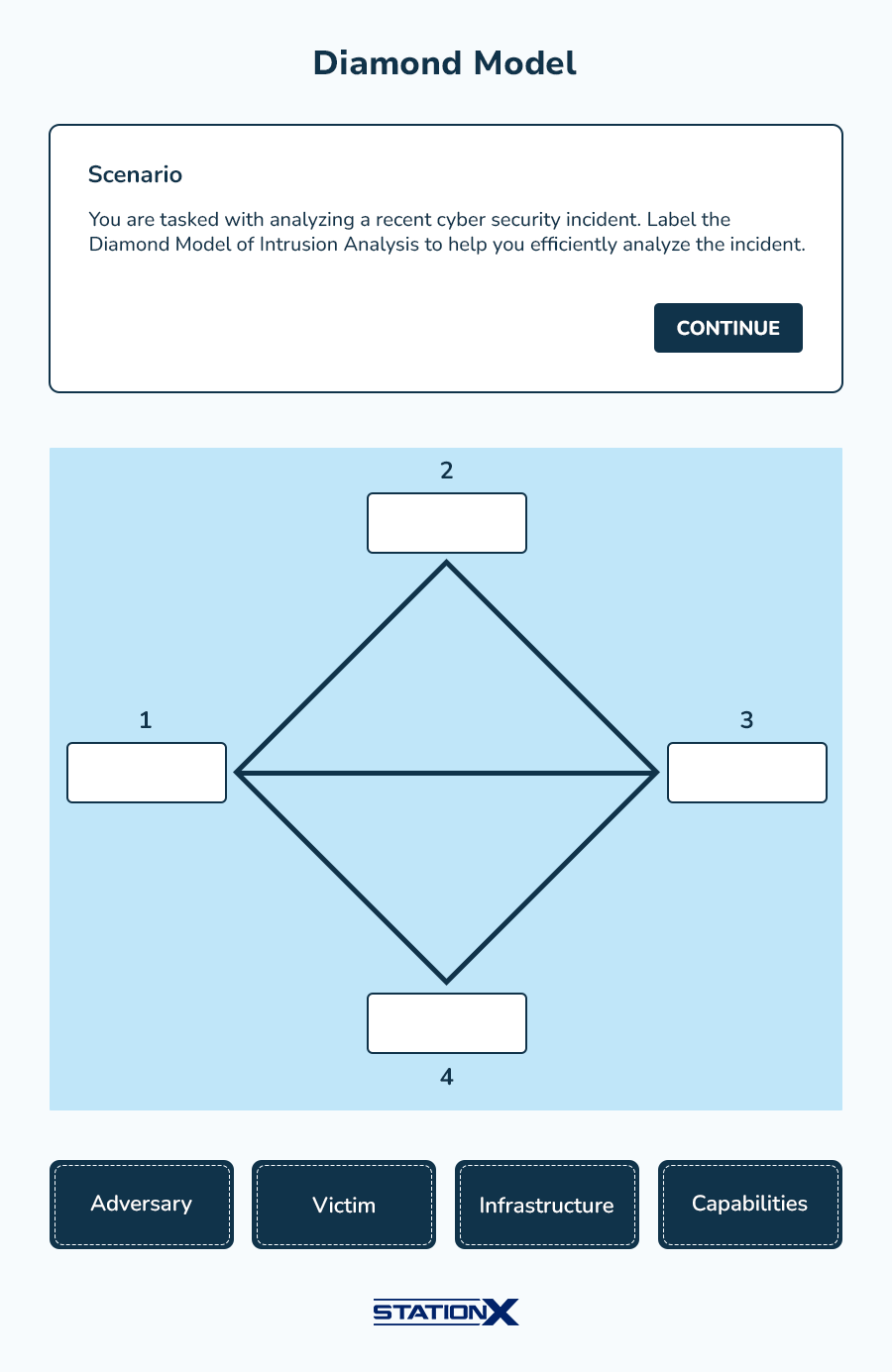
Click for answer
For Less.
StationX is a CompTIA Authorized Partner. The same official exam vouchers you'd buy from CompTIA, for less.
CompTIA price USD 878.00
Your exam voucher plus a free second attempt if you don't pass first time.
Today's US prices against CompTIA's US list price. Prices change and vary by country; the voucher page shows yours.
Security Program Management and Oversight (20%)
The final domain in the Security+ exam looks at the role governance plays in cyber security. It focuses on policies and standards, risk management processes and strategies, and effective security awareness training to mitigate threats like phishing.
Things you must remember:
- Third-party risk assessment and management.
- Compliance monitoring and reporting.
- Individual privacy rights and regulations, such as “Right to be Forgotten.”
- Considerations for hybrid/remote work environment.
- Common standards and regulations, such as GDPR, ISO, and PCI DSS.
- Risk management plans like a business continuity plan, disaster recovery plan, and incident response plan.
Sample Question 1:
What is business impact analysis?
a) Process for assessing and quantifying the potential impact of cyber security incidents on business operations.
b) Analysis of how a business would benefit from a cyber security program.
c) Process of assessing how a vulnerability may impact a business.
d) Assessing the damage a threat actor could cause to business operations.
Click for answer
a) Process for assessing and quantifying the potential impact of cyber security incidents on business operations.
Sample Question 2:
What is the formula for calculating Single Loss Expectancy (SLE)?
a) Single Loss Expectancy = Annualized Rate of Occurance / Business Impact
b) Single Loss Expectancy = Asset Value / Exposure Factor
c) Single Loss Expectancy = Annualized Rate of Occurrence x Business Impact
d) Single Loss Expectancy = Asset Value x Exposure Factor
Click for answer
d) Single Loss Expectancy = Asset Value x Exposure Factor
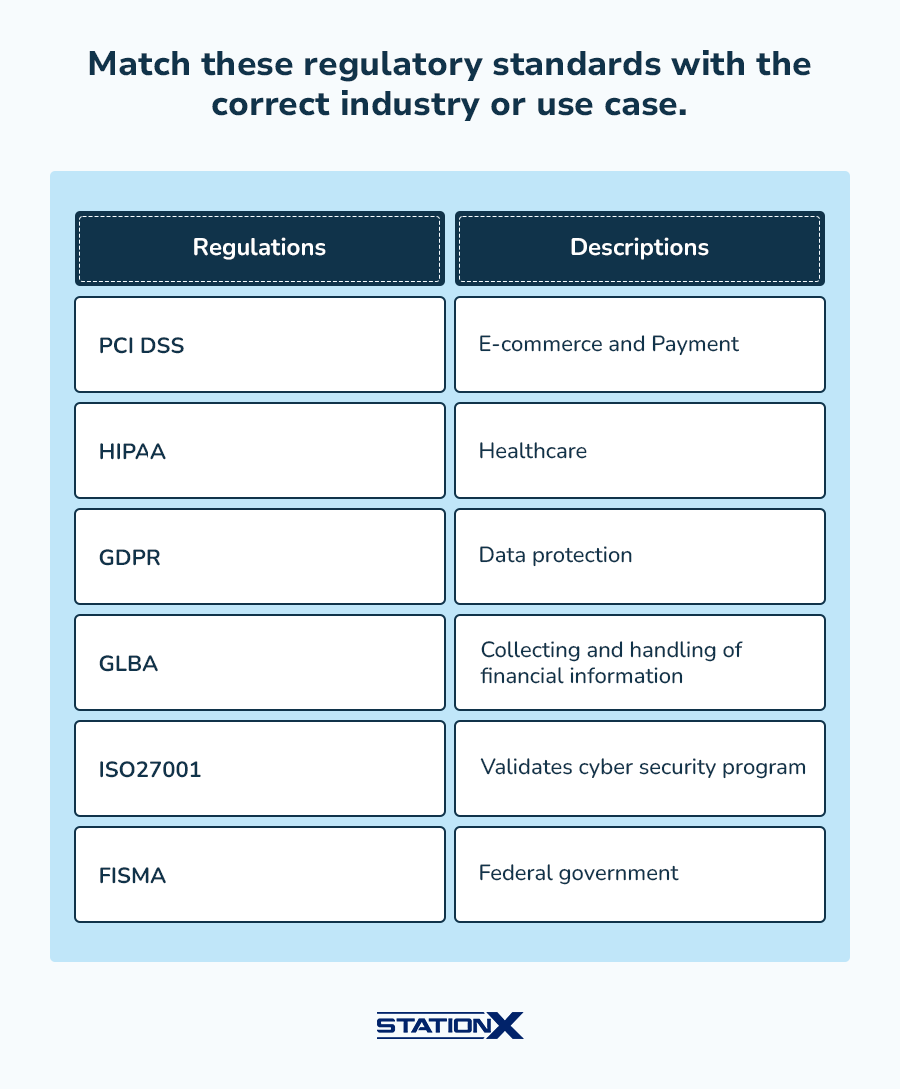
Sample PBQ:
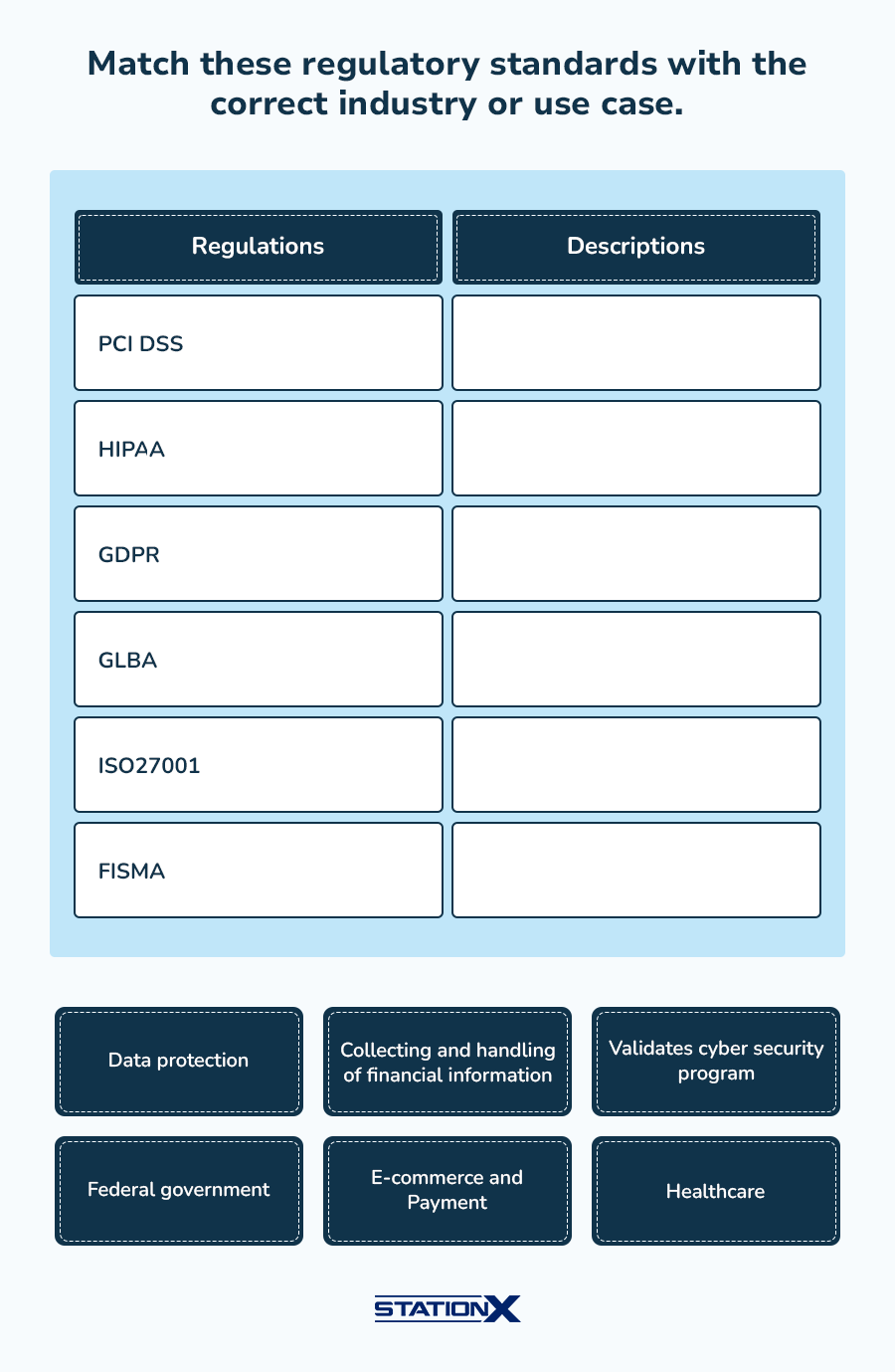
Click for answer
CompTIA Security+ Exam Advice
The Security+ can be a daunting exam. You have 90 minutes to answer a maximum of 90 questions assessing your general knowledge and performance across various cyber security topics. It is important to remember this is an entry-level certificate that many people have been able to pass before you. By dedicating adequate time to studying and exam preparation, you can pass this exam.
To help you be successful, here are some strategies that will help you maximize your exam score:
- Ensure you understand each item on CompTIA’s objectives list before taking the exam. It helps to write out a detailed roadmap, so you ensure you cover all the material. Read How Long to Study for Security+? A Comprehensive Roadmap to find out how to do this.
- Give yourself ample time on exam day to reach the exam location, be adequately rested and fed, and have the materials you need. You want to minimize stress as much as possible on exam day. It is stressful enough already.
- Try to memorize important acronyms and their meanings. These are listed at the end of CompTIA’s exam objectives document. They will help you remember keywords, phrases, and pieces of information when answering questions. CompTIA describes them as acronyms that appear on the exam.
- Regularly take practice exams throughout your studying to track your progress and identify domains you need to spend more time studying.
- Schedule your exam before you start studying. This gives you a goal to work towards and will keep you motivated.
For Less.
StationX is a CompTIA Authorized Partner. The same official exam vouchers you'd buy from CompTIA, for less.
CompTIA price USD 878.00
Your exam voucher plus a free second attempt if you don't pass first time.
Today's US prices against CompTIA's US list price. Prices change and vary by country; the voucher page shows yours.
Conclusion
Your preparation for your exam will be the difference between passing and failing. The CompTIA Security+ practice questions listed in this article give you a taste of what to expect on your exam. You must familiarize yourself with this format, learn to identify the correct answer on multiple choice questions quickly, and fully understand what performance-based questions are asking you to do.
We have a range of resources you can use to help best prepare for your Security+ exam. There is our Security+ cheatsheet, ultimate exam preparation guide, and a comparison of SY0-701 vs SY0-801.
To learn Security+ step by step, follow the StationX Security+ roadmap on StationX Labs: video courses for each exam domain plus hands-on labs for SY0-701 (our SY0-801 roadmap is coming soon), and it’s free to start.
See our CompTIA Security+ Training Bundle. For a one-time purchase, get lifetime access to multiple Security+ exam prep courses, practice tests, flashcards, and more. And don’t forget you can save up to 30% on your Security+ exam voucher by purchasing through our store.
For Less.
StationX is a CompTIA Authorized Partner. The same official exam vouchers you'd buy from CompTIA, for less.
CompTIA price USD 878.00
Your exam voucher plus a free second attempt if you don't pass first time.
Today's US prices against CompTIA's US list price. Prices change and vary by country; the voucher page shows yours.
The CompTIA Security+ Course & SY0-701 Practice Test Bundle includes:
- CompTIA Security+ Study Guide: SY0-701 Total Course
- CompTIA Security+ Training: Self-Paced Course
- CompTIA Security+ SY0-701 Exam Questions and Answers
- CompTIA Security+ Practice Test Series: Ace the SY0-701
- CompTIA Security+ Exam Objectives Flash Cards: SY0-701 Prep
Frequently Asked Questions
How many PBQs are on the Security+ exam?
The Security+ exam combines multiple-choice and performance-based questions (PBQs). CompTIA does not publish how many PBQs you will get, so prepare for both question types.
Is Security+ worth it?
The Security+ is a great certification if you are trying to enter the cyber security industry and find an entry-level job. It opens the door to many entry-level cyber security positions. You can learn more about why Security+ is a great entry-level certification in Is CompTIA Security+ Worth It? A Must-Read Review.
How many times can I take Security+?
You can take the Security+ exam as many times as it takes you to pass. There are no limits on exam retakes. You just need to pay the exam fee every time you have another go (there is no discount for retakes). To find out how long you should study before taking the exam, read How Long to Study for Security+? A Comprehensive Roadmap.
Is the Security+ exam multiple-choice?
The Security+ exam is a mixture of multiple-choice and performance-based questions. You will have 90 minutes to answer a maximum of 90 of these questions. To best prepare for these questions, read The Ultimate CompTIA Security+ Study Guide for Exam Prep.
About the Author

Nathan House, Founder & CEO of StationX
Nathan House has 30 years of hands-on cybersecurity experience and is Cambridge-educated, holding CISSP, CISA, CISM, OSCP, CEH, and SABSA. He founded StationX in 1999 — one of the UK’s first cybersecurity companies — and has secured £71 billion in UK mobile banking transactions and the London 2012 Olympics, advising clients including Microsoft, Cisco, BP, Vodafone, and VISA. He authored the world’s most popular cybersecurity course — a #1 Udemy bestseller taken by over 500,000 students — and was named Cyber Security Educator of the Year 2020, AI Security Educator of the Year, and a UK Top 25 Security Influencer 2025. A DEF CON speaker and featured expert on CNN, Fox News, NBC, and the BBC, Nathan leads StationX’s training of more than half a million students worldwide.