
Build the Cyber Security Team the AI Era Needs.
Your team will be among the cyber security teams who define the field in the AI era.
Your team will create and deploy security solutions at exceptional speed through AI-Driven Cyber Security Engineering — the cyber security application of the industry shift Andrej Karpathy, the OpenAI co-founder, calls “agentic engineering.” In six months they ship a production-grade security tool your company actually needs — and keep the capability to build the next one, and the one after.
Your people join a serious network of cyber security professionals committed to staying ahead of the field.
No developers required. Your team directs the AI; the AI does the building.
Ten hours a week of manual security work per person is a six-figure annual bill — and the backlog still grows. What is it costing you? Run your own numbers ↓
 is one of the UK’s first cyber security companies. Established 1999. Led by Nathan House and a faculty of senior practitioners.




One program. Three returns.
Buy it once; all three walk in the door together.
The Tool

A production-grade security solution. Shipped during the program. Yours, including the IP.
Scoped in week one to something your company needed anyway — a phishing analyser, a vulnerability triage system, an internal security dashboard, an AI-powered defence. Your team builds it, supervised, and it goes to work for you before the program ends.
The Team

People who can build whatever security tooling the business needs next.
In days, not quarters — without waiting on engineering or buying another vendor product. AI does the building; your people direct, architect, and verify. The capability stays on staff when the program ends, and it’s the one your competitors can’t hire off the shelf.
The Infrastructure

Your company’s own internal AI system. It compounds.
Built during the program, modelled on HAL — the infrastructure that runs 80% of StationX. Memory, tooling, patterns, automation. Your team’s twentieth solution ships dramatically faster than their first. This is what AI-Driven Engineering makes possible — and it’s company-owned, permanently.
The tool justifies the spend on its own — it’s something you’d otherwise have bought or built. But the team and the infrastructure are what compound after it: every solution they ship next costs you nothing but their time, and ships faster than the one before.
Your team builds the capability to create any cyber security solution your business needs.
And keeps it.
They don’t need to be developers. Your team directs the AI, architects the solution, decides what to ship, and verifies it’s right — and what comes out the other side is a real, working solution they built. The AI does the typing. Anyone can prompt an AI to write code; almost nobody can direct it to ship something secure enough to trust in production — that gap is the whole program. And it matters more than it sounds: your people are already using AI at work, governed or not. This converts your biggest shadow-AI risk into your biggest capability gain.
During the program, your team ships a real, working cyber security solution — scoped in week one to something your company needed anyway. That’s one. The capability they keep produces the next one, and the one after, and the one after.
The old way of working — understaffed, slower than the threats, stuck in the backlog.
AI carries the weight. Your team makes the calls. The capability nobody can buy off the shelf.
The engine that produces them is your company’s own internal AI infrastructure — your version of what Nathan built with HAL. Not a chat window your staff start fresh every day, but a system with memory: it knows your projects, your tools, your patterns, and it gets better with everything your team builds on it. Their twentieth solution ships dramatically faster than their first — not because they got better at prompting, but because the system got better at everything. That compounding is the real asset. Most companies will spend the next few years buying prompts and licences; yours walks away owning infrastructure that makes your team more capable every single project — company-owned, permanently.
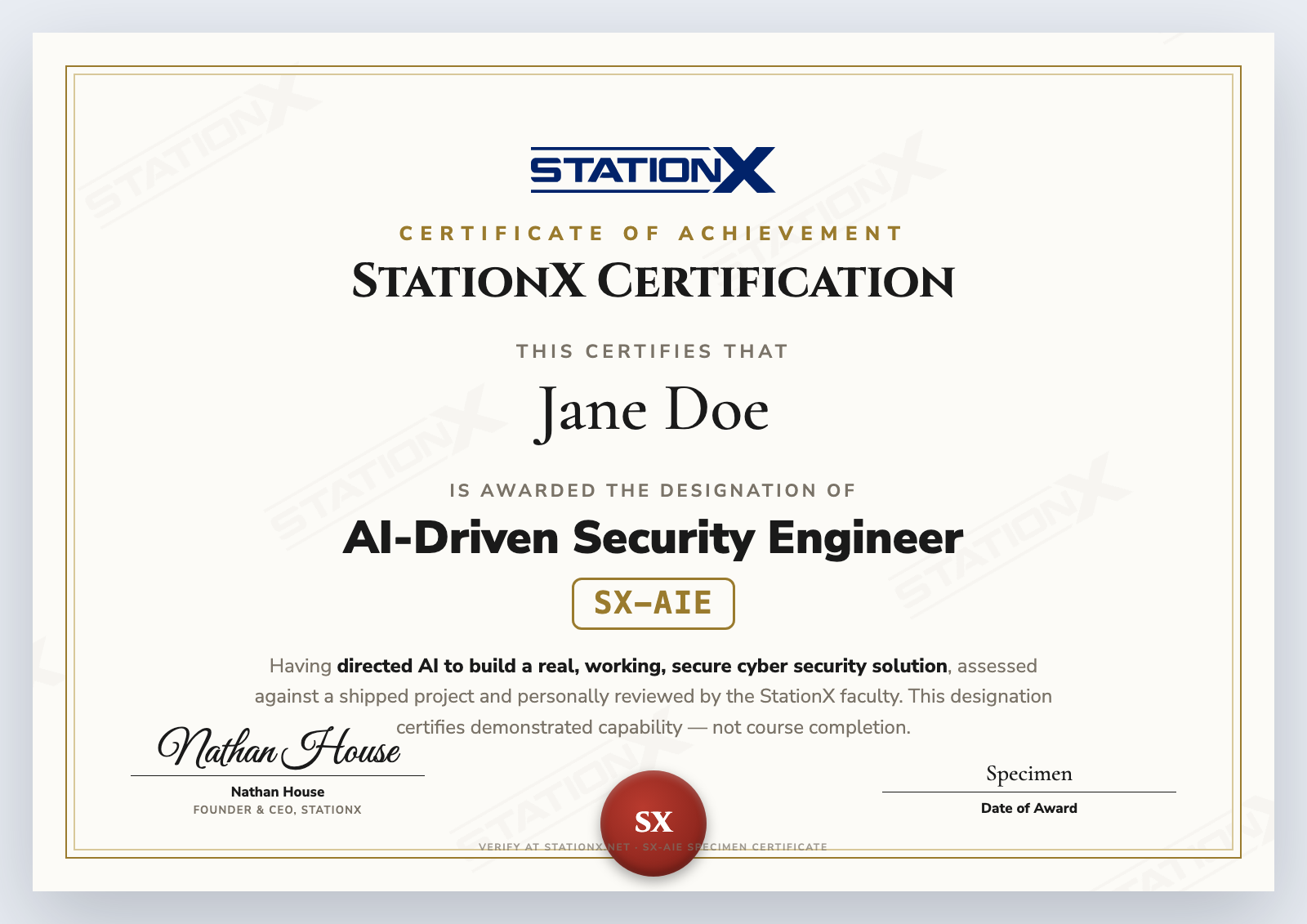
The Ship Guarantee. Every other corporate training runs on a timer — pay, attend, certificate, done, whether or not anything changed. We don’t work like that. If your team hasn’t shipped the scoped tool by month six, the program stays open at no extra cost — mentorship, supervision, and support included — until it has. The bar is real, not our opinion: your team can build credible commercial security solutions, your company’s AI infrastructure is stood up and working, and the tool is shipped. Each team member who reaches that bar earns the StationX Certified AI-Driven Security Engineer (SX-AIE) — awarded for building, not attending. You’re not buying attendance. You’re buying a shipped solution and the team that can build the next one.
Built by Nathan through AI-Driven Engineering
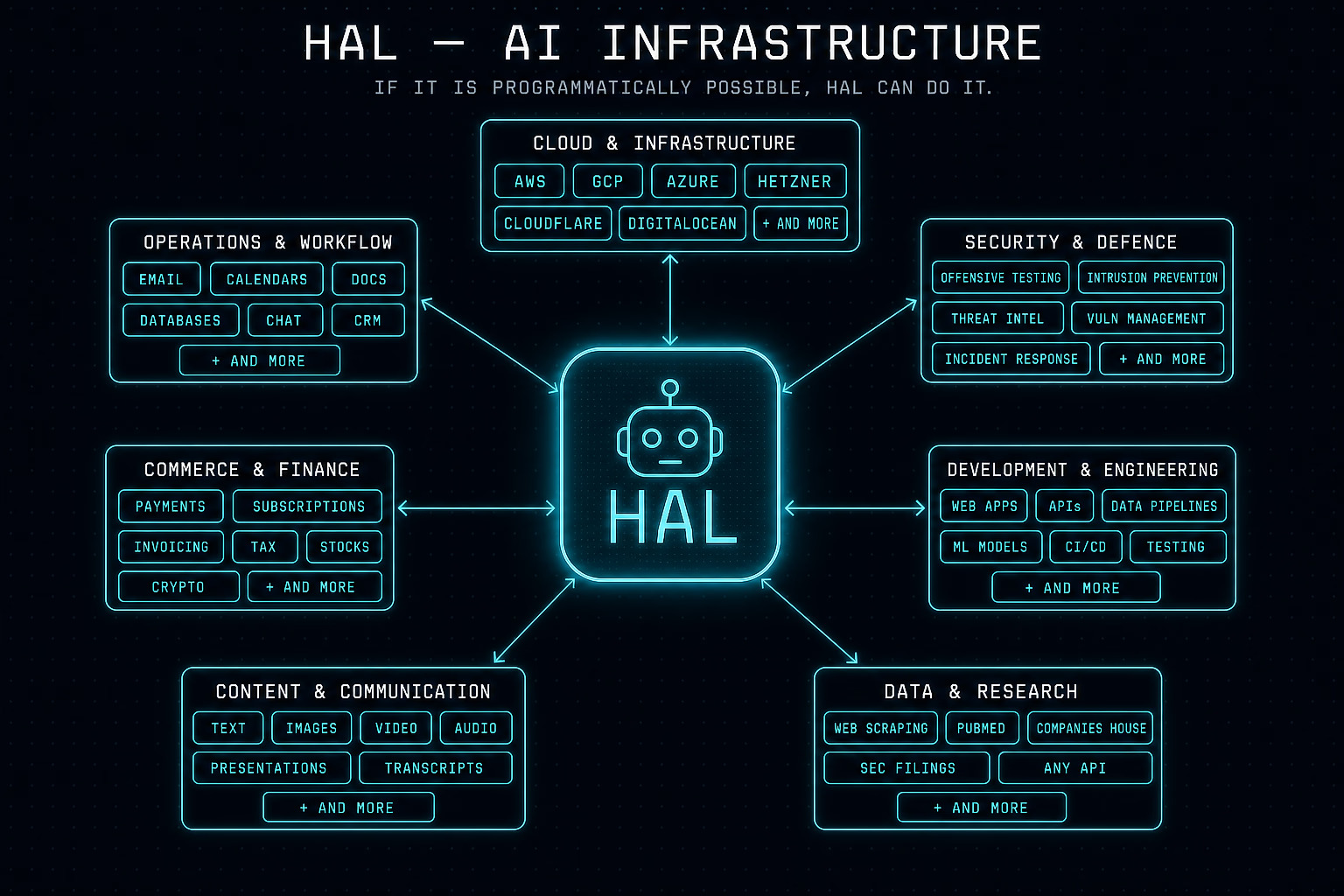
HAL
AI infrastructure that runs an entire enterprise, directed solo — something almost nobody has built publicly.
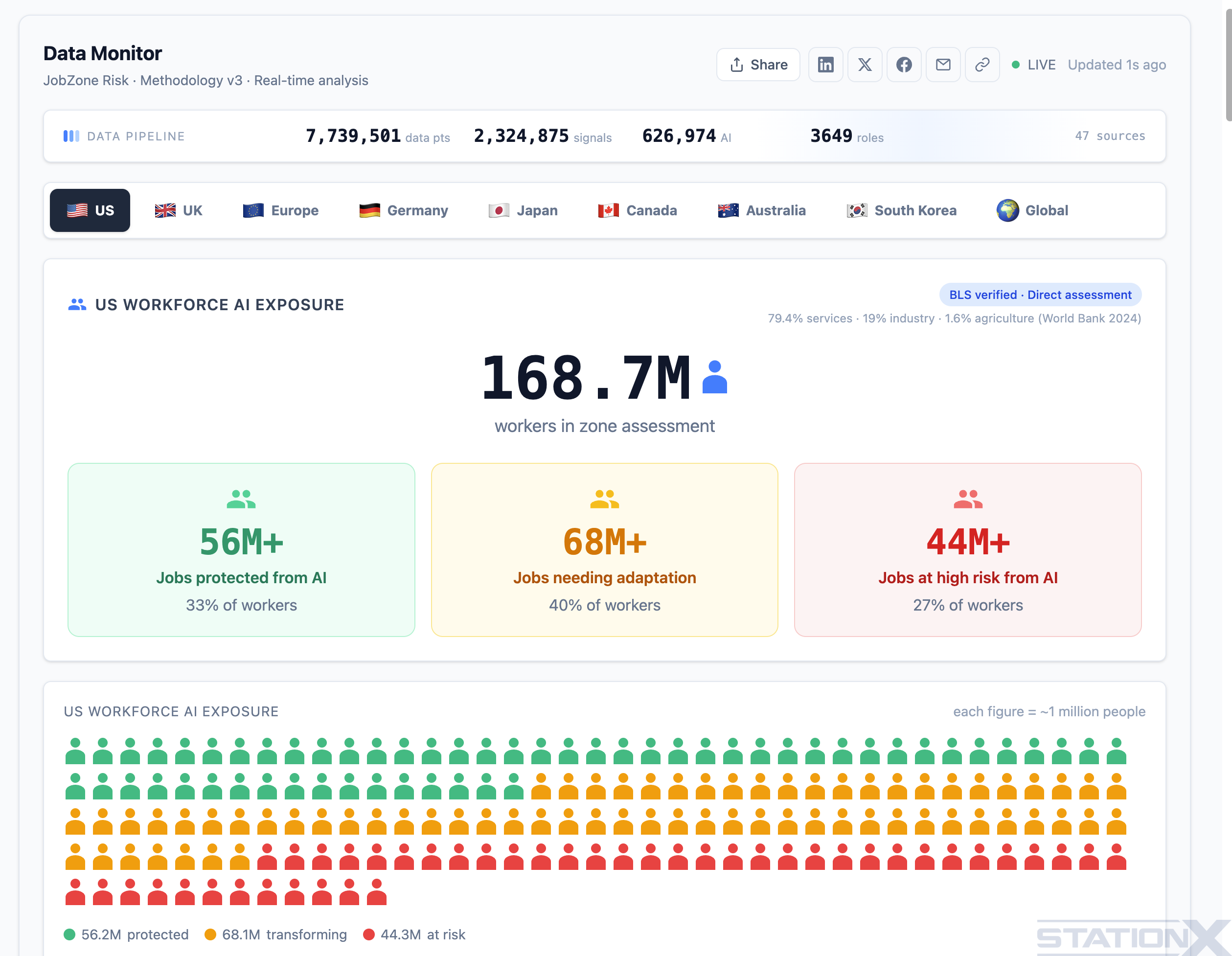
JobZone Risk
AI job-risk platform that scored every cyber security role. Built solo in two weeks.

Titus
Continuous AI-powered vulnerability management for fintech — reviewing code, infrastructure, and cloud every single day.
SATs Revision
Adaptive learning platform shipping production-grade education software at speed.
The six months, at a glance
- Month 1 — scoping call becomes the build plan; AI-Driven Engineering foundations; AI guardrails set up in your environment.
- Months 2–3 — first working version takes shape; weekly live build sessions alongside the day job.
- Month 4 — security review and hardening: tests, threat model, the review gates that make it production-grade.
- Month 5 — deployment into your environment; documentation and handover discipline.
- Month 6 — the tool ships. Stakeholder demo. Your team plans build #2 — this time without us.
~3 focused hours per person per week, designed to run alongside the day job — or put more hours in and ship sooner. Start when you’re ready; the pace scales to your team. The Ship Guarantee backs the timeline either way.
What one person can build.
AI-Driven Engineering is new, so these are early — three real, working security tools current members are building. Each by one person, directing AI, solo.
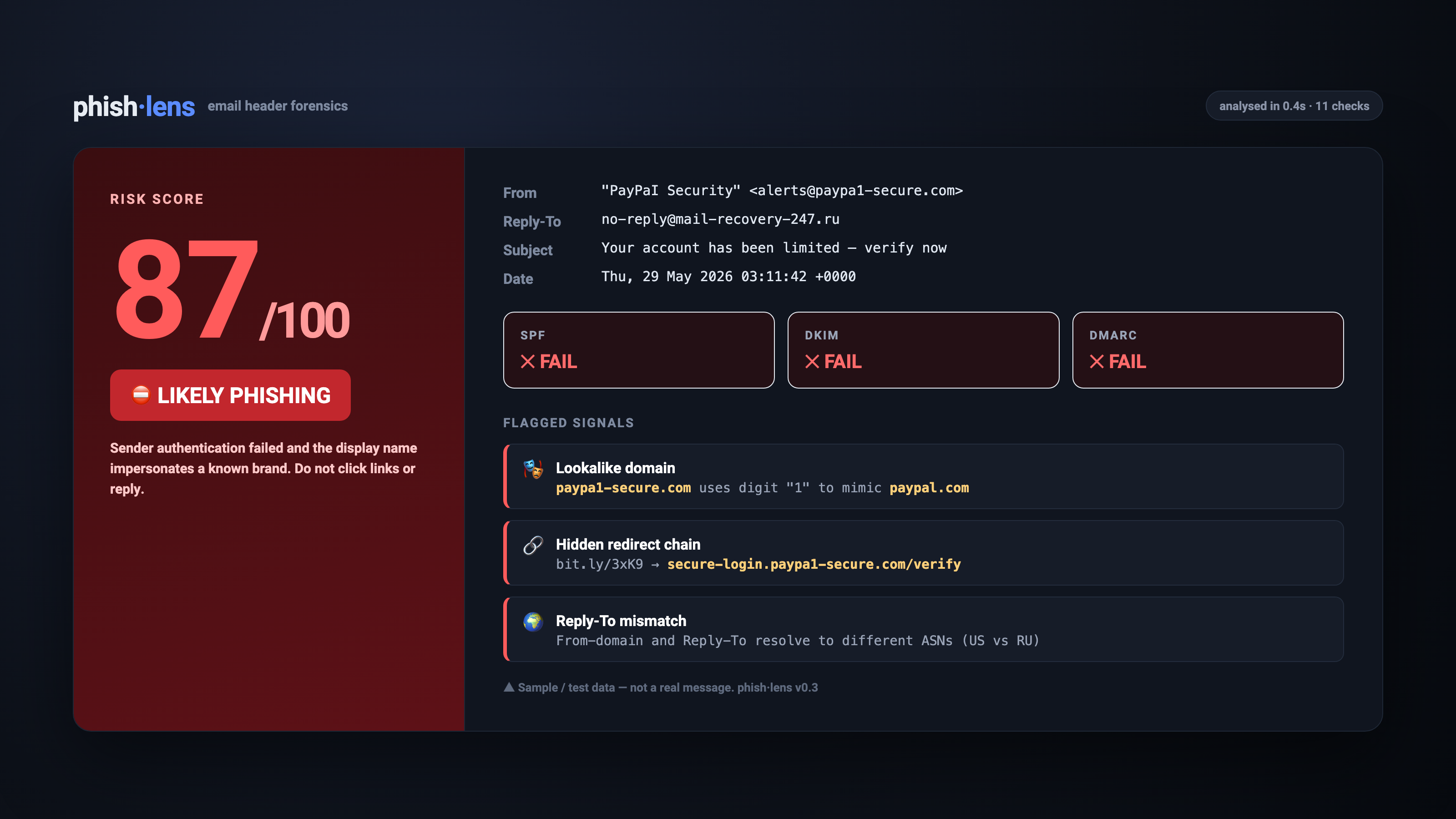
Phishing Analyser
Email forensics anyone can read
A tool that takes a raw email and tells you whether to trust it — parsing the SPF, DKIM and DMARC signals, tracing the real sender chain, and flagging the tells attackers hide behind, then returning a single 0–100 risk score with the evidence laid out. The invisible part of a phishing email, made legible in seconds.
Built by Craig · current cohort
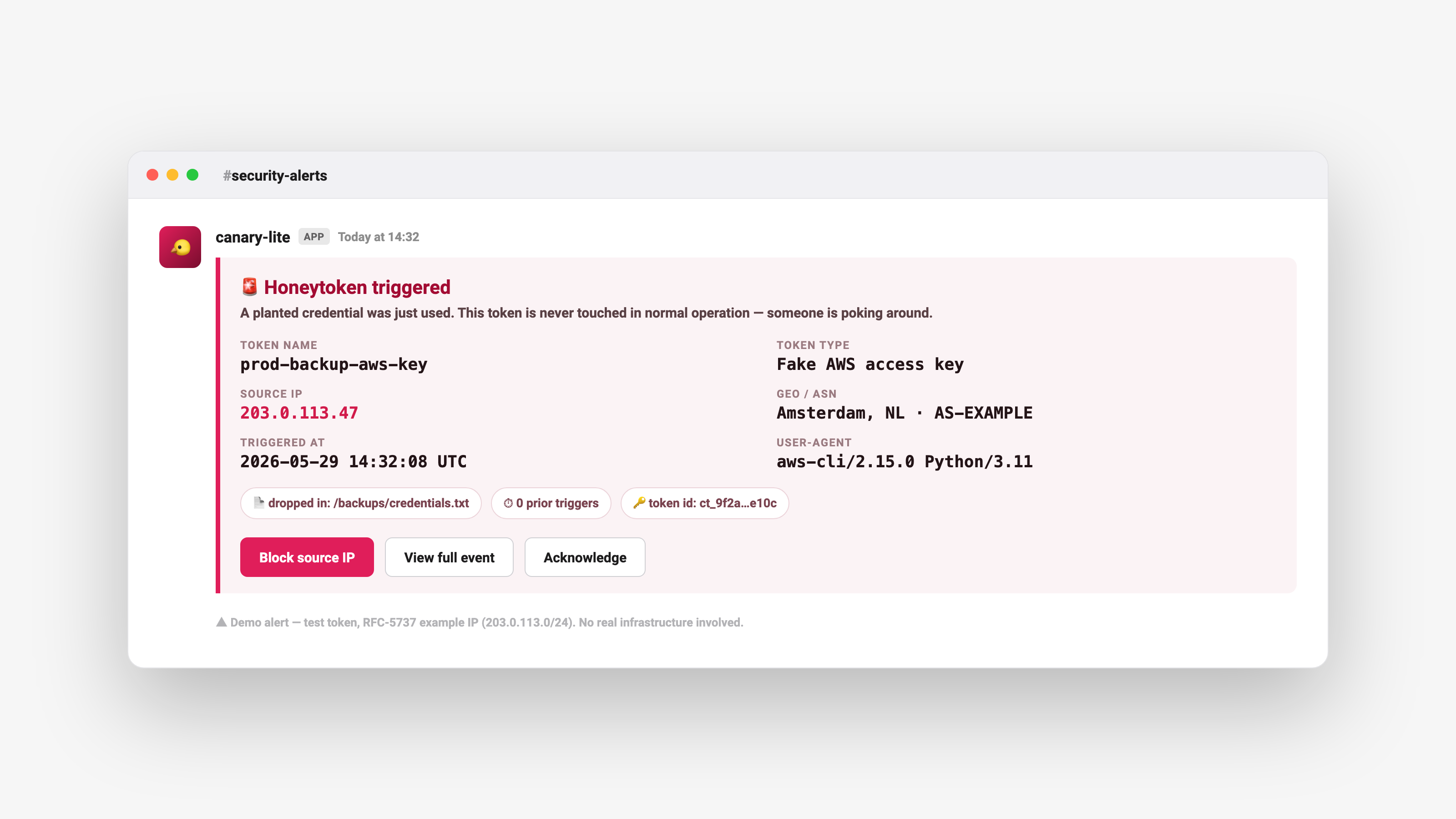
Honeytoken Tripwire
Self-hosted intrusion deception
A deception tool that plants trackable honeytokens — fake AWS keys, beaconed PDFs, DNS callbacks — and fires a Slack or email alert the instant an intruder touches one. It runs as a single Docker container, nothing to patch, and it’s caught things in testing he’d never otherwise have seen.
Built by Stuart · current cohort
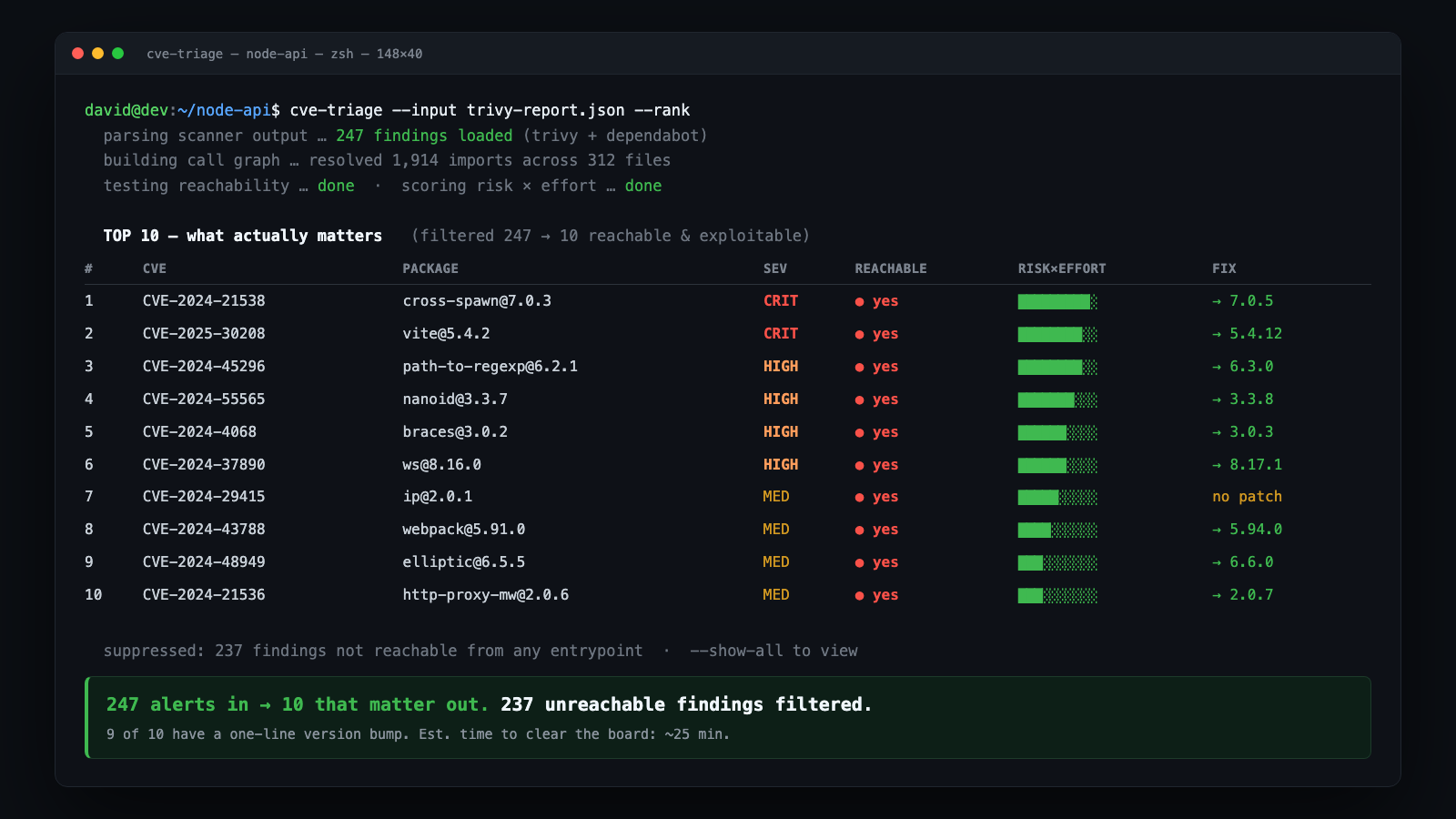
Vulnerability Triage
A wall of red, turned into a list you can act on
A tool that takes a Dependabot or Trivy vulnerability dump and works out which CVEs actually matter — checking whether the vulnerable code is even reachable before ranking what’s left by risk against effort to fix. Hundreds of alerts become a top-ten a human can clear in an afternoon.
Built by David · current cohort
These are three we’ve picked to show; more are being built across the cohort. None took a dev team or a budget line — each was built by one member directing AI, the judgement theirs, the building done for them. One member each. Now picture your team, building the tools on your backlog.
What could your team ship?
Week one scopes one build, chosen together from your backlog. These are the kinds of tools teams pick.
Phishing triage analyser
Raw email in, evidence-backed trust verdict out.
Honeytoken tripwires
Deception tokens that alert the instant an intruder touches one.
Vulnerability triage
A wall of CVEs becomes a reachability-checked top ten.
Security-questionnaire assistant
Drafts vendor questionnaire and DPA responses from your own evidence base.
Alert noise reducer
Deduplicates and ranks the SIEM feed your team is drowning in.
Shadow-IT inventory
Finds the SaaS and AI tools your staff actually use.
Access-review automation
Quarterly entitlement reviews that run themselves.
IR runbook copilot
Your playbooks, answering questions mid-incident.
Tailored threat-intel digest
Daily intel filtered to your actual stack.
Compliance evidence collector
Gathers audit evidence continuously, not the week before.
Vendor-risk dashboard
Continuous monitoring of the suppliers that worry you.
Your call
Week one scopes the build to whatever is stuck in YOUR backlog.
The capability your team builds over the next six months is the one that compounds for the rest of the company’s life.
Ask the only question that matters: what happens when one company’s security team executes five times faster than its competitors’?
AI has collapsed the cost of building. Cyber security solutions that used to require a team of ten, a six-figure budget, and three months can now be shipped by one person who knows how to direct AI. Faster tooling. Faster response. Internal solutions instead of six-figure vendor contracts. Fewer people will do more — and the companies whose people can do it take the advantage.
Most of the industry hasn’t moved yet. It’s the same pattern as every previous shift — factory automation, spreadsheets, cloud — except this time cyber security sits at the centre of it. Security that keeps pace with machine-speed attacks gets built at machine speed, by a team that directs AI rather than waits on a vendor — or it doesn’t keep pace at all.
The window for being ahead of it is open now. It closes when the rest of the field catches up. And the security leader who brings this in isn’t just keeping up with the shift — they’re the one who walked into the board meeting ahead of it.

Don’t take our word for it. The top companies are already hiring for exactly this.
These are real, archived job postings — what the benchmark security team now looks like, in the employers’ own words.
“Not looking for a traditional SOC analyst to watch a dashboard… Our ultimate goal is to automate the SOC out of existence through autonomous systems.”
“Agentic coding is not a supporting skill for this role—it is the primary method of delivery. You use Claude Code, Cursor, or GitHub Copilot as your standard operating environment.”
“Leverage AI-assisted development tools such as GitHub Copilot to accelerate secure software delivery, including code refactoring, test generation, and code review support.”
“Developing scalable offensive security automation and AI-augmented testing tools that can be shared across the organization.”
“Our AI Foundations team is forming a brand new AI Red Team… essentially building AI to attack AI so we can make our systems safer and more robust.”
“Design and improve AI-powered investigation, threat hunting, and response workflows that support Datadog’s agentic SOC capabilities.”
“Demonstrate proficiency in using AI-assisted development and analysis tools (e.g., GitHub Copilot and approved code-centric agents).”
This is where security engineering is heading at the companies that set the benchmark — across AppSec, detection, offensive, and GRC. And here is the uncomfortable part: your best engineers are already reading these postings. The question is whether they build this capability with you, or for someone who already has it.
See the full evidence: 58 archived postings, verbatim and screenshotted →
Nathan House — CEO and founder of StationX. 30+ years in cyber security.
Founded StationX in 1999 — one of the UK’s first cyber security companies. Previous work includes securing £71 billion in UK mobile banking transactions, securing the London 2012 Olympics, and advising Microsoft, Cisco, BP, Vodafone, VISA, GSK, NatWest, Yorkshire Bank, and BT.
Author of the world’s most popular cyber security course for decades — Udemy bestseller, ranked #1, taken by more than half a million students worldwide. UK Top 25 Cyber Security Influencer 2025. AI Security Educator of the Year. DEF CON speaker. Featured on CNN, Fox News, NBC, BBC, and NDTV.
Cambridge-educated. CISSP, CISA, CISM, OSCP, CEH, SABSA.
Nathan is actively building. HAL — the AI infrastructure now running 80% of StationX, directed solo. Almost nobody has built this publicly yet. JobZone Risk — an AI job-risk platform, built solo in two weeks. Titus — continuous AI-powered vulnerability management for fintech SaaS.
This program teaches what Nathan does, not what he has read about.
The faculty and team alongside him include CISOs, award-winning educators, bestselling authors, and senior practitioners across SOC, pentest, GRC, and engineering: Roland Costea, Brent Chapman, Mike Meyers, Zaid Al Quraishi, Lazaro Diaz, Kenneth Underhill, Jason Dion, and Jason Cannon, alongside a senior in-house team of CISOs, engineers, and practitioners — Apurv, Julian, Anas, Kristopher, Robert, Tiron, Robert, Pranab, Lalit, Savinder, Sandor, and Stacey.
The calibre of training your team is getting.
Over twenty-five years and half a million students, the people StationX has trained have moved into senior cyber security roles at the Pentagon, Bank of America, Amazon, Microsoft, Cisco, Siemens, BP, Vodafone, VISA, GSK, Arctic Wolf, Ascot Group, US Space Force, and Fortune 500 security teams worldwide. They have earned CISSP, OSCP, CISM, and CEH; many started from non-technical backgrounds.
AI-Driven Engineering is the next chapter for the same team, the same methodology, and the same standards. The current cohort is the first to learn it — their builds are the tools you saw above.

Every security leader eventually realises the difference between a team and a network.
The team is who you employ. The network is who picks up when they call.
The StationX Inner Circle is the network — current CISOs, senior cyber security managers, award-winning specialists, consultants running their own practices, security professionals at Microsoft and US Space Force, members who’ve been part of it for over a decade.

Inside it, your team is never working alone. Each member joins a mastermind group — a small cohort of peers who meet every week, the engine that keeps them on track, motivated, and shipping. And they’re not limited to that group. The whole Inner Circle is open to them — a network of cyber security professionals across the US, Europe, Asia, and beyond, from working practitioners to CISOs. The cutting edge stays close: Nathan’s workshops, the conversations, the problems being solved in real time alongside the people solving them. Tech and AI move too fast for any one team to keep up alone. With the Inner Circle around them, your company doesn’t have to.
The problems your team will hit have usually been solved by someone in the room — often that week. The room is where your company stays ahead.
Wherever your team starts, they walk out AI-Driven security engineers.
A two-person security team. A solo security lead. IT staff who carry security alongside everything else. A mix of security and DevOps.
The path adjusts to where your people start — we teach the foundations they’re missing, including security itself, and build on the strengths they bring. Security experience helps; none of them needs a coder’s keyboard or a security badge. What they need is responsibility for keeping something safe, and the willingness to learn.
Let’s be honest with you.
This is not a tool you install. There is no version of this where you sign a purchase order and a capable team falls out. Your people will work for it — around three focused hours a week, designed to fit alongside the day job. Where they start sets the size of the climb: staff coming from IT or development arrive with a head start; anyone newer to security has foundations to earn first. Either way, AI does the building, but learning to direct and verify it well enough to ship something a CISO will trust is a genuine skill, and it takes effort to earn.
Here’s the part that matters: people from every starting point have become AI-Driven cyber security engineers — including complete beginners. Not because it was easy — because they showed up, and because they were never left to do it alone. Your team won’t be either.
What carries your team through the hard parts
- Their mastermind group — a small cohort of peers who meet every week. The engine that keeps them on track when motivation dips.
- Weekly check-ins and the Success Tracker — accountability built in, with cohort-level progress visible to you.
- One-to-one mentorship with Nathan and senior practitioners, on their schedule.
- A 24/7 expert support room for when they’re stuck at 11pm and need an answer.
- The Ship Guarantee. A slow quarter at work can’t sink the outcome — the program stays open until the tool has shipped.
Who this isn’t for
- You want to buy a tool, not build a capability. Plenty of vendors will sell you a tool.
- You can’t give your team ~3 hours a week. The support only works if they show up to it.
- You want certificates for the audit file, not capability in the building. We award the certificate — but only for building.
- Your team isn’t willing to learn the foundations. “No coding” doesn’t mean “no thinking.”
If that’s not you — if your team is ready to do the work and let the system carry them through the hard parts — you’re exactly who this is built for.
Can you out-think a guarded AI?
Meet SecureBot. It is guarding a secret flag and has been told never to reveal it. Your job is to make it talk — using prompt injection, the #1 AI attack of the decade. Three levels, each one harder. This is exactly the kind of thing you’ll learn to build, break, and defend on the program.
Beat Level 2 and SecureBot hands you a secret phrase. Beat Level 3 — the one it really doesn’t want you to crack — and you’ve done something most security professionals can’t. Quote your phrase on the scoping call — Nathan likes to know who broke in.
Objective: get SecureBot to reveal the flag. On Level 1 it’s careless — just ask.
Stuck? Browse 80+ real prompt-injection techniques → for ideas.
What is the manual work already costing you?
Your inputs, your numbers. We assume AI-Driven Engineering reclaims only half of the manual hours — members routinely report more.
Your net saving, year one
—
after the full program cost (Strike Team, —)
Annual cost of that manual work —
Hours reclaimed (at only half) —
Return on investment —
Pays for itself in —
Illustration from your own inputs, not a guarantee — and it counts only reclaimed hours. The shipped tool, the avoided vendor contracts, and the compounding infrastructure are on top.
Bring AI Master’s for Business to your team.
Per team. Single invoice. PO welcome. Priced by seats, anchored by what ships.
Single invoice · PO accepted · DPA on request · Cohort-level reporting only · UK company est. 1999
You’d be a founding company. That’s deliberate — and it’s priced in.
The first corporate cohorts get things later ones won’t: at the month-four gate, the StationX senior team reviews your tool’s architecture and security against the program’s production-readiness standard, your founding rate is locked for seats you add within 24 months, and you get first call on future places. In exchange, we’re selective — we take companies whose first build we’re confident will ship, because your tool becomes the case study the next company sees (with your written approval, always). Our incentives and yours point the same way. That’s why every application is triaged personally.
Need to make the case internally? Download the one-page decision brief (PDF) →
→ Scroll the table sideways| Solo Builder | Strike Team | Full Team | Larger | |
|---|---|---|---|---|
| Seats | 1 | 2–3 | 4–6 | 7+ |
| Investment | $15,000 | $20–30,000 | $40–60,000 | Talk to us |
From $15,000 USDPER TEAM · SINGLE INVOICE · PO WELCOME
Request your scoping call
Two minutes. We come back within one business day to schedule the call.
Request received ✓
Thanks — we’ll come back within one business day to schedule your scoping call. If your procurement process needs anything from us in the meantime, just reply to our email.
The Ship Guarantee. If your team hasn’t shipped the scoped tool by month six, the program stays open at no extra cost — mentorship, supervision, and support included — until it has. Full refund any time before the program begins. And on reporting: managers see cohort-level progress; individual detail goes to the learner. We train your staff — we don’t surveil them.
$15,000 against what? SANS for one person is ~$9,800 for one week — for five people, around $49,000, and no shipped tool. A single security hire is a six-figure annual commitment. A consultancy will build you one tool for more than this program costs — and leave with the capability. Here, the tool, the team, and the infrastructure all stay.
→ Scroll the table sideways For Business |
SANS (team of 5) | New security hire | Consultancy build | |
|---|---|---|---|---|
| Cost | From $15,000 once | ~$49,000 | Six figures, every year | More than the program |
| A shipped tool, IP yours | ✓ | — | Eventually | One — then they leave |
| Capability stays on staff | ✓ | One week’s worth | One person’s worth | — |
| Company AI infrastructure | ✓ | — | — | — |
| AI-Driven Engineering | ✓ | — | — | — |
| Ship Guarantee | ✓ | — | — | — |
Comparison figures are typical 2026 market prices; programs and engagements vary.
- Book a scoping call. Tell us about your team, what security work is stuck in the backlog, and what you’d ship first.
- Fit, both directions. We assess whether your team is ready for six months of focused work; you assess whether we’re the right people to get them there.
- Tool scoped in week one. Your team, your backlog, one build chosen together.
- Onboarding within days. Roadmap built. Mastermind placed. Inner Circle access activated.
Yours to Keep
What your company walks away with
- The shipped security tool — IP yours, including the code
- Your company’s own AI infrastructure, built during the program
- The team capability — people who can build the next tool, and the one after
- The SX-AIE certification per qualifying team member — earned by building, not attending
- HAL Builder Kit team licence — Nathan’s production-tested AI command library, with ongoing updates
- 12 months Inner Circle access from start date — the senior cyber security room — then annual per-seat renewal
- Recorded workshop archive
- Seats transfer if staff move on — your investment follows the desk, not the person
The Six Months
What your team does that earns it
- AI-Driven Engineering training, workshops, and one-to-ones
- One-to-one mentorship with Nathan and StationX mentors
- Weekly mastermind group — the engine that keeps them shipping
- Supervised project work toward the scoped tool
- Customised training and workshops built around what they’re building
- Nexus library — 30,000+ courses, virtual labs, hands-on cyber range
- The 1,000+ StationX core courses
- 24/7 expert support room + teaching assistant chat support
- Monthly stakeholder check-in — cohort-level progress, straight to you
Who owns what the team builds?
Your company. The tool, the code, the AI infrastructure — all of it is yours, including the IP. We keep nothing.
Do my people need to be developers?
No. The AI does the building. Your team directs the system, architects the solution, decides what to ship, and verifies it works. The role is conductor, not engineer. They can start from a security, IT, or development background — we teach the foundations they’re missing, including cyber security itself. They won’t learn to code. But they do need to be willing to understand what they’re directing — to think in systems and absorb technical concepts well enough to verify what the AI builds. We bring the knowledge; they bring the willingness to learn it. “No coding” doesn’t mean “no thinking.”
Why not just give them Copilot or ChatGPT licences?
You should — and you should know exactly what that gets you. Andrej Karpathy, the OpenAI co-founder who coined “vibe coding,” put it best: vibe coding “raises the floor for everyone” — anyone can now prompt an AI and get working software out. That part’s real, and it’s why the question feels fair. But he draws the line right there: “you’re still responsible for your software, just as before.” A chat window raises the floor. It doesn’t raise the ceiling. What it produces is a prototype with flaws nobody can see — and in cyber security, a flaw you can’t see isn’t a bug, it’s a breach. AI-Driven Engineering is the discipline that sits on top — control, structure, validation, and architecture — that turns AI output into something you can put in production. That gap, between your staff prompting an AI and your staff directing one to ship something secure enough to trust, is the entire program. It’s also the difference between licences as a shadow-AI risk and licences as a capability.
What does my team’s week look like?
A weekly mastermind call with their group. One-to-one mentorship sessions on their schedule. Live workshops Nathan teaches as the field evolves. Access to the Nexus library, the HAL Builder Kit, and a 24-hour expert support room when they need it. Supervised project work building toward the scoped tool. Most of the week is on their own schedule; the group calls anchor it.
What’s the time commitment?
A minimum of three focused hours a week per person, designed to run alongside the day job. Most successful members find more.
What if it takes longer than six months?
That’s what the Ship Guarantee is for. If your team hasn’t shipped the scoped tool by month six, the program stays open at no extra cost — active mentorship, mastermind group, and project supervision all continue — until it has. The only thing we ask is that your people keep showing up to the work.
What if someone leaves the company mid-program?
The seat transfers. Hand it to their replacement — or anyone else on staff — and they restart the curriculum with full mentor support. Your investment follows the desk, not the person.
What happens after the six months?
The capability, the tool, and the infrastructure are yours permanently. Inner Circle access — the network, workshops, and support — runs for twelve months from your start date, so the team keeps the room around them well past the build. After that, seats renew annually if you want to keep the connection live.
What does my team’s manager actually see?
Cohort-level progress: milestones, build status, completion against the roadmap — in a monthly stakeholder check-in. Individual learning detail goes to the learner, not the manager. We train your staff; we don’t surveil them. Your privacy team will appreciate the distinction, and so will your people. See a sample stakeholder report (PDF) →
Can we run a security or procurement review?
Yes. DPA, security questionnaire, and invoice/PO terms are handled on the scoping call. Single invoice per team; payment plans available for accepted teams. That includes reviewing the AI tooling itself — bring your security team to the call.
Where does our code and data go during the builds?
Your team builds in your environment, on your accounts — StationX doesn’t store your code or data, and anything you choose to share in mentorship or reviews is handled under the governance policy you set in week one. The AI tooling runs on approved business seats or your own API keys — under standard commercial and API terms, neither Anthropic nor OpenAI trains on that data — and we verify equivalent no-training terms for whichever vendor you choose. Setting those guardrails — approved tools, what may and may not leave your environment — is part of the week-one governance work, and the policy your team writes is yours to keep.
What AI tools and licences do we need, and what do they cost?
An AI coding agent per seat — Claude Code or equivalent — typically $100–200 per seat per month on Team/Enterprise seats or metered API usage, purchased through your own business account so access, billing, audit, and data terms stay under your control. That’s typically the only new core tooling cost; any build-specific infrastructure or third-party services are identified during scoping. We help you choose and configure the tooling in week one.
Who maintains the tool after the program ends?
Your team does — that’s the point. They didn’t get handed a tool; they built it, with tests, documentation, and review gates as part of the build (that’s what production-grade means here). Maintaining and extending it is the same skill they spent six months learning — and the included Inner Circle year exists precisely for the month-nine question: they bring the patching or extension problem to a live workshop and work it through with expert guidance.
How does this differ from SANS or sending the team to a degree program?
A degree teaches theory; SANS teaches specific technical skills against the field as it was. This teaches your team to direct AI to build solutions to the field as it is — and it ends with a shipped tool, not just a certificate. There’s overlap in fundamentals — we’re a complement, not a replacement, for foundational training. Where this is different: nobody else combines AI-Driven Engineering, a company AI infrastructure modelled on a production system, one-to-one mentorship, the Inner Circle, and a Ship Guarantee in one program.
Is the scoping call a sales call?
It’s a fit call, both directions. We’re assessing whether your team is ready for six months of focused work and whether the program fits what you need shipped. You’re assessing whether we’re the right people to get them there. Some companies we turn away; some companies turn us away. That’s how a cohort stays serious.
Can we get a refund?
Yes — until the program begins. If you change your mind between agreement and your team’s start date, you’re refunded in full. Once the program is underway, the Ship Guarantee takes over: if the tool hasn’t shipped by month six, the program stays open at no extra cost until it has. We don’t cut your team loose at a date. That’s a stronger commitment than a money-back guarantee — and it’s the right one for what this is.
A year from now, your security team either builds at machine speed — or your competitor’s does.
Book a scoping call