AI-Driven Engineering: $100 Million Dollar Products in Weeks
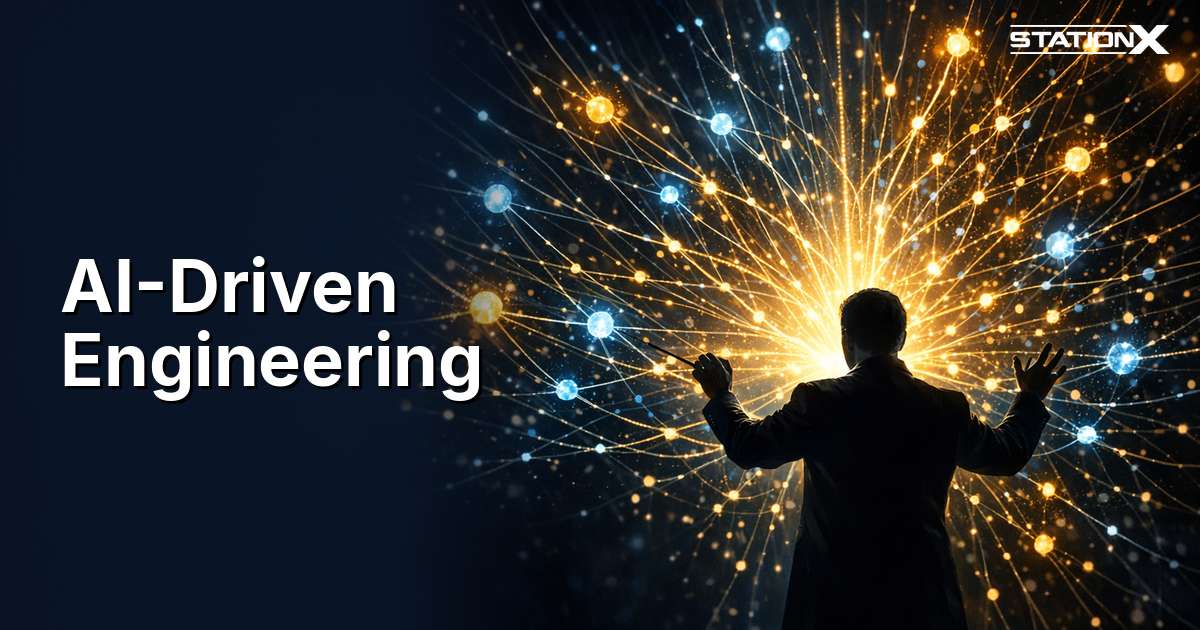
Vibe Coding Was the First Five Minutes
Vibe coding is dead. It just hasn't stopped twitching yet.
Andrej Karpathy coined the term in 2025 to describe writing code with AI without looking at what it produced. Collins Dictionary made it word of the year. Millions of people started vibe coding their way through weekend projects, MVPs, and side hustles. And everyone seemed to agree: this was the future of building software.
It wasn't. It was the first five minutes.
Vibe coding is to AI-driven engineering what learning to hold a hammer is to building a house. Useful? Sure. But nobody ever built anything that mattered by swinging a hammer and hoping the architecture sorted itself out.
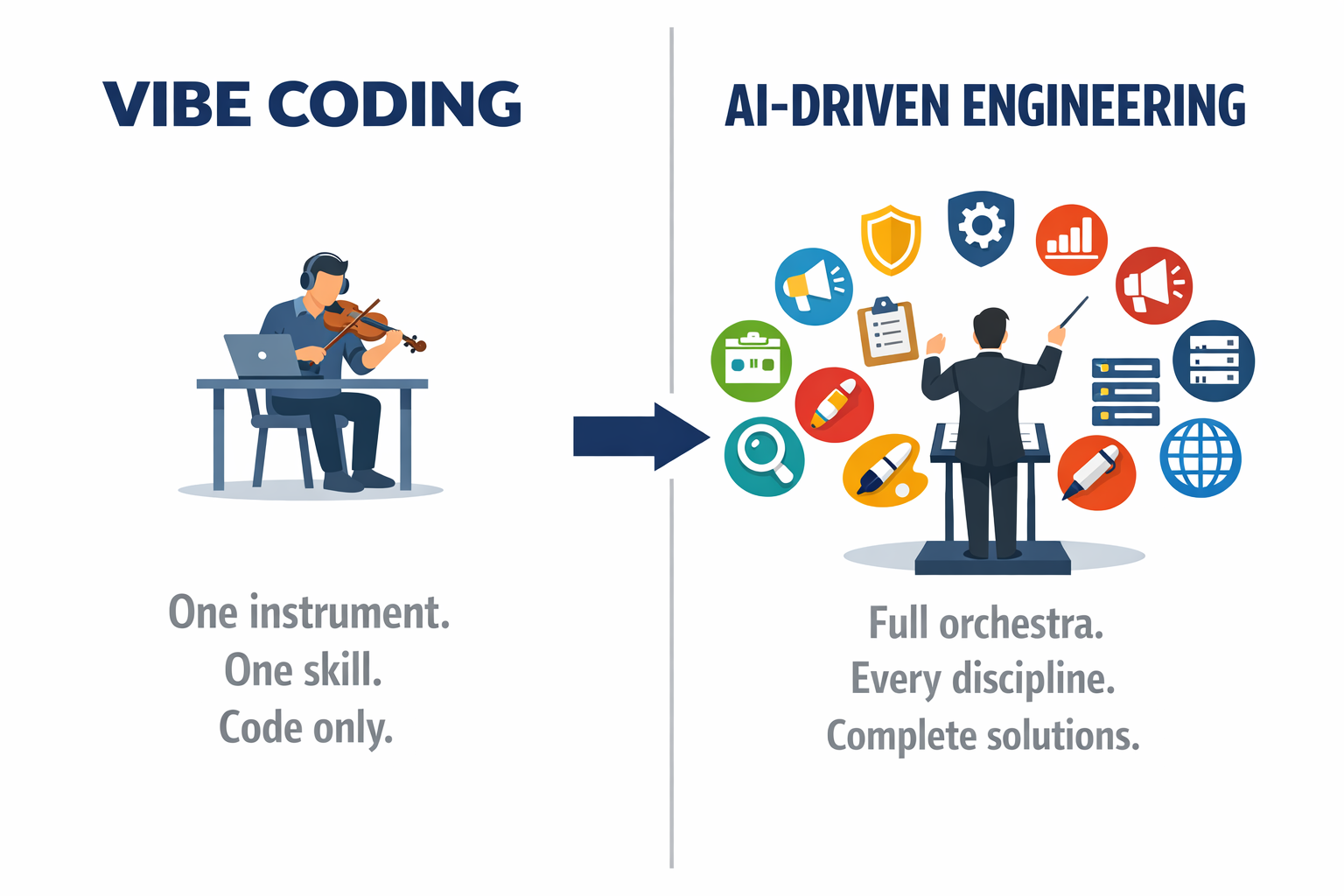
Here's what actually happens when you build a real product. You need an architect to design the system. A security architect to threat model it. A project manager to keep it on track. Developers to build it. Pen testers to break it. A data engineer to pipe information through it. Someone to write the content. Someone to handle the SEO. Someone to deploy it, monitor it, back it up, and stop it getting hacked on a Tuesday afternoon. Marketing, sales, outreach — all of it.
That's not a job for a vibe coder. That's an orchestra. And orchestras need conductors, not just people who can play one instrument really fast.
Code was never the hard part. The hard part was always conceiving the solution, coordinating the disciplines, and shipping something complete.
What AI-Driven Engineering Actually Is
AI-driven engineering is the conductor role. One person, directing AI across every discipline needed to deliver a complete solution — architecture, security, project management, testing, marketing, sales, deployment, everything. Not just code. Not even mostly code.
Code turns out to be a remarkably small part of shipping something that works.
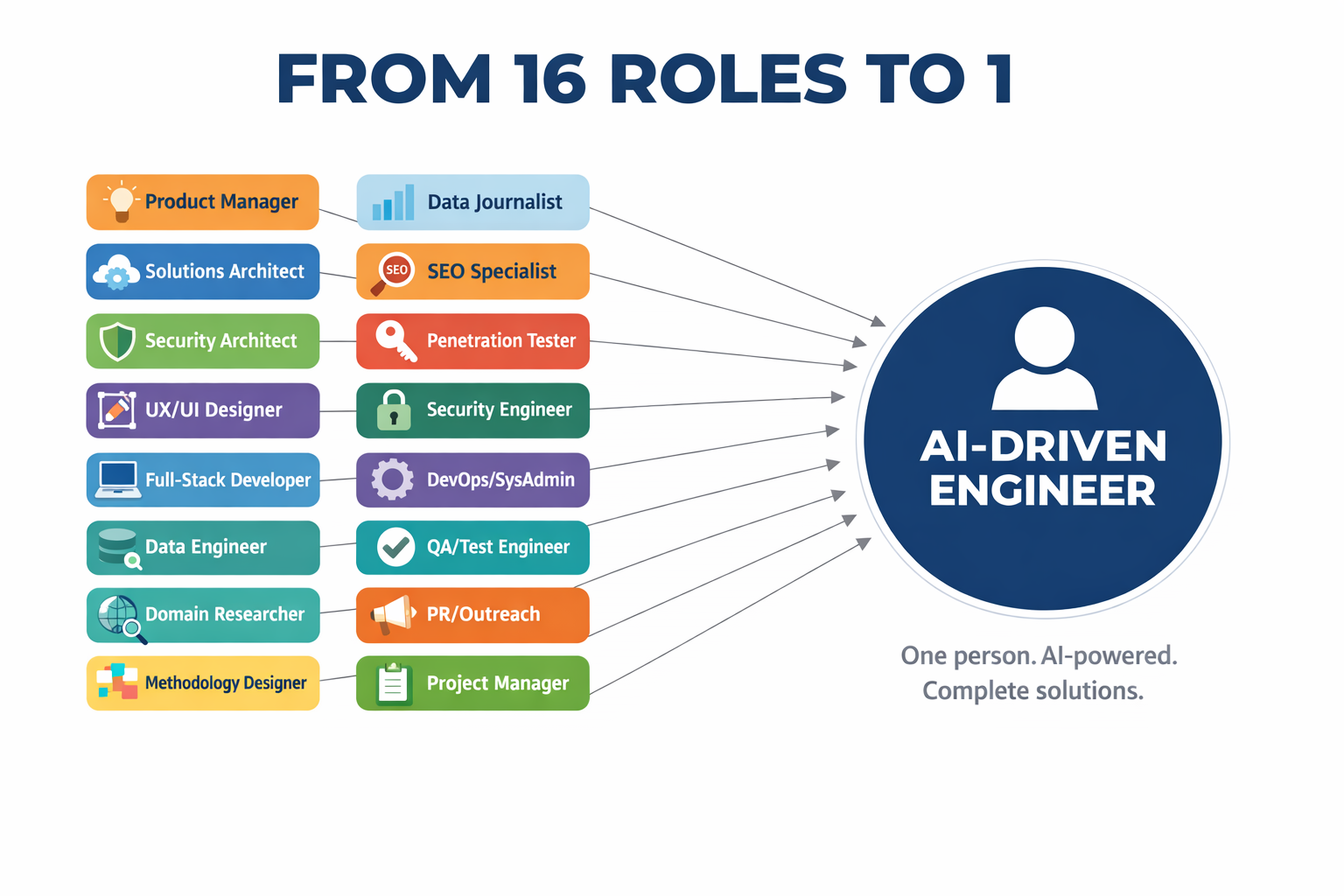
The 16 roles one person now directs:
| Build | Secure | Ship |
|---|---|---|
| Solutions architect | Security architect | DevOps and deployment |
| Developer | Penetration tester | QA engineer |
| Data engineer | Security engineer | Monitoring |
| UX designer | — | Backup & DR |
| Methodology designer | — | Incident response |
| Content / copy | — | — |
| Research | — | — |
| SEO | — | — |
Plus the commercial layer: product management, marketing, sales, PR, outreach.
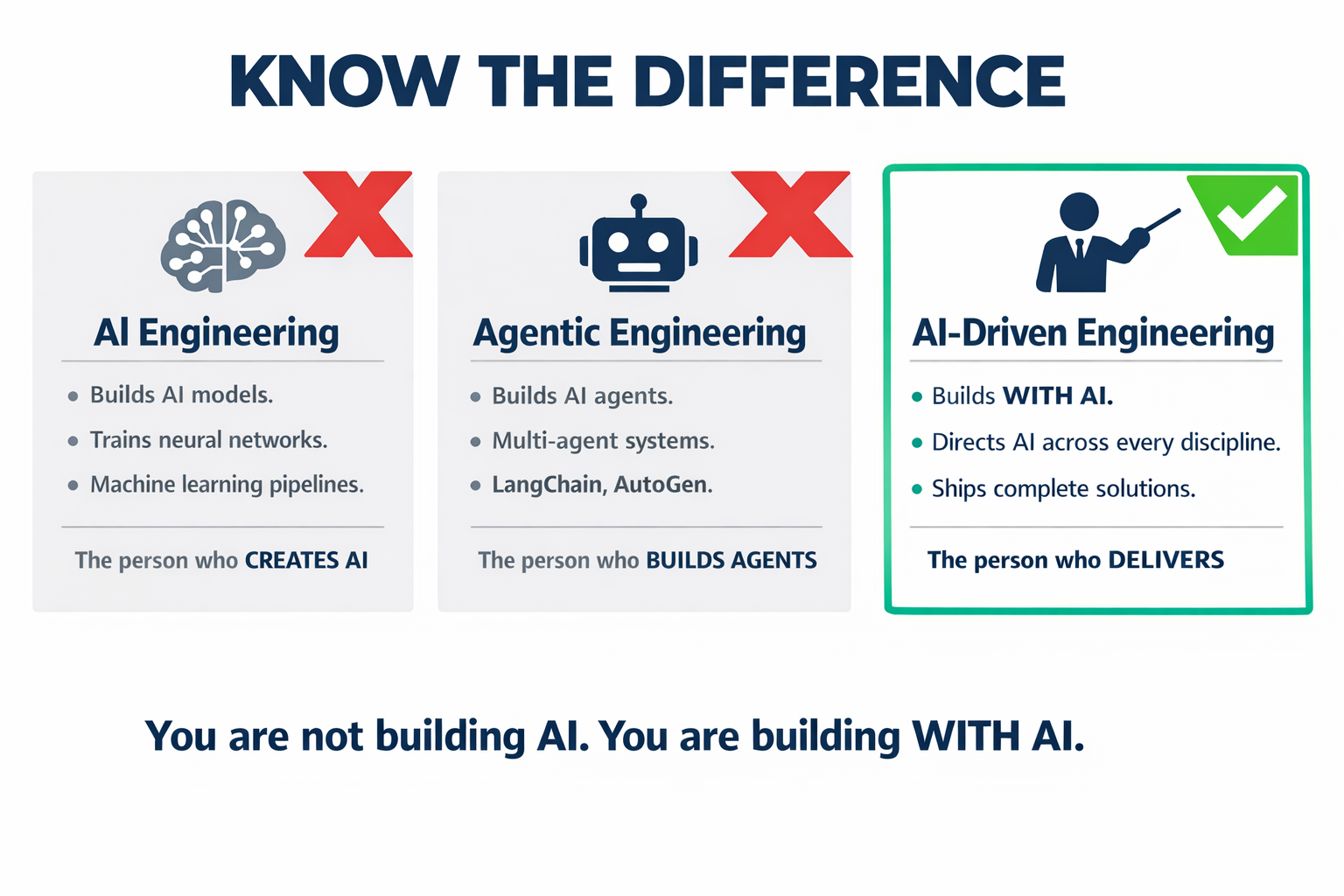
"AI-driven" means you're not building AI. You're building with AI. Across every discipline.
The Infrastructure That Makes It Work
Here's the part nobody talks about. I didn't just open an AI tool and start prompting. That would be vibe coding with extra steps.
What made any of this possible was something I'd already spent months building: a persistent AI infrastructure. A system with memory, context, commands, workflows, and tools that compound over time. Every problem I solve becomes a reusable command. Every architectural decision becomes context for future decisions. Every workflow becomes an automation.
The system doesn't start from zero. It starts from everything it's already learned.
This is context engineering — and it's the real skill underneath AI-driven engineering. Not prompting. Not knowing which buttons to press. Building a system that makes your AI progressively more capable with every project you deliver.
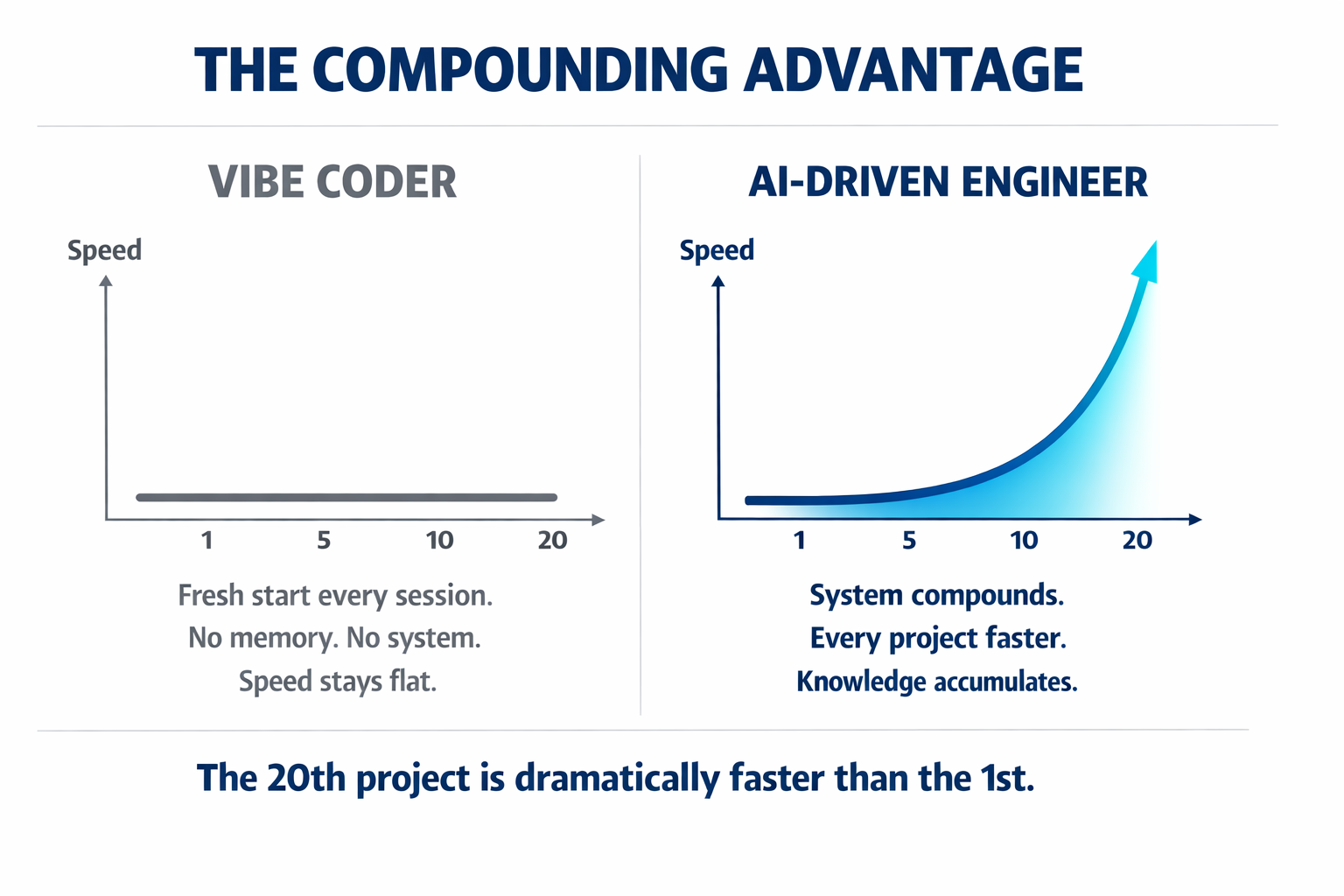
Think of it this way. A vibe coder opens a fresh chat window every time they sit down. They describe what they want, get some code, close the window, and start again tomorrow. Their AI has no memory, no accumulated knowledge, no understanding of their standards, their architecture, their security requirements.
Every session is day one.
An AI-driven engineer builds a system where the AI already knows the architecture, the security principles, the design patterns, the deployment process, the testing standards, the content voice, the SEO strategy. When they start a new project, they're not starting from scratch. They're starting from a foundation that gets stronger with every solution they ship.
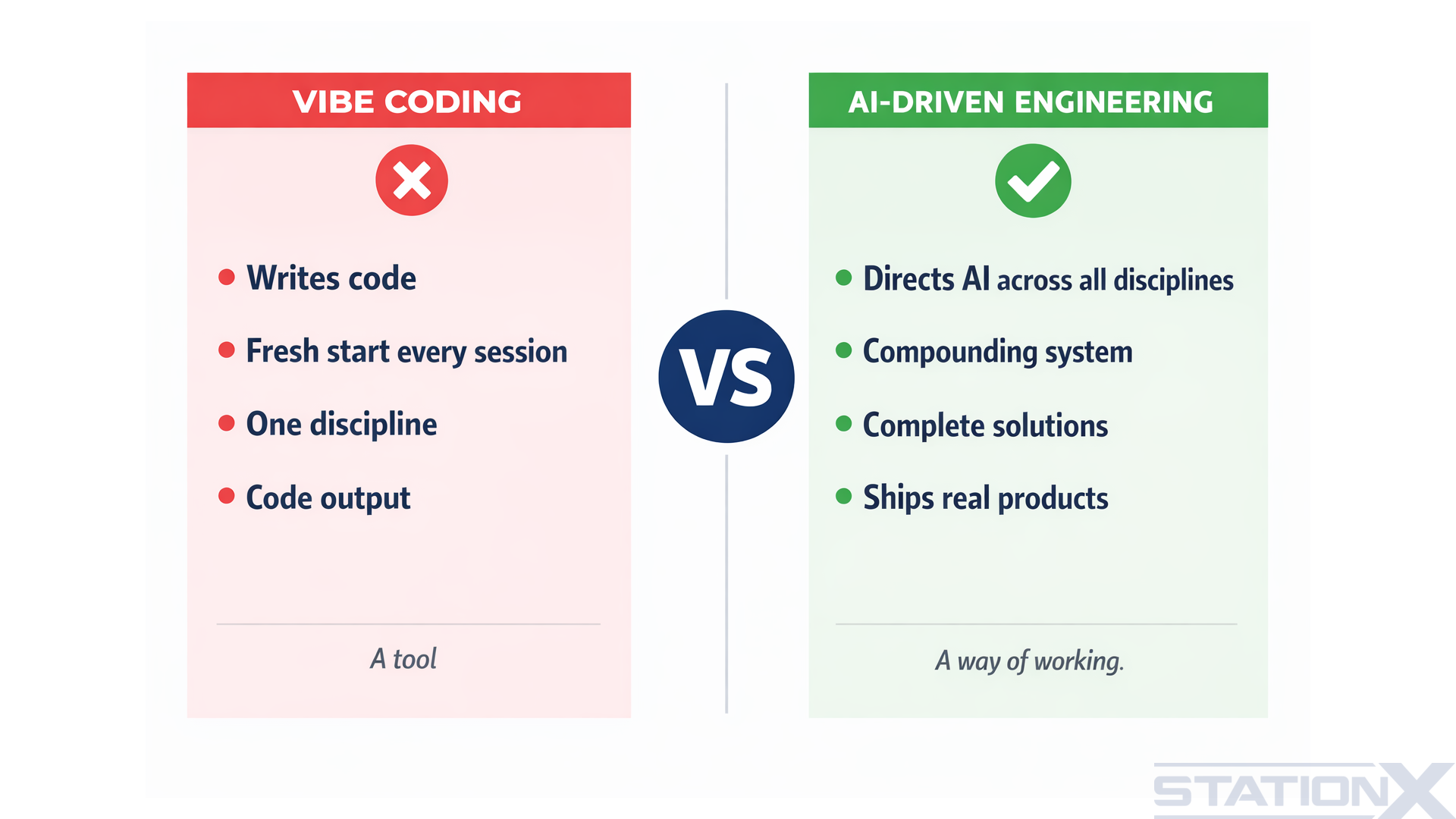
The twentieth project is dramatically faster than the first — not because they got better at prompting, but because their system got better at everything.
This is the compounding advantage that separates AI-driven engineering from vibe coding. The vibe coder's speed stays flat. The AI-driven engineer's speed accelerates. And the gap widens with every project.
Proof: Three Products. One Person. One System.
This is the part that usually gets dismissed as hype until you see it. So let me show you three live production platforms — completely different domains, completely different audiences — all built and run by one person using the same underlying AI-driven engineering system.
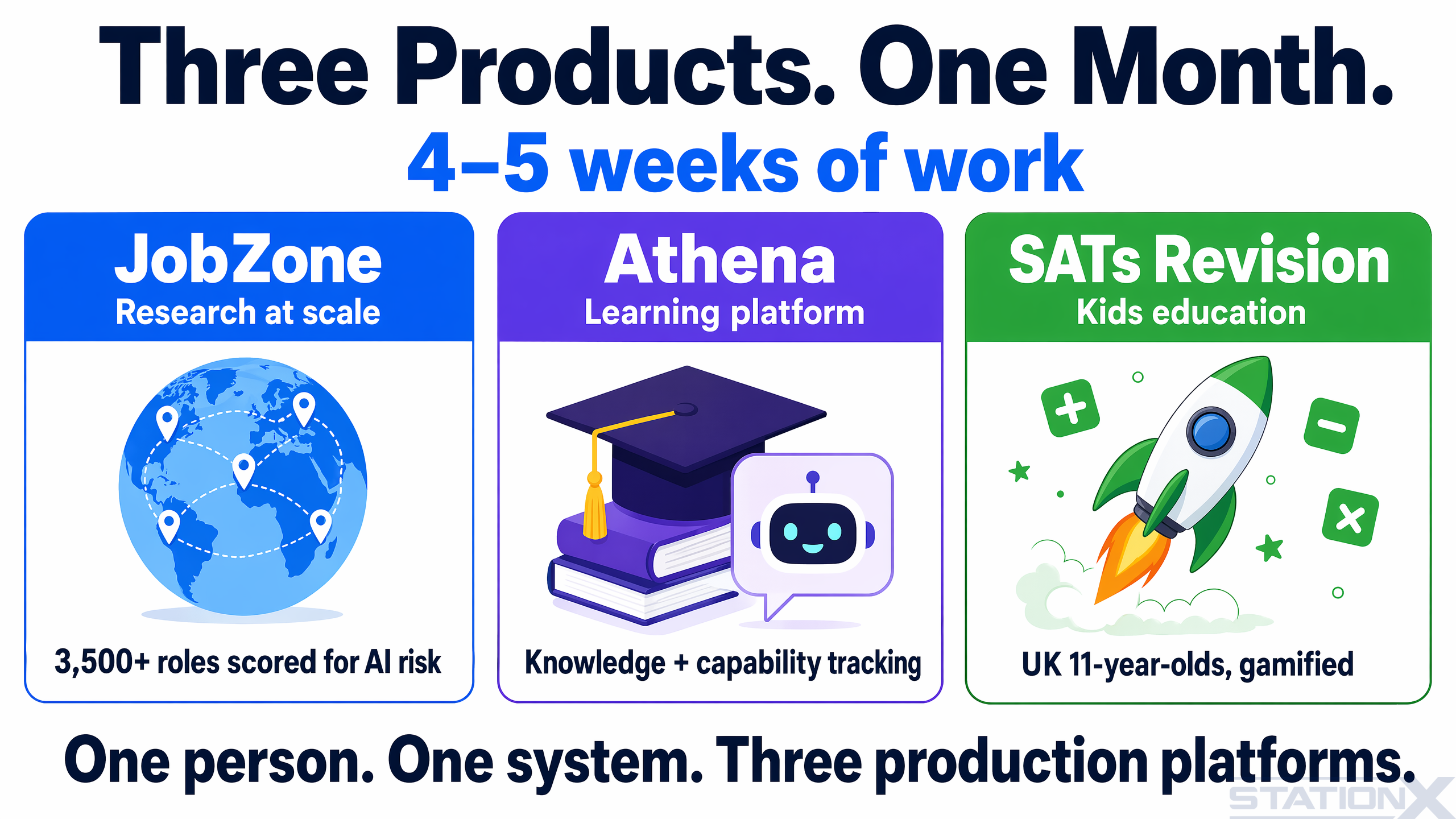

Example 1 — JobZone
Live at jobzonerisk.com — research at scale.
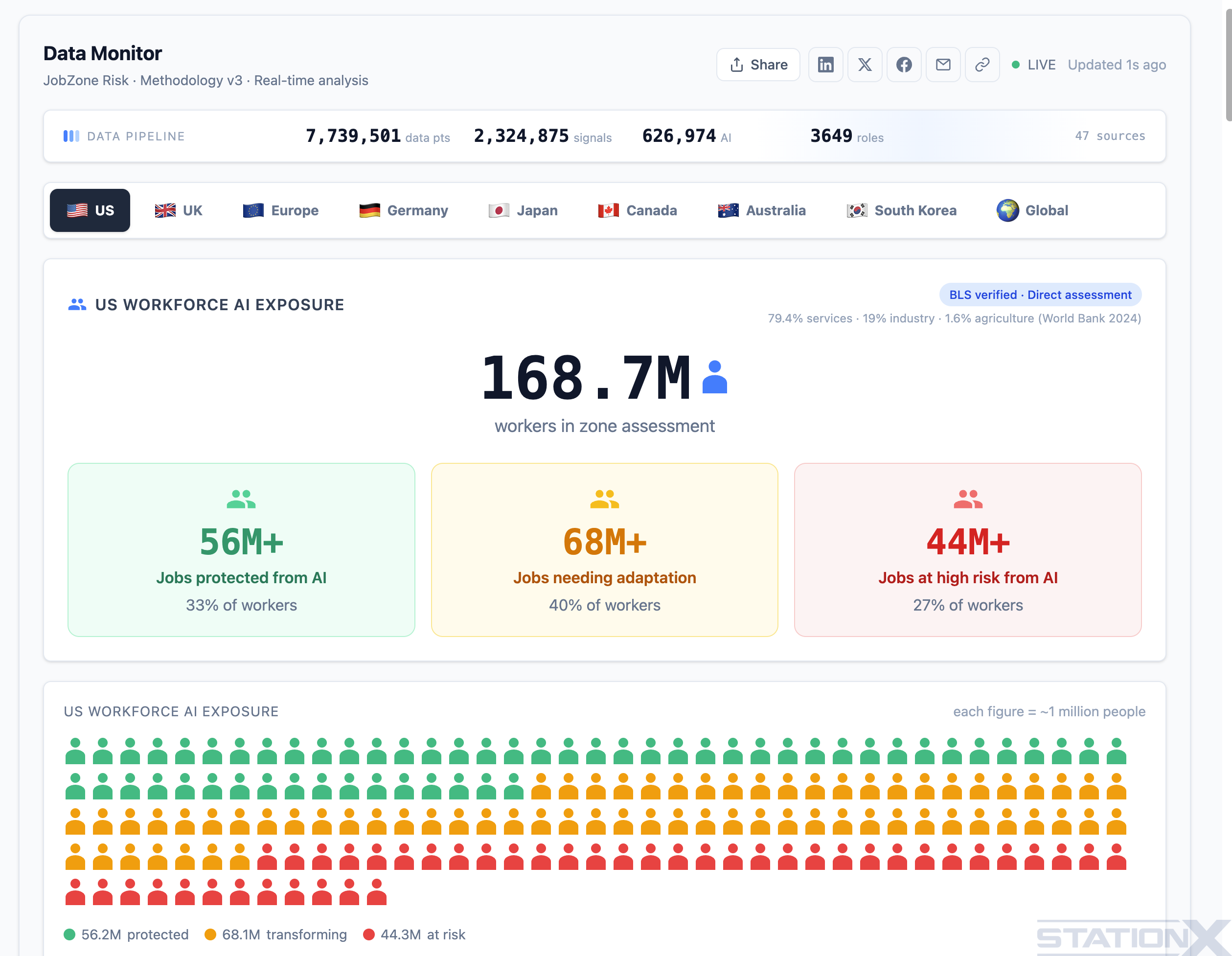
Every job in the economy scored for AI displacement risk. 3,500+ roles, every one individually assessed. Not a static report — a living system that pulls legislation, research, news, and policy changes from the internet and re-scores roles as the world changes.
- Task-level breakdown — not just "is this job at risk" but which specific tasks are being automated
- Tens of thousands of pages of individually researched content
- 9 countries with interactive choropleth maps and regional employment data
- Personal assessment tool — paste LinkedIn data, get your own risk score and email report
- AIJRI scoring methodology — an 8-step framework I designed, peer-reviewable
- Full production security stack — CSP with nonces, CSRF, rate limiting, CrowdSec intrusion prevention, 4 rounds of OWASP WSTG review, Semgrep + Dependabot + automated vuln scanning
- Senators and MPs have asked me to brief their offices on the data
Nothing else like this exists. There's no comparable dataset anywhere.

Example 2 — Athena
A completely different problem: how people learn.
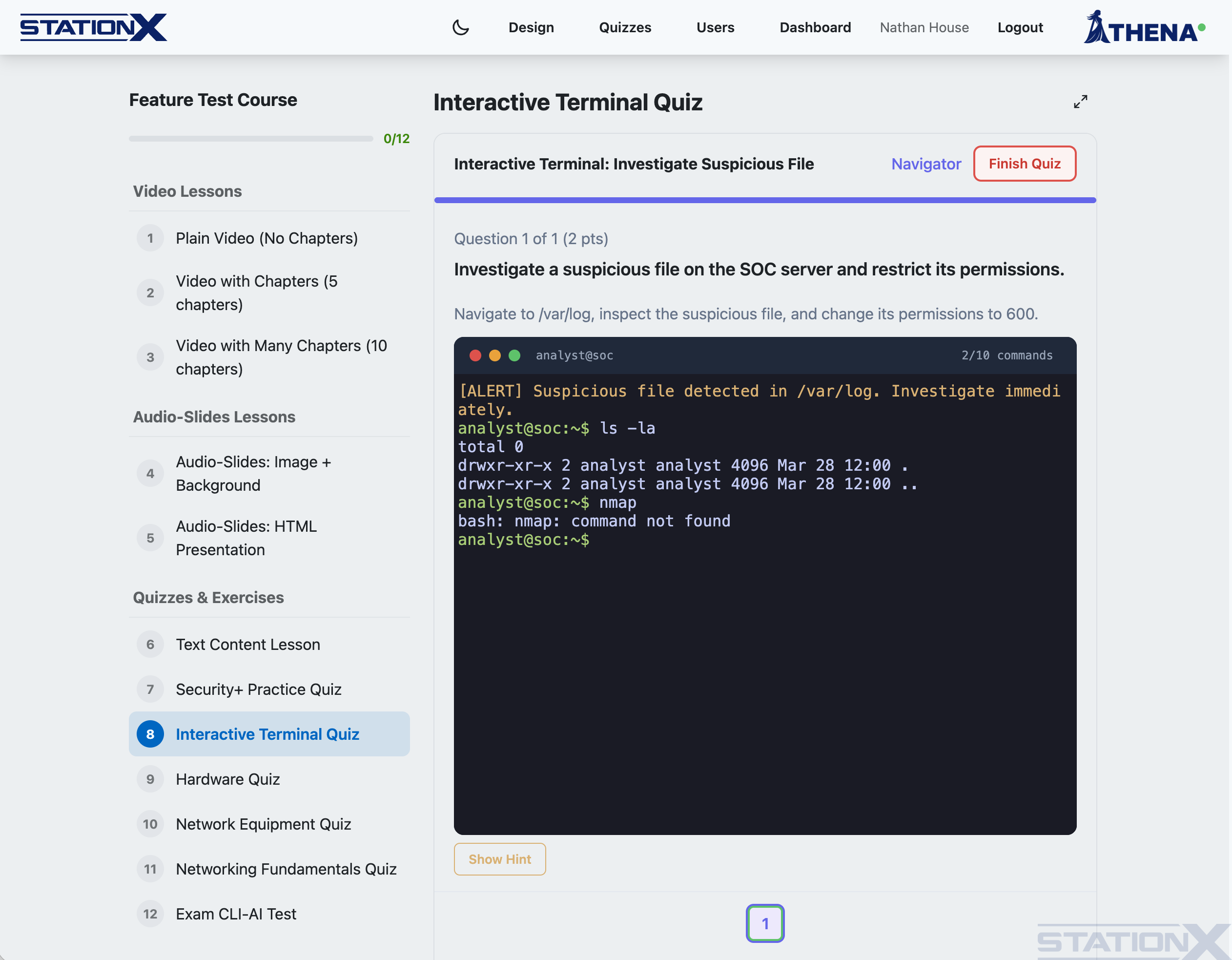
Most learning platforms teach you to pass a test. Athena teaches you to actually do the thing. It tracks knowledge and capability as two separate dimensions — so you know what you understand and what you can actually do, tested against both.
- Custom LMS replacing generic platforms (Teachable/Thinkific territory)
- Video, audio-slides, and a native quiz engine — MCQ, drag-drop, CLI simulation, hotspots
- Practice mode plus timed exam simulation, mastery tracking per objective
- Learning science baked in — spaced repetition, retrieval practice, interleaving
- "Ask Athena" AI Tutor — Claude Code via MCP with real-time browser sync. Nothing else does this.
- Streaming TTS at 0.4 second latency
- Two courses running: Cybersecurity Fundamentals and AI Security Vol 1

Example 3 — SATs & Sorcery
Live at satsrevision.com — a completely different audience: UK 11-year-olds preparing for their SATs maths exam.
This one matters because it proves the system is portable to any domain. Same engineer, same infrastructure, completely different product.
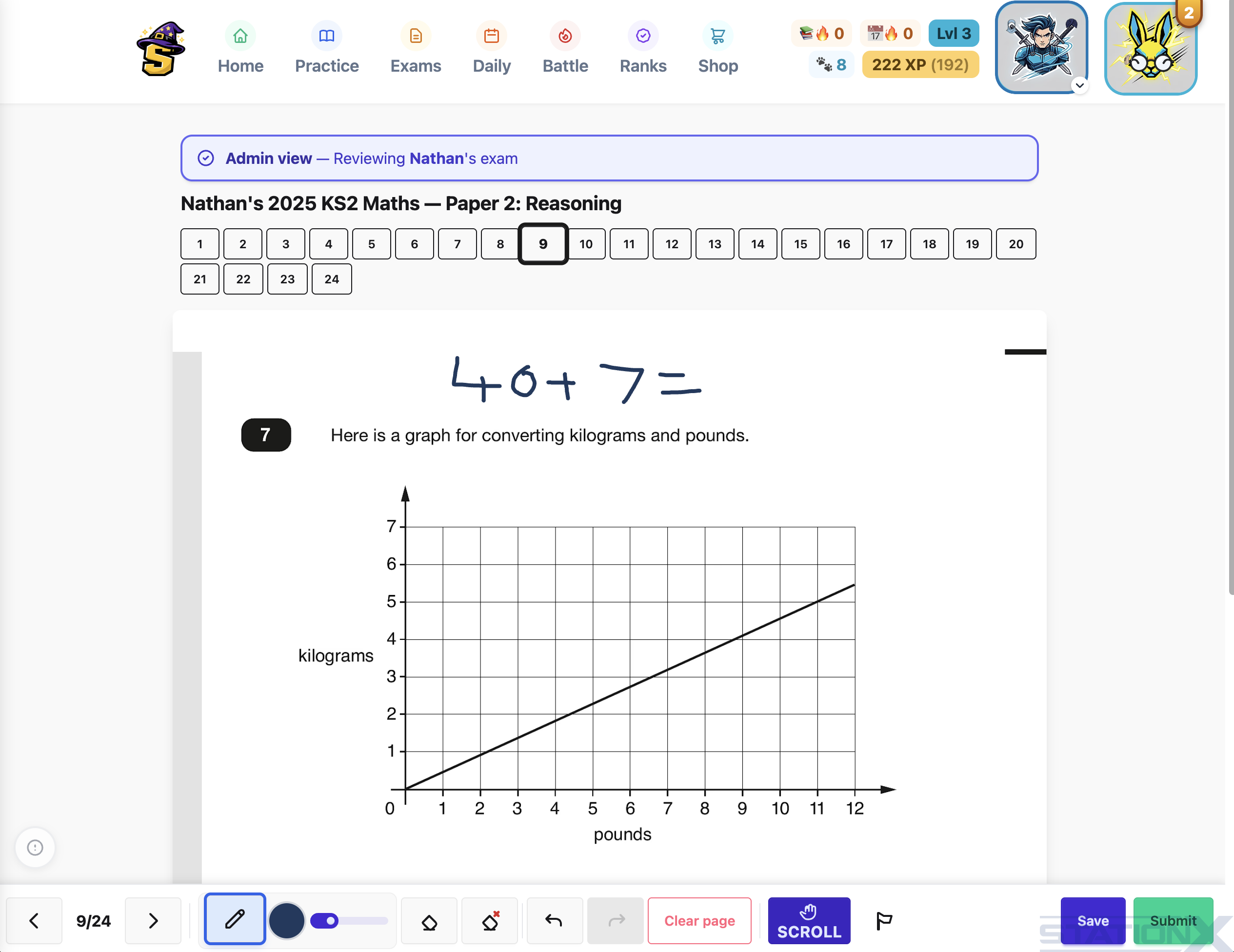
- 1,582 real exam questions, 8 years of past papers (2016–2025)
- 6 question types — multiple choice, short answer, calculation, matching, spelling, extended
- Practice mode plus timed exam simulation, mastery tracking vs curriculum objectives
- Full gamification — achievements, leagues, leaderboards, daily challenges, avatars, companions, in-app shop
- Multi-role system — students, parents, teachers, school admins, classes
- AI-driven Chrome QA that reviews every question automatically
What this actually means
Three live production platforms. Three completely different problems. All running right now.
Research and public policy. Professional learning with a custom AI tutor. Kids' education with gamification. Same person. Same underlying system.
And underneath all of it — 19 production servers. Monitored. Secured. Automated vulnerability scanning. Deployment pipelines. The whole infrastructure stack.
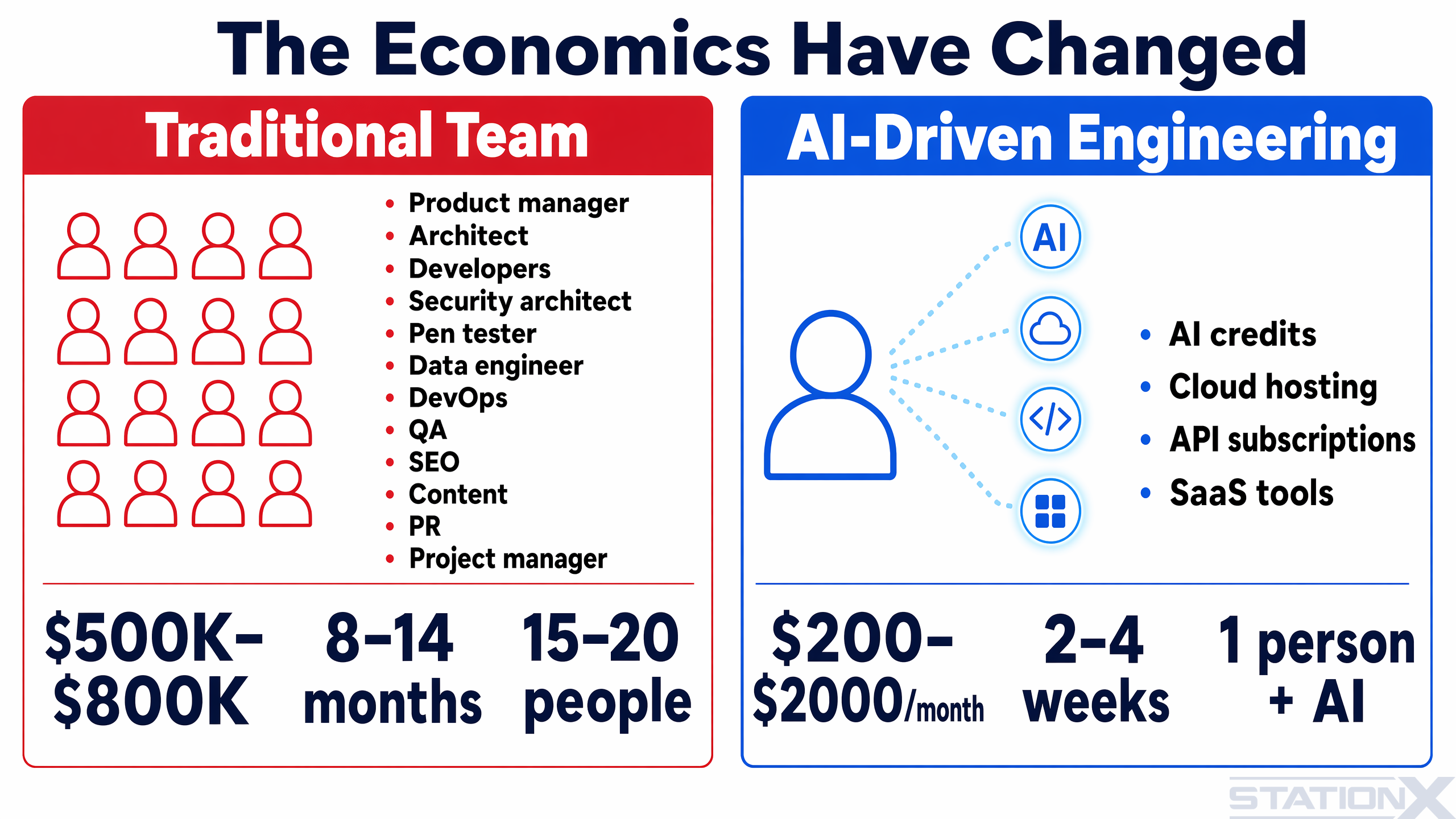
Built the traditional way, each one of those products would need: a product manager, solutions architect, security architect, UX designer, developers, data engineer, researchers, methodology designer, SEO specialist, penetration tester, security engineer, DevOps, QA engineer, PR, and a project manager. 15 to 20 people. 8 to 14 months. $500,000 to $800,000. Per product.
Three products. One person. One system.
That's not a project. That's an entire operation. And it sounds insane when you say it out loud — which is the point. The rules of what one person can do have actually changed.
That's AI-driven engineering. Not a better way to write code. A completely different way to deliver solutions.
Want to become an AI-driven engineer?
We're putting together a starter kit that gets you from zero to your first real AI-driven build — skipping the 18 months of trial-and-error it took to figure this out. We'll only build it if there's demand.
No spam. We'll only email you if we build it.
Why This Matters Now
Every automation wave in history followed the same pattern.
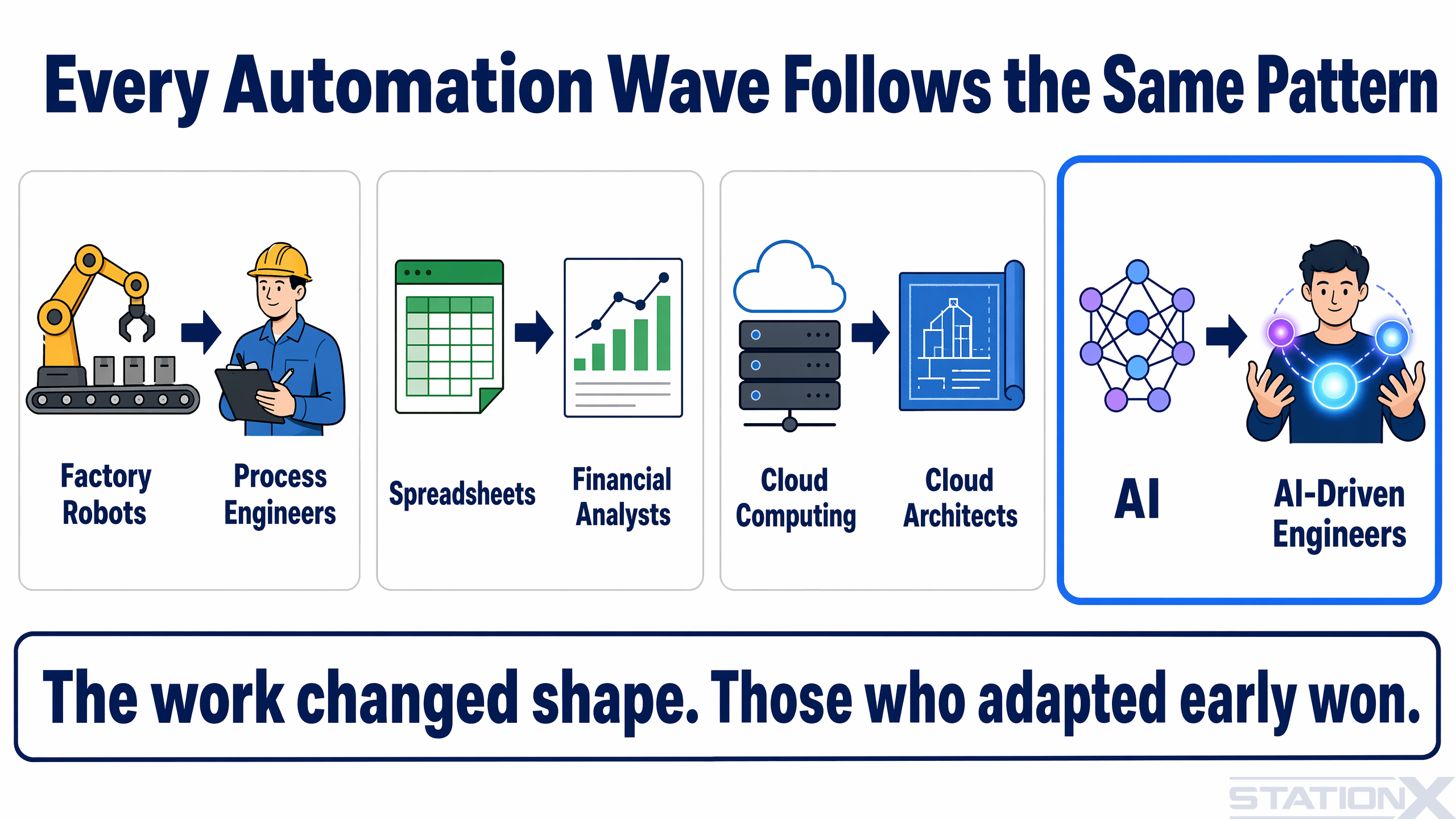
Factory robots didn't eliminate manufacturing. They turned assembly line workers into process engineers.
Spreadsheets didn't kill accountants. They turned number crunchers into financial analysts.
Cloud computing didn't end system administration. It turned rack-and-stack sysadmins into cloud architects.
The work didn't disappear. It changed shape. The people who adapted early won. The people who kept doing it the old way became expensive and irrelevant.
AI is doing the same thing right now. But the difference is it's hitting every knowledge role at the same time, not one at a time.
Factory workers. Then accountants. Then sysadmins. That was one industry at a time, spread over decades. AI is hitting every person who works in front of a computer, simultaneously. That has never happened before.
The threat moved faster than the defence
This isn't just an opportunity argument. It's also a necessity argument.
Last month Anthropic published research showing their frontier model found zero-day vulnerabilities in every major operating system and every major web browser — including a 27-year-old bug in OpenBSD and a 17-year-old bug in FreeBSD (full root access, no login required, from anywhere on the internet). Then it wrote the exploits, autonomously.
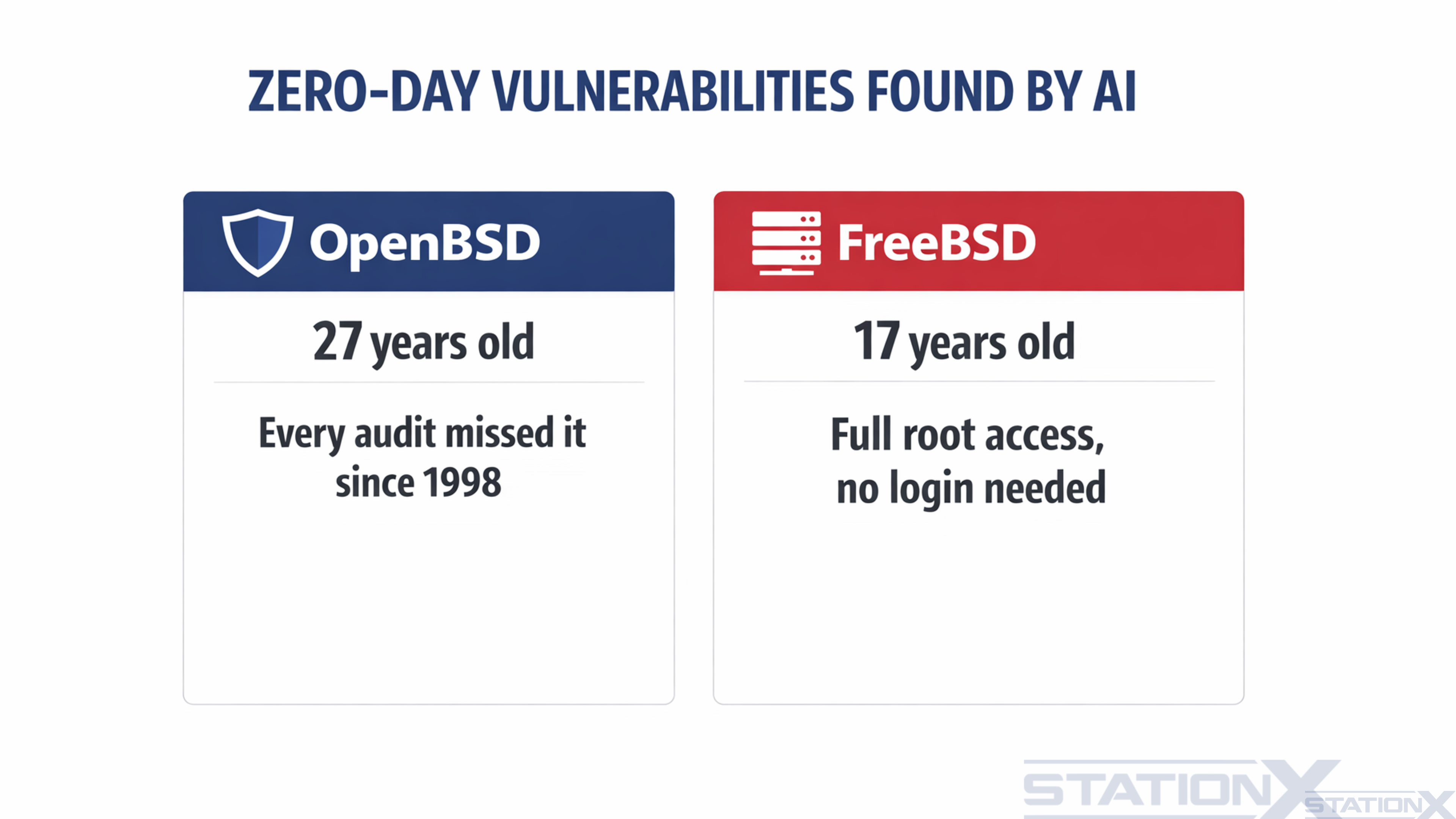
The cost right now: a few thousand dollars. Within a year: a few hundred.
When attackers go from CVE to working exploit in hours — and from discovery to exploit without human involvement — you can't defend with quarterly pen tests and monthly patches. You defend with systems that operate at machine speed. You defend with AI-driven engineering.
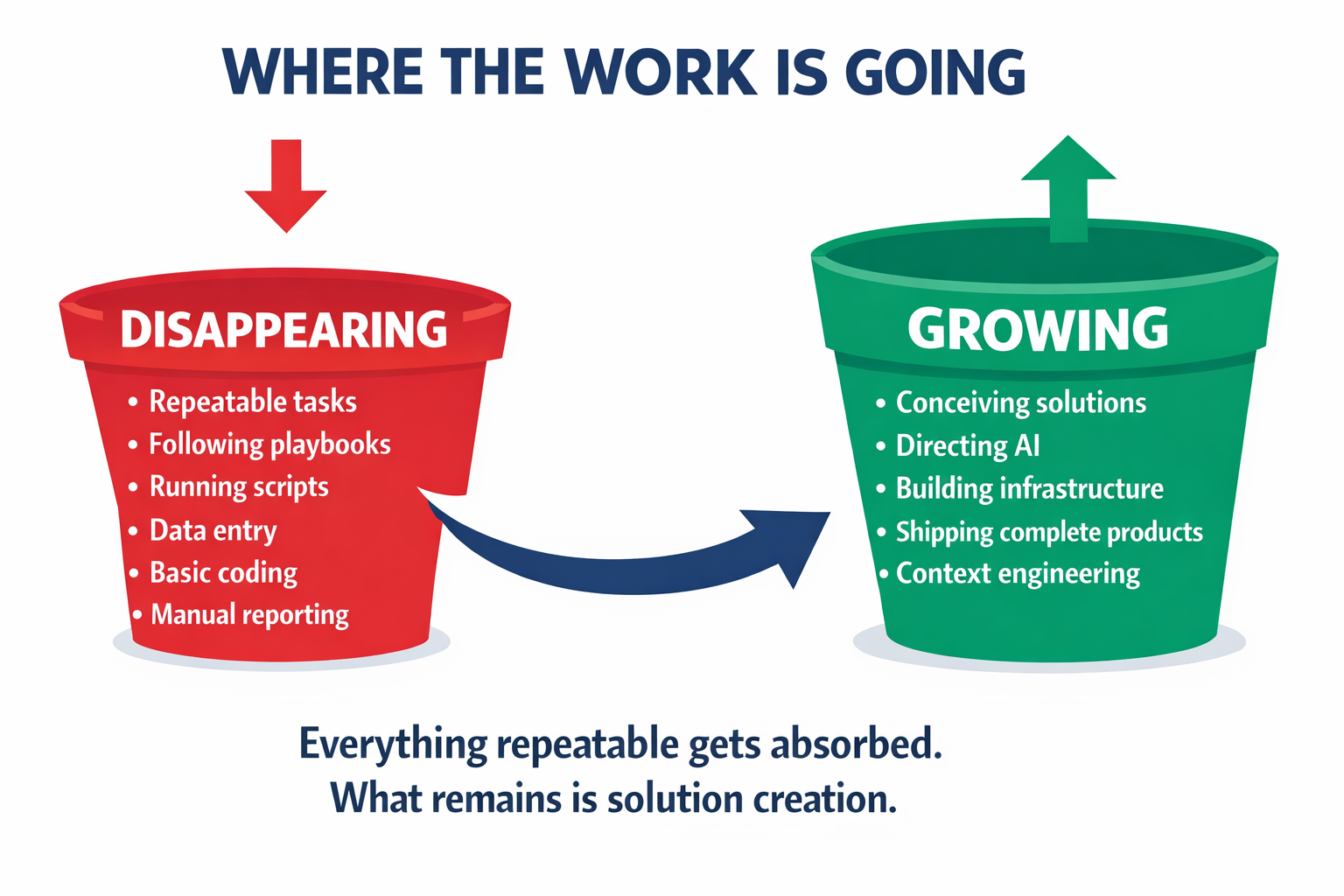
Everything repeatable is being absorbed by AI. What's left — and what's growing — is the person who can conceive a solution and direct AI to deliver it.
That's AI-driven engineering. That's the job that's growing while the others contract.
The Compounding Advantage
Right now, almost nobody understands this. Most people are still arguing about which vibe coding tool is best. They're optimising for one sixteenth of what matters.
The people who build their AI infrastructure now — who learn to direct AI across every discipline, not just coding — will have an advantage that compounds every single day.
Their system gets smarter. Their speed increases. And the gap between them and everyone else widens with every project they ship.
Vibe coding taught the world that AI could write code. That was genuinely exciting.
But code was never the hard part.
Fifty to seventy percent of software projects fail. Almost none of them fail because the code was bad.
The hard part was always conceiving the solution, building the infrastructure to deliver it, coordinating the disciplines, and shipping something complete.
AI just made that possible for one person.
One person delivering what used to need a company. That's not a prediction about the future. That's what's happening right now.
That's AI-driven engineering.
🔧 Built with AI-driven engineering
This page — its design, code, copy, image pipeline, deployment, and the aidrivenengineering.ai domain redirect that brought you here — was built end-to-end with the same AI-driven engineering approach described above. Same for the rest of app.stationx.net. The article was adapted from Nathan's YouTube video on AI-driven engineering using the same AI infrastructure that directs every other discipline on this site. The system built the thing that talks about the system.
Follow the work
I'm publishing on AI-driven engineering every week on YouTube — the concepts, the case studies, the live builds. If this page resonated, that's where more of it is happening.
Subscribe on YouTubeNo newsletter. No waitlist. Just the work, as I publish it.
Related
- JobZone — the product built using AI-driven engineering
- SATs Revision — same system, completely different audience
- StationX — where I teach cybersecurity and AI skills
Term first published by Nathan House on 17 March 2026. Page last updated 24 April 2026.
About the Author

Nathan House, Founder & CEO of StationX
Nathan House has 30 years of hands-on cybersecurity experience and is Cambridge-educated, holding CISSP, CISA, CISM, OSCP, CEH, and SABSA. He founded StationX in 1999 — one of the UK’s first cybersecurity companies — and has secured £71 billion in UK mobile banking transactions and the London 2012 Olympics, advising clients including Microsoft, Cisco, BP, Vodafone, and VISA. He authored the world’s most popular cybersecurity course — a #1 Udemy bestseller taken by over 500,000 students — and was named Cyber Security Educator of the Year 2020, AI Security Educator of the Year, and a UK Top 25 Security Influencer 2025. A DEF CON speaker and featured expert on CNN, Fox News, NBC, and the BBC, Nathan leads StationX’s training of more than half a million students worldwide.