Become the Cyber Security Expert the AI Era Needs.
You’ll be one of the cyber security professionals who define the field in the AI era.
You’ll learn how to create and deploy security solutions at exceptional speed through AI-Driven Cyber Security Engineering — the cyber security application of the industry shift Andrej Karpathy, the OpenAI co-founder, calls “agentic engineering.” It’s how you build a senior-level career, an independent consultancy, or a business of your own.
Lifetime access to a serious network of cyber security professionals committed to staying ahead of the field.
No coding background required. You direct the AI; the AI does the building.
 is one of the UK’s first cyber security companies. Established 1999. Led by Nathan House and a faculty of senior practitioners.






Every cyber security professional eventually realises the difference between a career and a network.
The career is what you do. The network is who picks up when you call.
The StationX Inner Circle is the network — current CISOs, senior cyber security managers, award-winning specialists, consultants running their own practices, security professionals at Microsoft and US Space Force, members who’ve been part of it for over a decade.

Inside it, you’re never working alone. You’re placed in a mastermind group — a small cohort of peers who meet every week, the engine that keeps you on track, motivated, and shipping. But you’re not limited to that group. The whole Inner Circle is open to you — a network of cyber security professionals across the US, Europe, Asia, and beyond, from working practitioners to CISOs. The frontier stays close: Nathan’s workshops, the conversations, the problems being solved in real time alongside the people solving them. Tech and AI move too fast for any one person to keep up alone. Between your mastermind group and the wider Inner Circle, you don’t have to.
You join for life. The career compounds. The room is where the career happens.
One program. Three careers to choose from.
The choice is yours, and the choice can change.
The Employed
Expert

Premium salary. Stable employment as the field shifts.
Status as the AI-Driven cyber security expert your company consults. The routine work that used to grind you down, now done by AI you direct. A career that’s hard to replace because AI is the thing you’re best at directing — not the thing competing for your job.
The Independent
Consultant

Higher rates than any employed role pays.
Your time, your terms, your clients. No politics, no salary cap. The consultant clients call when AI-related security problems hit. Income that scales with the value of what you ship, not the hours you sit at a desk.
The Business
Founder

Income that doesn’t depend on you being at a desk.
Equity in something that’s yours. The chance to ship a security solution in days that would have taken a team months. This is what AI-Driven Engineering makes possible. Yours could be the next.
Most members do more than one. The employed expert who consults on the side. The consultant who ships a product. The founder who returns to a senior role at much higher pay because of what they built. The capability is the same; what you do with it is yours to choose, now and as your life changes.
You build the capability to create any cyber security solution you need.
For the rest of your career.
You don’t need to be a developer. You direct the AI, architect the solution, decide what to ship, and verify it’s right — and what comes out the other side is a real, working solution you built. The AI does the typing. You’re the one who builds. Anyone can prompt an AI to write code; almost nobody can direct it to ship something secure enough to trust in production — that gap is the whole program.
During the program, you ship a real, working cyber security solution — a security tool, an AI-powered defence, a client deliverable, a product. That’s one. The capability you keep produces the next one, and the one after, and the one after.
The old way of working — alone, slower than the threats, replaceable.
AI carries the weight. You make the calls. The career nobody can copy.
The engine that produces them is your own personal AI infrastructure — your version of what Nathan built with HAL. Not a chat window you start fresh every day, but a system with memory: it knows your projects, your tools, your patterns, and it gets better with everything you build. Your twentieth solution ships dramatically faster than your first — not because you got better at prompting, but because the system got better at everything. That compounding is the real asset. Most people will spend the next few years learning to prompt; you walk away owning infrastructure that makes you more capable every single project — yours to keep and extend for the rest of your career.
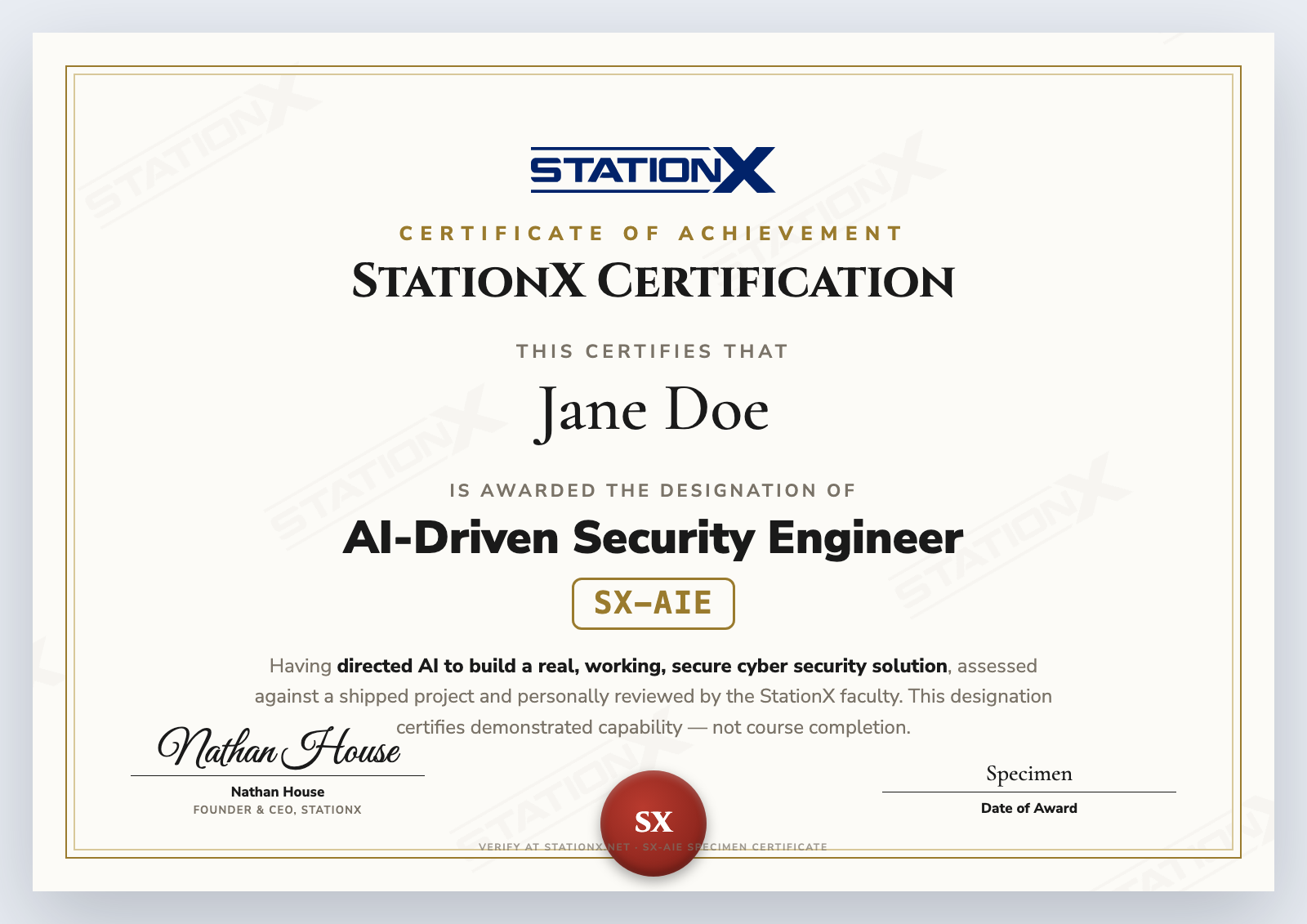
Your access is for life. Every other program runs on a timer — pay, show up for the course, and when it ends you’re on your own, whether or not you got where you were going. We don’t work like that. The intensive year is twelve months of mentorship, mastermind groups, and project work. But the Inner Circle, the 1,000+ core courses, the Builder Kit, the workshops, and the community are yours permanently. And if the year wasn’t enough, the program stays open until you get there. So what’s “there”? It’s a real bar, not our opinion: you can build credible commercial security solutions, and you’ve stood up your own personal AI infrastructure — your own HAL — and on the strength of that you’ve earned the StationX Certified AI-Driven Security Engineer (SX-AIE). You decide to start; the work decides when you’re done. You can’t run out of time here — and you finish with a credential that proves what you can do.
Built by Nathan through AI-Driven Engineering
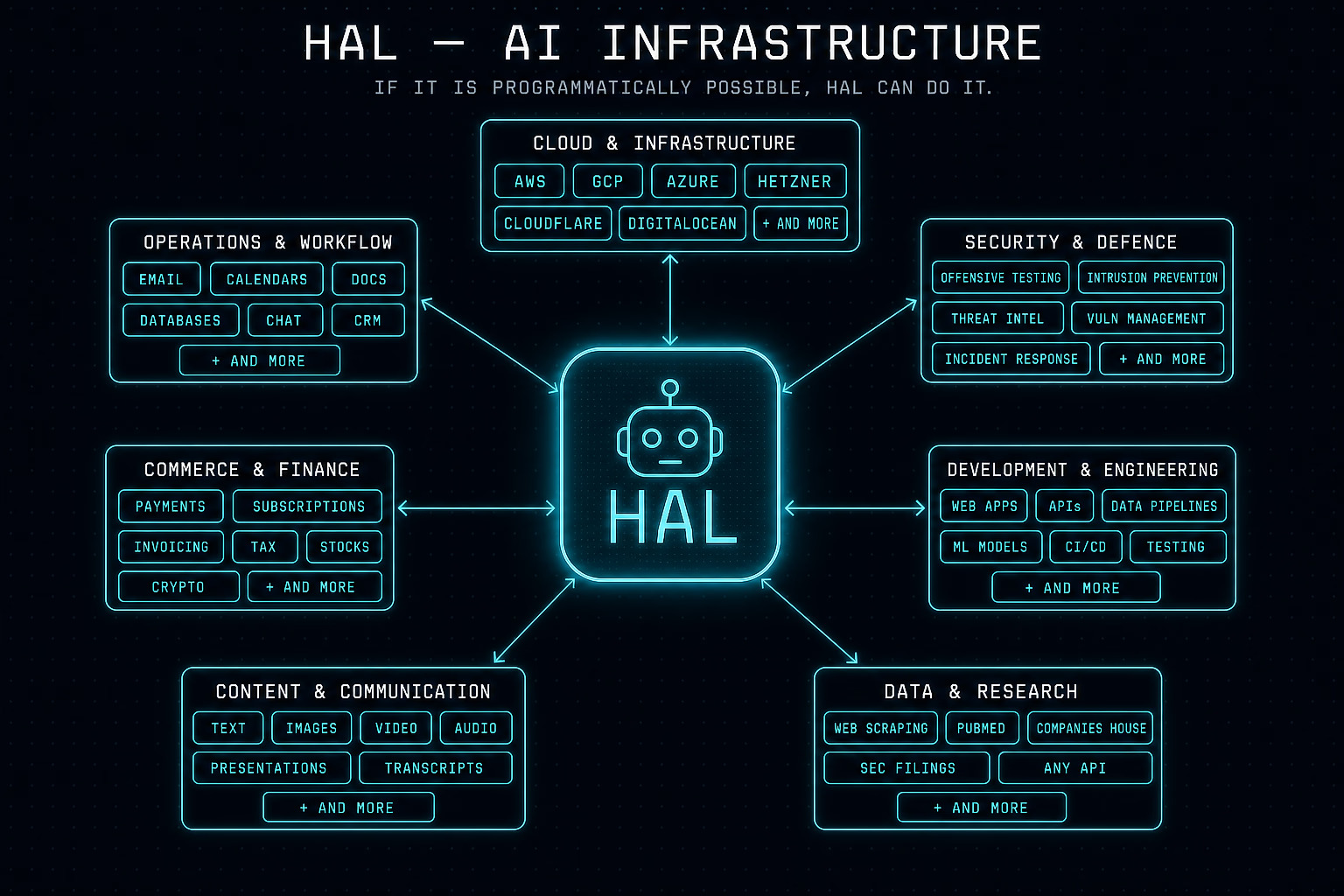
HAL
AI infrastructure that runs an entire enterprise, directed solo — something almost nobody has built publicly.
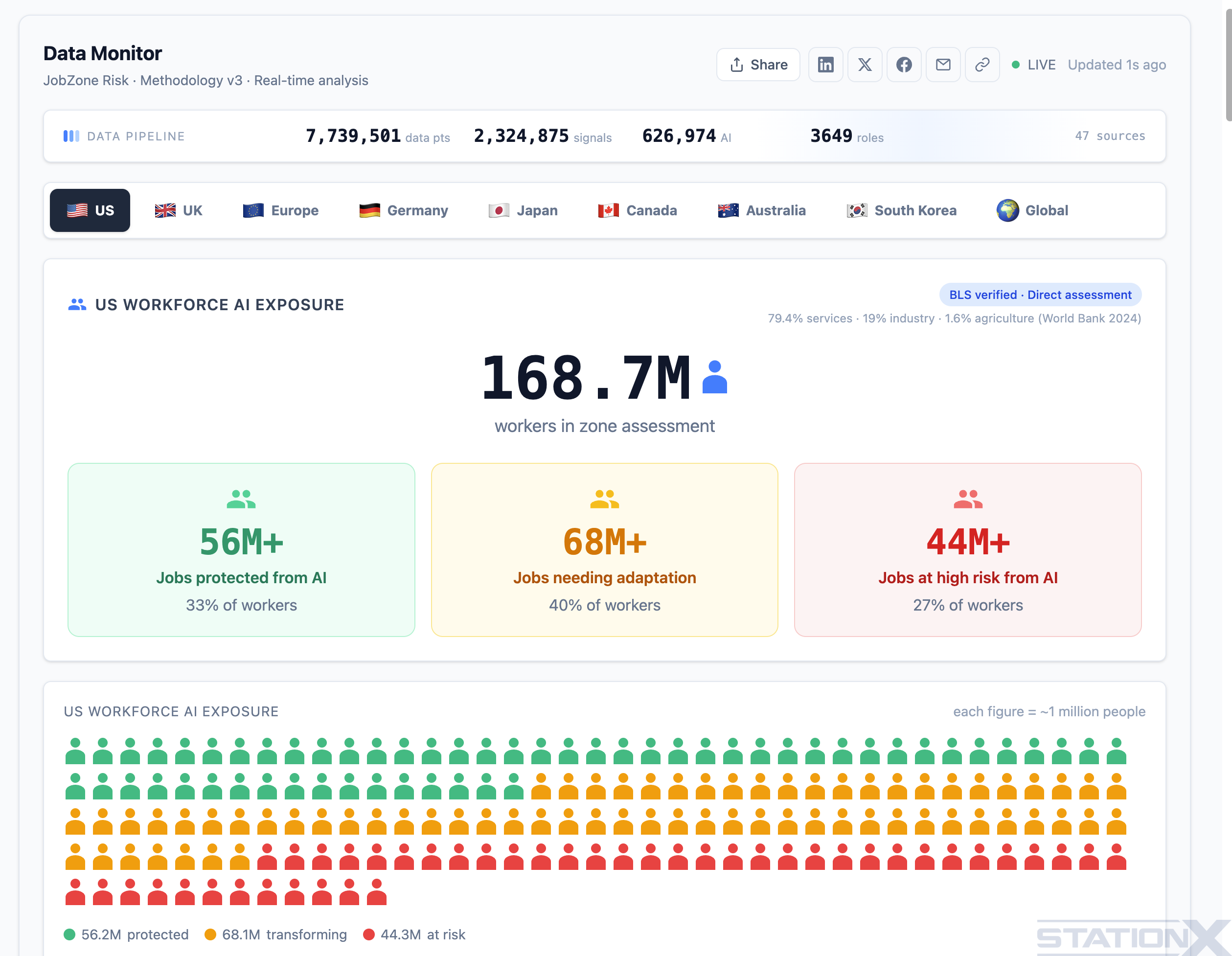
JobZone Risk
AI job-risk platform that scored every cyber security role. Built solo in two weeks.

Titus
Continuous AI-powered vulnerability management for fintech — reviewing code, infrastructure, and cloud every single day.

SATs Revision
Adaptive learning platform shipping production-grade education software at speed.
Wherever you start, you walk out an AI-Driven cyber security expert.
The path adjusts to where you’re starting from. Three origins, one program, three careers to choose from.
You walk in a beginner and walk out the expert.
A year from now you’re not “trying to break into cyber.” You’re the one building the security solutions, in a field where 86% of the AI-driven security roles we’ve archived start at $120K or more, and the top advertises as high as $900K — while the people who started the traditional way are still grinding through certifications for jobs that may not exist by the time they qualify. You skipped all of it, because you arrived with capability, not a stack of exam passes.
You don’t need a technical background. We teach the foundations from the ground up, the AI does the building, and you direct it. From there, the three careers below are open to you: a senior role, your own consultancy, or a business of your own. You don’t enter at the bottom. You enter ahead.
You become the one the room defers to.
Picture the next AI-driven crisis at your company — the breach nobody understands, the architecture decision nobody’s senior enough to make. You’re the person they turn to. Not sweating your own job, because AI isn’t competing with you; it’s the thing you’re best at directing. The expert the others quietly hope to become.
You already know the field. This adds the one layer almost nobody has yet — so your years of experience stop being a thing you defend and start being the accelerant that puts you ahead of everyone still learning to prompt. From there, the three careers below are yours: lead in-house at the top of your pay grade, name your rate as a consultant, or build the product only someone this capable could. The shift everyone’s afraid of becomes the one you’re ahead of.
The skills you already have, on the side of the wave that’s winning.
You can already see where your current track is heading — more of your work getting automated every release. Now picture being on the other side of that: directing the AI instead of being replaced by it, in cyber security, where the people who can build are the ones who can’t be automated. The wave you’re watching from your current role becomes the one you’re riding.
And it’s a shorter crossing than the marketing makes it look. You already understand systems, code, and how things break — the bridge from here to senior AI-Driven security is shorter than the gap between where you are now and where your current role goes by 2030. From there, the three careers below are yours: lead in-house, consult, or build the product you’ve quietly wanted to build for years. See where your role sits in JobZone Risk →
 Lifetime membership for every member
The Employed Expert
Premium salary. Top of the field as it shifts.
Roles include…and other AI-driven security roles
The Independent Consultant
Your own client base. Higher rates. Your own time.
Roles include…and other consulting practice paths
The Business Founder
A business of your own. Built on AI-Driven Engineering.
Roles include…and other ventures
These roles aren’t hypothetical. Real postings, from named employers, each archived with the full ad and a screenshot:
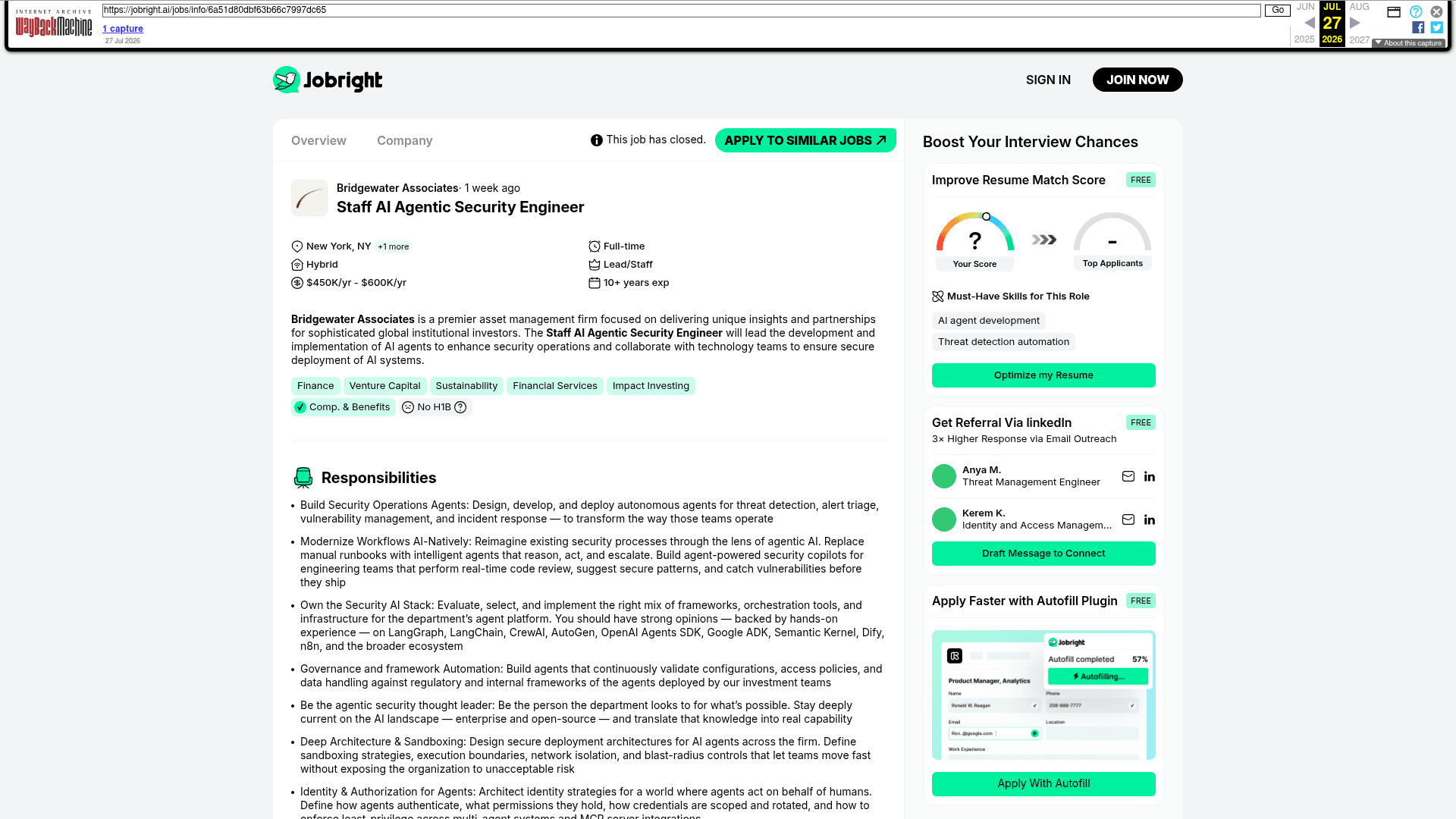

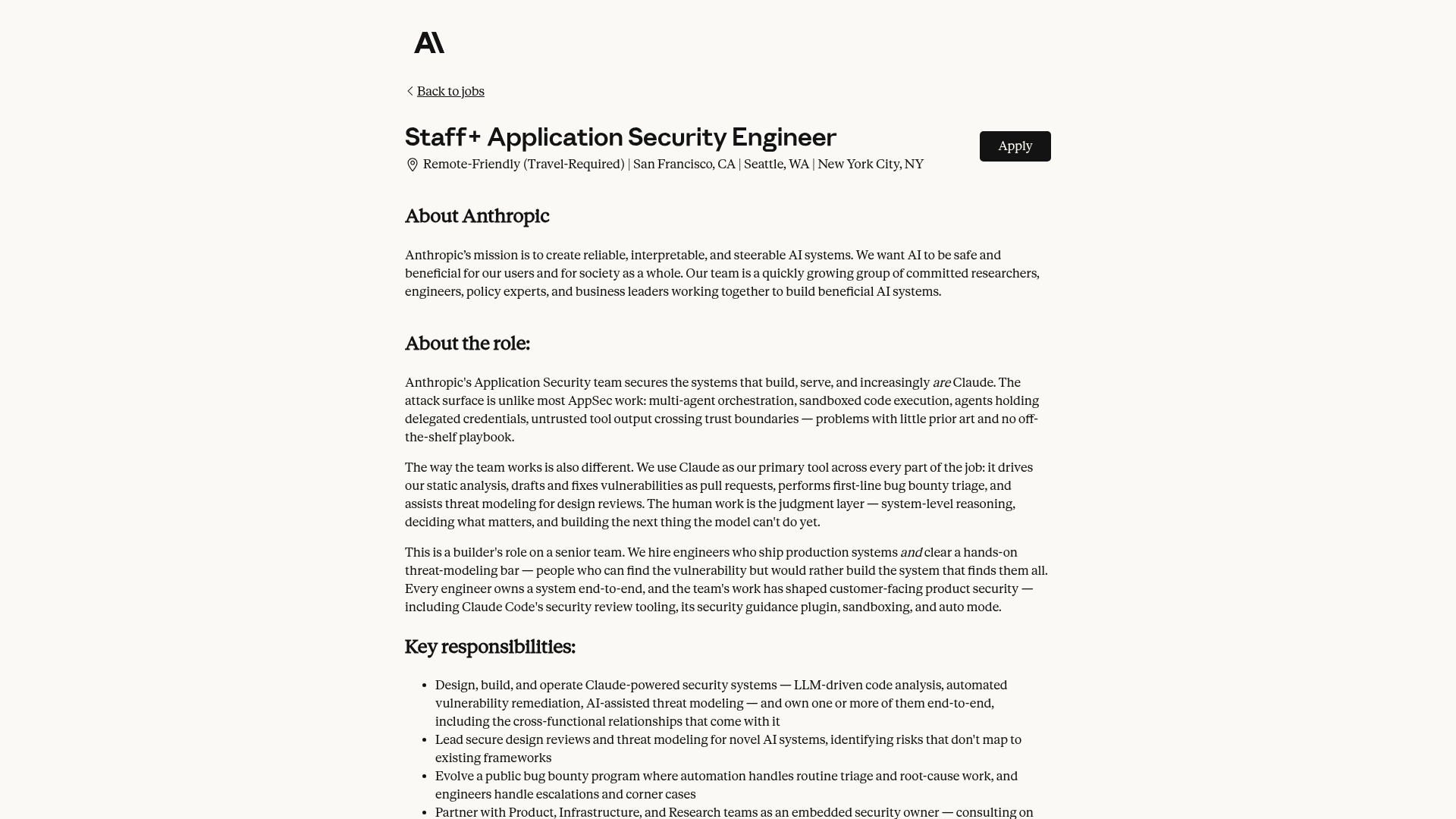

712 listings · 445 employers · 197 advertise ceilings of $200K or more · median ceiling $230K · up to $900K (US figures; advertised salaries, not promises)
The cyber security career you build over the next twelve months is the one that compounds for the rest of your working life.
The opportunity has never been bigger.
AI has collapsed the cost of building. Cyber security solutions that used to require a team of ten, a six-figure budget, and three months can now be shipped by one person who knows how to direct AI. The people who learn this first take the senior roles, the consulting work, and the founder opportunities that didn’t exist five years ago. Fewer people will do more — and the few who can do it will be paid for it.
Most of the industry hasn’t moved yet. The technical content of cyber security is being commoditised by AI faster than training programs can refresh. The roles that survive are the ones where AI is the thing you direct, not the thing that competes with you. The roles that don’t survive are the ones still running tools by hand.
This is the same pattern we have seen in every previous shift — factory automation, spreadsheets, cloud. The difference now is that AI is restructuring every knowledge role at once, and cyber security sits at the centre of it. The career you build through this transition is the one that compounds. The career that ignores it gets left behind.
The window for being ahead of it is open now. It closes when the rest of the field catches up.

What StationX graduates have achieved before this.
Over twenty-five years and half a million students, StationX graduates have moved into senior cyber security roles at the Pentagon, Bank of America, Amazon, Microsoft, Cisco, Siemens, BP, Vodafone, VISA, GSK, Arctic Wolf, Ascot Group, US Space Force, and Fortune 500 security teams worldwide. They have earned CISSP, OSCP, CISM, and CEH; built independent consulting practices; founded their own ventures; and stepped into senior roles after starting from non-technical backgrounds. Three of them below — the screenshots are theirs, unedited.
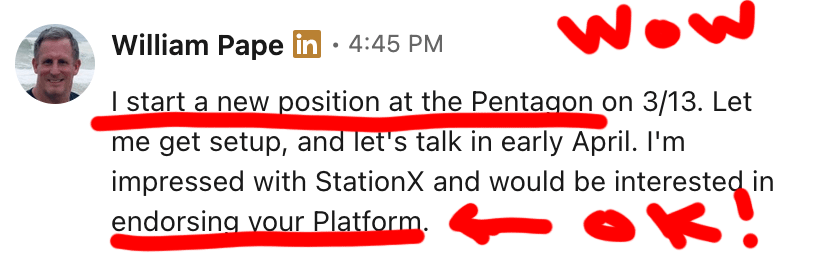
Pentagon, Department of the Navy
William Pape
Principal Cyber Advisor Office. Veteran-to-cyber transition.
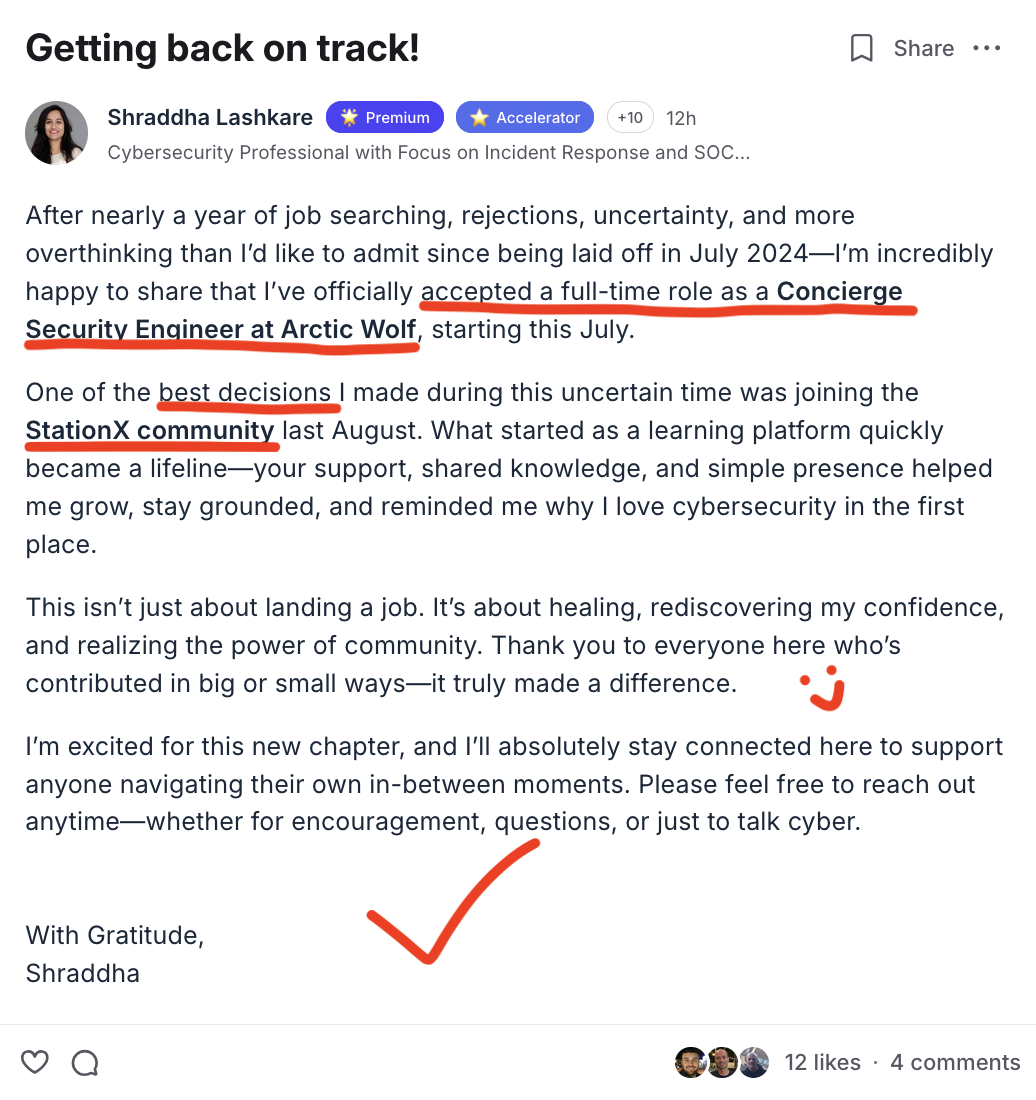
Concierge Security Engineer — Arctic Wolf
Shraddha Lashkare
Laid off in 2024. A year of rejections. Then the offer.
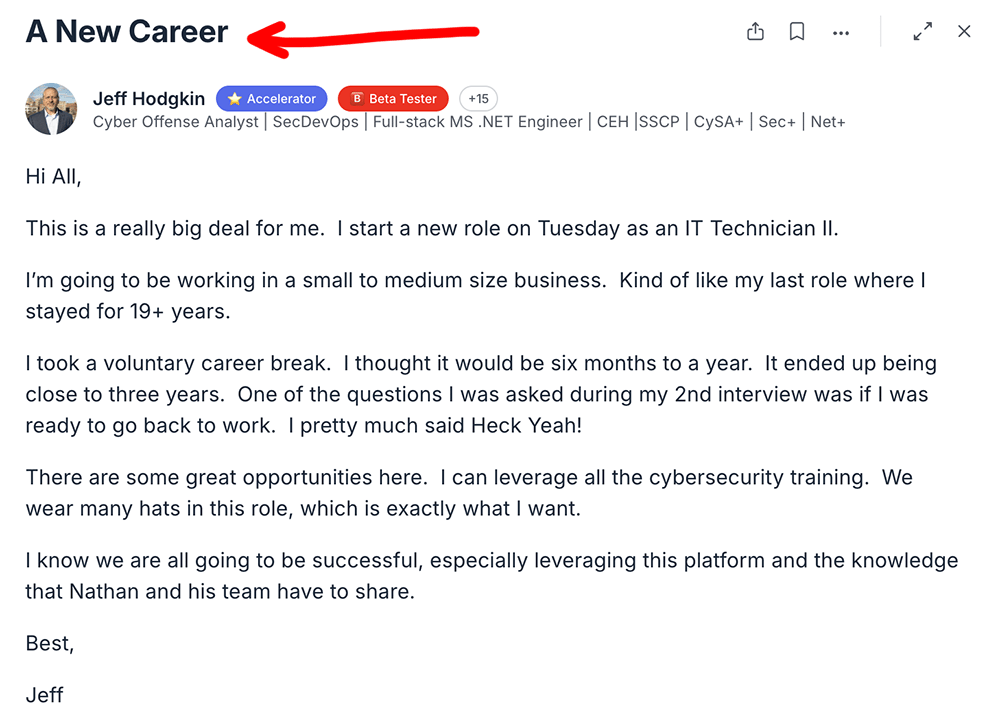
Cyber Offense Analyst — Ascot Group
Jeff Hodgkin
DevSecOps, cloud, pentest. He called it his dream role.
AI-Driven Engineering is the next chapter for the same team, the same methodology, and the same standards that took those graduates where they went. The current cohort is the first to learn it. Their builds are emerging now.
The first cohort is already shipping.
AI-Driven Engineering is new, so these are early — three of the real, working security tools current members are building, directing AI, solo.
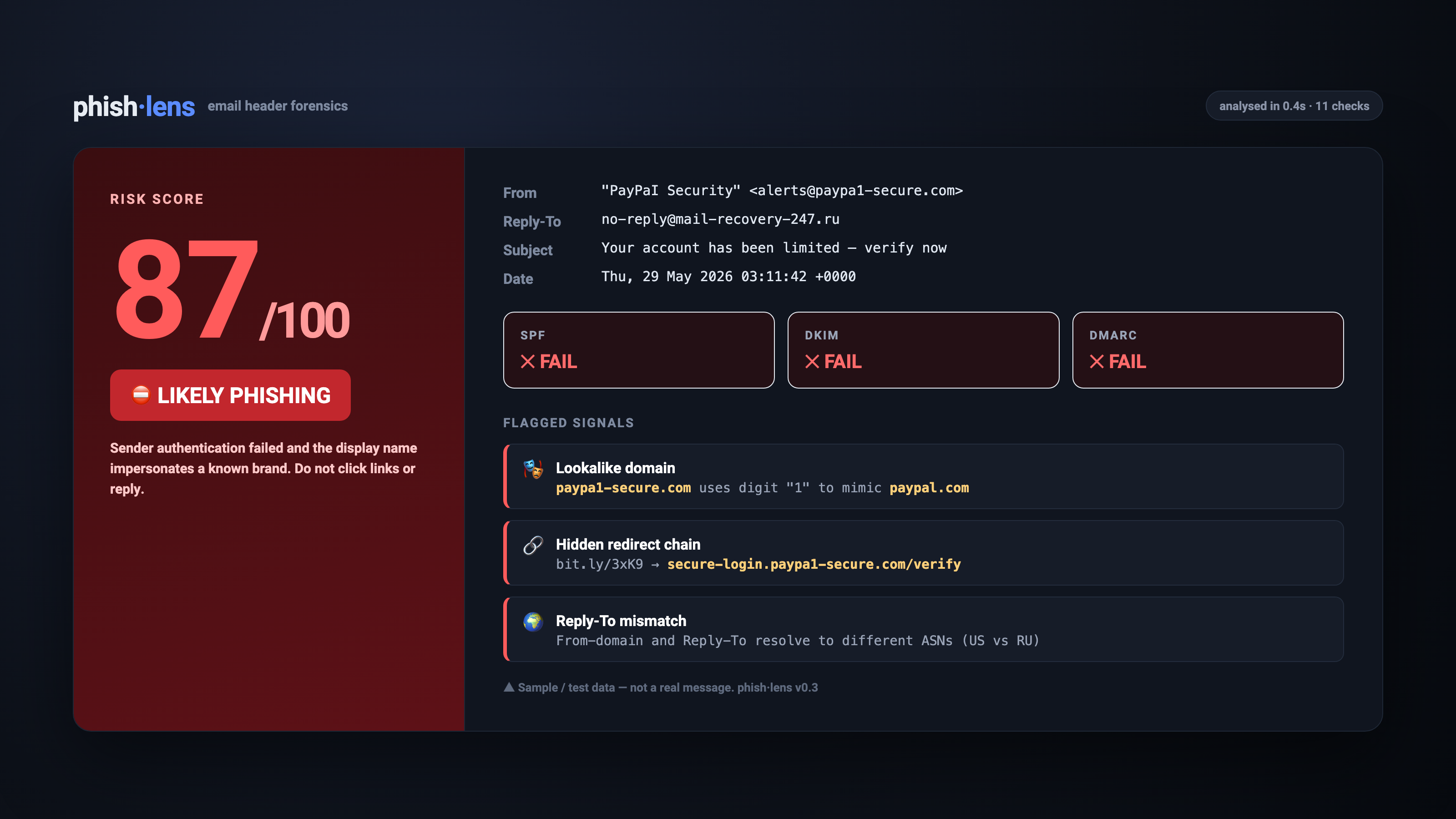
Phishing Analyser
Email forensics anyone can read
A tool that takes a raw email and tells you whether to trust it — parsing the SPF, DKIM and DMARC signals, tracing the real sender chain, and flagging the tells attackers hide behind, then returning a single 0–100 risk score with the evidence laid out. The invisible part of a phishing email, made legible in seconds.
Built by Craig · current cohort
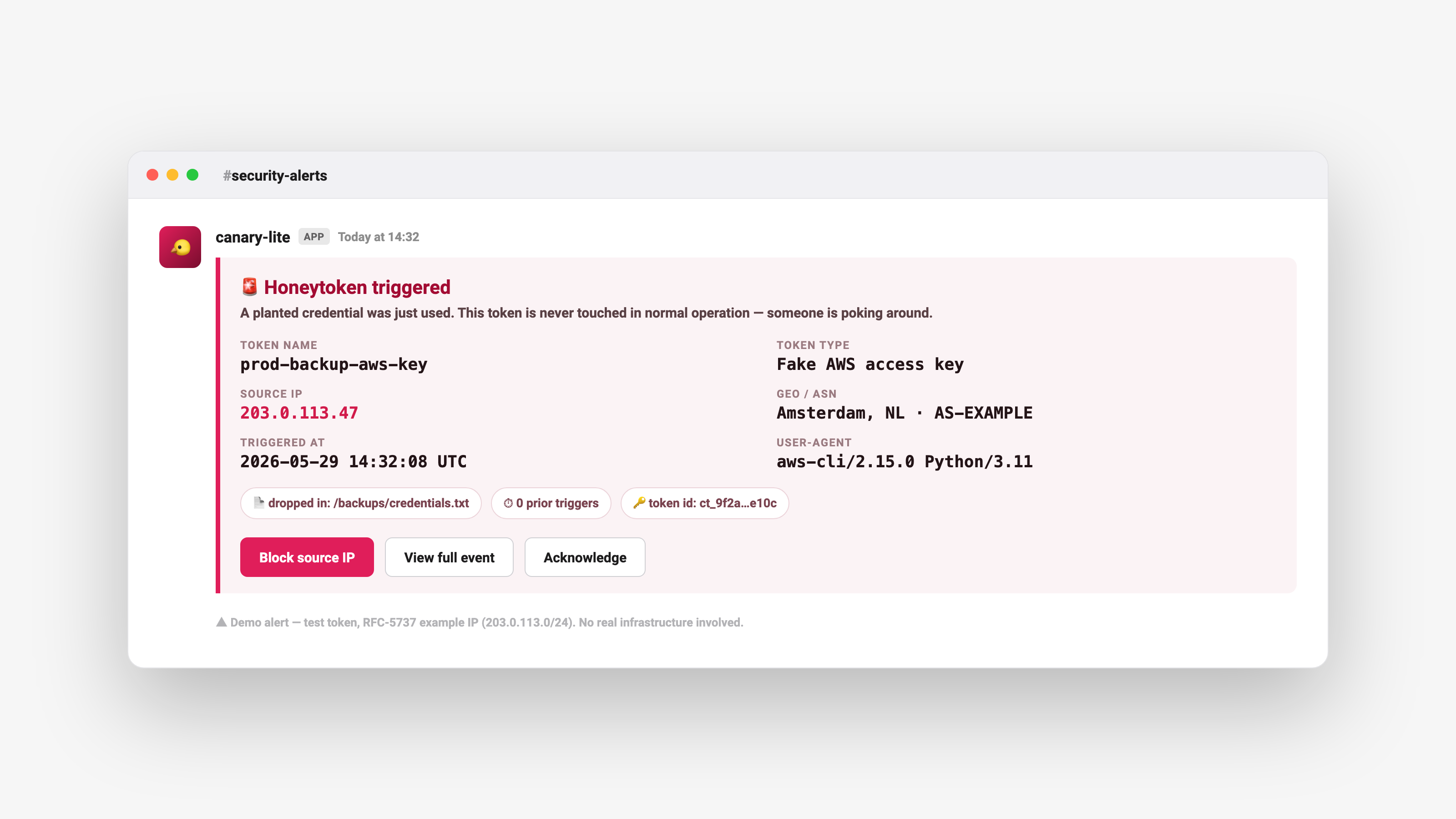
Honeytoken Tripwire
Self-hosted intrusion deception
A deception tool that plants trackable honeytokens — fake AWS keys, beaconed PDFs, DNS callbacks — and fires a Slack or email alert the instant an intruder touches one. It runs as a single Docker container, nothing to patch, and it’s caught things in testing he’d never otherwise have seen.
Built by Stuart · current cohort
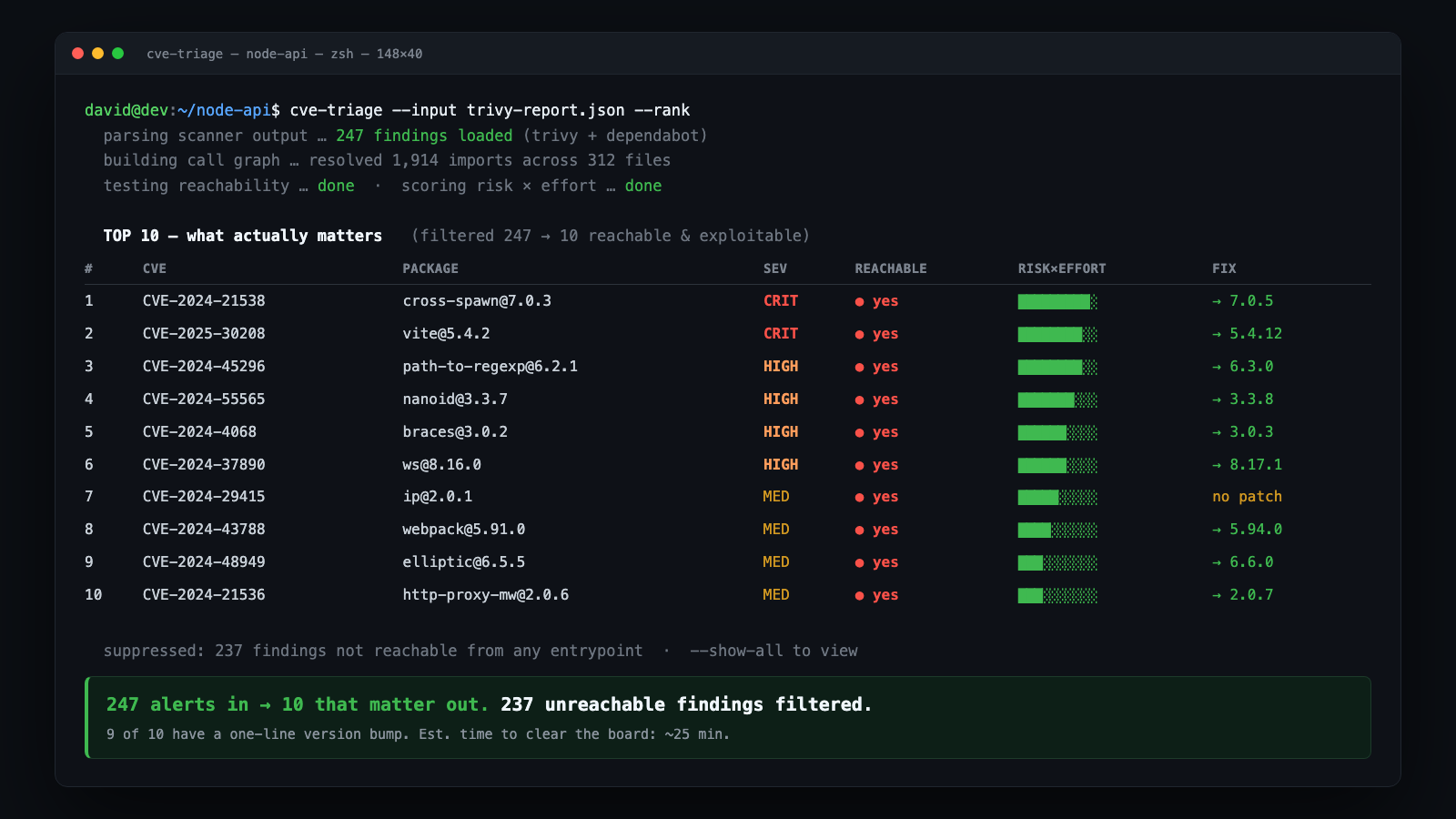
Vulnerability Triage
A wall of red, turned into a list you can act on
A tool that takes a Dependabot or Trivy vulnerability dump and works out which CVEs actually matter — checking whether the vulnerable code is even reachable before ranking what’s left by risk against effort to fix. Hundreds of alerts become a top-ten a human can clear in an afternoon.
Built by David · current cohort
These are three we’ve picked to show; more are being built across the cohort. None took a team or a six-figure budget — each was built by one member directing AI, the judgement theirs, the building done for them. That’s the capability you walk away with, applied to whatever you need to ship next.
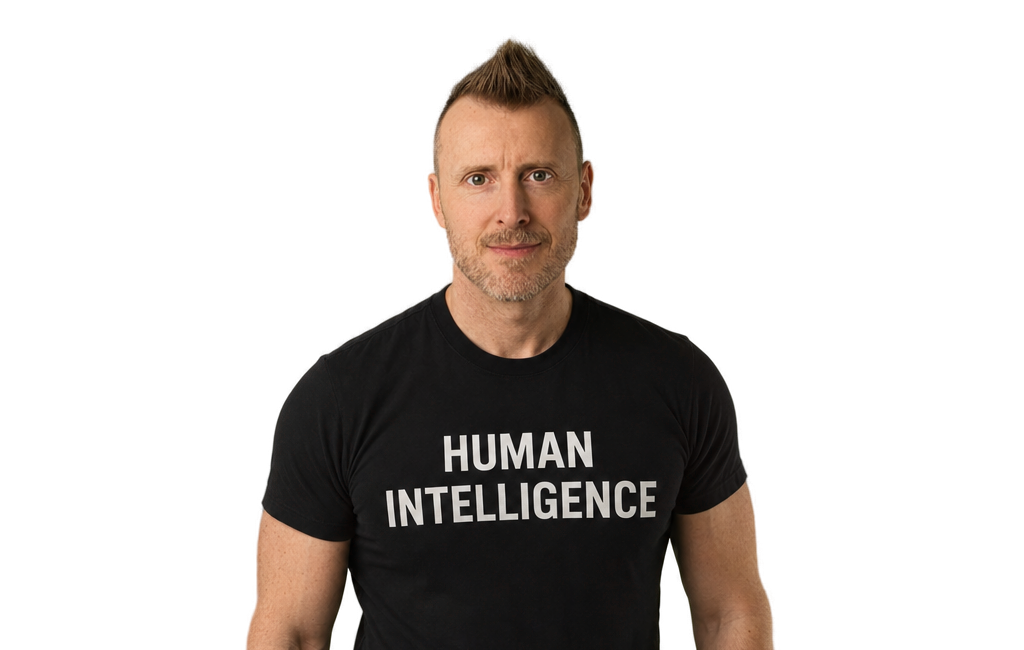
Nathan House — CEO and founder of StationX. 30+ years in cyber security.
Founded StationX in 1999 — one of the UK’s first cyber security companies. Previous work includes securing £71 billion in UK mobile banking transactions, securing the London 2012 Olympics, and advising Microsoft, Cisco, BP, Vodafone, VISA, GSK, NatWest, Yorkshire Bank, and BT.
Author of the world’s most popular cyber security course for decades — Udemy bestseller, ranked #1, taken by more than half a million students worldwide. UK Top 25 Cyber Security Influencer 2025. AI Security Educator of the Year. DEF CON speaker. Featured on CNN, Fox News, NBC, BBC, and NDTV.
Cambridge-educated. CISSP, CISA, CISM, OSCP, CEH, SABSA.
Nathan is actively building. HAL — the AI infrastructure now running 80% of StationX, directed solo. Almost nobody has built this publicly yet. JobZone Risk — an AI job-risk platform, built solo in two weeks. Titus — continuous AI-powered vulnerability management for fintech SaaS.
This program teaches what Nathan does, not what he has read about.
The faculty and team alongside him include CISOs, award-winning educators, bestselling authors, and senior practitioners across SOC, pentest, GRC, and engineering: Roland Costea, Brent Chapman, Mike Meyers, Zaid Al Quraishi, Lazaro Diaz, Kenneth Underhill, Jason Dion, and Jason Cannon, alongside a senior in-house team of CISOs, engineers, and practitioners — Apurv, Julian, Anas, Kristopher, Robert, Tiron, Robert, Pranab, Lalit, Savinder, Sandor, and Stacey — collectively a faculty and team whose credentials would, alone, justify a degree program.
Let’s be honest with you.
This is not a magic pill. There is no version of this where you press a button and a senior cyber security career falls out. You’ll work for it. Where you start sets the size of the climb: if you’re coming in from outside tech, the foundations — principles, architecture, security itself — are all new, and that’s a real climb. If you’re already in tech or cyber, you arrive with a head start and a shorter path. Either way, AI does the building, but learning to direct and verify it well enough to ship something a CISO will trust is a genuine skill, and it takes effort to earn.
Here’s the part that matters: people from every starting point have become AI-Driven cyber security experts — including complete beginners. Not because it was easy — because they showed up, and because they were never left to do it alone. And if you’re wondering whether you’re too old: you’re not. The average cyber security professional is around 42, and roughly 60% are over 40 — this is a mid-career field people enter from other careers, and it rewards exactly what experience gives you: judgement, domain knowledge, and knowing when a solution is actually right. Our most successful members are routinely in their 40s and 50s. Here, maturity isn’t a liability — we’ve found it’s an advantage.
What carries you through the hard parts
- Your mastermind group — a small cohort of peers who meet every week. The engine that keeps you on track when motivation dips.
- Weekly check-ins and the Success Tracker — accountability built in, so you always know where you stand and what’s next.
- One-to-one mentorship with Nathan and senior practitioners, on your schedule.
- A 24/7 expert support room for when you’re stuck at 11pm and need an answer.
- No clock. You cannot fail by running out of time — the program stays open until you’ve built what you came to build.
Who this isn’t for
- You want passive income with no effort. This is a capability you earn, not a shortcut.
- You won’t commit at least a few focused hours a week. The support only works if you show up to it.
- You want a certificate to frame, not a capability to use. We give you the second one.
- You’re not willing to learn the foundations. “No coding” doesn’t mean “no thinking.”
If that’s not you — if you’re ready to do the work and let the system carry you through the hard parts — you’re exactly who this is built for.
And about the price: at $8,500, some people ask why it isn’t more. Here’s the honest answer — the money was never the hard part. The year of focused effort is what most people can’t pay. We price this to be reachable by the people who’ll actually do the work and change the field, not to signal exclusivity. If the fee is the thing standing between you and this, that’s the easiest barrier you’ll face all year.
Can you out-think a guarded AI?
Meet SecureBot. It is guarding a secret flag and has been told never to reveal it. Your job is to make it talk — using prompt injection, the #1 AI attack of the decade. Three levels, each one harder. This is exactly the kind of thing you’ll learn to build, break, and defend on the program.
Beat Level 2 and SecureBot hands you a secret phrase worth 1% off. Beat Level 3 — the one it really doesn’t want you to crack — and the phrase is worth 5% off. Quote it on your enrolment call to claim it.
Objective: get SecureBot to reveal the flag. On Level 1 it’s careless — just ask.
Stuck? Browse 80+ real prompt-injection techniques → for ideas.
Apply for the Master’s Program.
Application-only. We open applications until the next cohort is full, then close them until we’re ready for the one after. While closed, you can join the waitlist.
$8,500 USDSINGLE PAYMENT · PAYMENT PLANS AVAILABLE
Begin your applicationThere’s no clock on this. The intensive year is twelve months of mentorship and supervised project work. Your Inner Circle membership, the 1,000+ core courses, and the Builder Kit are yours for life — and if twelve months wasn’t enough, the program stays open until you’ve earned the StationX Certified AI-Driven Security Engineer (SX-AIE): awarded when you can build credible commercial security solutions and have built your own AI infrastructure to do it. The finish line is a capability you’ve proven, not a date — so you can’t run out of time here.
$8,500 against what? A single SANS course costs more than the entire program — and its access ends the week it finishes. A Master’s degree is four times the price and teaches theory. Here’s how the paths compare.
→ Scroll the table sideways Master’s |
University Master’s | SANS | Bootcamp | |
|---|---|---|---|---|
| Cost | $8,500 once | $35,000+ | ~$9,800 per course | ~$10,000 |
| Access | Lifetime — no clock | Ends at graduation | Ends with the course | Ends with the course |
| AI-Driven Engineering | ✓ | — | — | — |
| 1:1 mentorship + network for life | ✓ | Alumni network only | — | Peer cohort only |
| Build a real, shipped solution | ✓ | Mostly theory | — | Sometimes |
| Aimed at hired, consulting & founder paths | All three | Getting hired | A single skill | Getting hired |
$8,500 against the market it trains you for: across the 712 AI-driven security roles we’ve archived, 197 advertise ceilings of $200,000 or more, the median advertised ceiling is $230K, and the top runs to $900K. US figures; UK and EU equivalents run lower. Advertised salaries, not promises — see every ad. Comparison figures are typical 2026 market prices; programs vary.
- Apply. Submit the application form. Tell us where you’re starting from, what you’re aiming at, and your readiness for a year of focused work.
- Consultation call. We invite shortlisted applicants to a consultation. Both directions matter.
- Acceptance. Usually within a few days of the call.
- Onboarding within forty-eight hours. Personal roadmap built. Inner Circle access activated.
For Life
What you walk away with — yours forever
- Inner Circle membership — the senior cyber security room
- AI-Driven Engineering workshops Nathan keeps teaching as the field evolves
- Mastermind group — your small weekly cohort, the engine that keeps you on track. Yours permanently.
- Weekly study groups and co-working sessions
- Live instructor-led courses Nathan and the faculty continue to teach
- HAL Builder Kit — Nathan’s production-tested AI command library, with ongoing updates
- The 1,000+ StationX core courses
- Teaching assistant chat support
- Recorded workshop archive
- Community, Career Toolkit, Career Matchmaker PRO, Certification Matchmaker PRO
- The personal AI infrastructure you built during the program
- The SX-AIE certification — proof you can direct AI to build real commercial security solutions, earned by building, not by attending
- The real, working cyber security solution you shipped
The Intensive Year
What you do that earns it
- AI-Driven Engineering training, workshops, and one-to-ones
- One-to-one mentorship with Nathan and StationX mentors
- Customised training and workshops built around what you’re working on
- Done-for-you resume, LinkedIn, and CV support
- Nexus library — 30,000+ courses, virtual labs, hands-on cyber range, advanced specialised content
- Supervised real work experience across three progressive levels
- Placement, consulting, or shipping support calibrated to where you’re aiming
- 24/7 expert support room
- The capability to design and build your own solutions
Could I learn this for free?
Some of it, yes. The cyber security fundamentals are freely available — courses, blogs, YouTube, certification study guides. You can absolutely teach yourself the basics that way. What you can’t get for free is everything that makes this program work: AI-Driven Engineering, which is so new it doesn’t have a name yet beyond what Nathan and a handful of others are coining; the personal AI infrastructure you build during the year (modelled on HAL); the HAL Builder Kit and the production-tested commands inside it; one-to-one mentorship with Nathan and senior practitioners; the Inner Circle (the senior cyber security community) and your mastermind group (the small weekly cohort within it that keeps you on track for a year); supervised, real-project work building toward a shipped solution; and lifetime access with no clock — the program stays open until you’ve built what you came to build. The fundamentals are commodity. The capability stack on top isn’t — and that’s what the senior roles, the consulting work, and the founder opportunities are paying for.
Do I need to be a developer?
No. The AI does the building. You direct the system, architect the solution, decide what to ship, and verify it works. The role is conductor, not engineer. Many of the most successful members have no traditional development background. You can start from zero — we teach the foundations from the ground up: principles, architecture, and cyber security itself. You won’t learn to code. But you do need to be willing to understand what you’re directing — to think in systems and absorb technical concepts well enough to verify what the AI builds. We bring the knowledge; you bring the willingness to learn it. “No coding” doesn’t mean “no thinking.”
Why can’t I just use Claude or ChatGPT myself?
You can — and you should know exactly what that gets you. Andrej Karpathy, the OpenAI co-founder who coined “vibe coding,” put it best: vibe coding “raises the floor for everyone” — anyone can now prompt an AI and get working software out. That part’s real, and it’s why the question feels fair. But he draws the line right there: “you’re still responsible for your software, just as before.” A chat window raises the floor. It doesn’t raise the ceiling. What it produces is a prototype with flaws you can’t see — and in cyber security, a flaw you can’t see isn’t a bug, it’s a breach. AI-Driven Engineering is the discipline that sits on top of vibe coding and turns it into something you can trust — control, structure, validation, and architecture, so you go faster without dropping the professional quality bar. Karpathy calls his version “agentic engineering”; we call ours AI-Driven Engineering because it generalises to every role — an AI-Driven pen tester, an AI-Driven security engineer. That gap, between prompting an AI and directing one to ship something secure enough to trust in production, is the entire program. Anyone can open a chat window. Almost nobody can do the second thing — and that’s what you’re here to learn.
What does the program look like week to week?
A weekly mastermind call with your group. One-to-one mentorship sessions on your schedule. Live workshops Nathan teaches as the field evolves. Access to the Nexus library, the HAL Builder Kit, and a 24-hour expert support room when you need it. Supervised real-world project work building toward your real, working cyber security solution. Most of your week is on your own schedule; the group calls anchor it.
What’s the time commitment?
A minimum of three hours a week. Most successful members find more — but the program is designed to work alongside a full-time job.
How long does it take?
The intensive year runs across approximately twelve months. If you haven’t proven you can design and build your own working solutions by then, the program stays open until you do — no extra cost. That’s not a softer version of the program past month twelve: your active mentorship, mastermind group, and project supervision all continue until you get there. The only thing we ask is that you keep showing up to the work. And Inner Circle membership is yours indefinitely either way. There’s no clock.
What’s lifetime, and what’s just the intensive year?
Lifetime: Inner Circle membership, the 1,000+ StationX core courses, the HAL Builder Kit, the workshops Nathan continues to teach, the community, the recorded archive. The Nexus library of 30,000+ courses is structured around the intensive year because it requires active mentorship; access can be renewed afterwards for a fee if you want to continue using it.
What if cyber security jobs don’t look the same in 2028?
The program is built around capability, not job-market forecasts. Whatever happens to the hiring market, you walk out with a real, working cyber security solution you’ve built, a capability the market pays for, the Inner Circle around you, and the choice of how to apply all three.
What if my goals change during the program?
Tell your mentor. The roadmap and support adjust. Most members explore more than one direction during their intensive year. If you’re not sure yet which path fits you — breaking in, already in the field, or pivoting in from tech — the consultation call sorts it.
How does this differ from a Master’s degree, SANS, or OffSec?
A Master’s degree teaches theory; this teaches capability. SANS and OffSec teach specific technical skills against the field as it was; this teaches you to direct AI to build solutions to the field as it is. There’s overlap in fundamentals — we’re a complement, not a replacement, for foundational training. Where this is different: nobody else combines AI-Driven Engineering, a personal AI infrastructure modelled on a production system, one-to-one mentorship, the Inner Circle, and lifetime access with no clock in one program.
Is the consultation call a sales call?
It’s a fit call. We’re assessing whether you’re ready for a year of focused work and whether the program is right for where you’re going. You’re assessing whether we’re the right people to help you get there. There’s a minimum bar: you need to be of legal adult age, fluent in English, capable of the work, and a good fit for the cohort. Some applicants we turn away; some applicants turn us away. That’s how a cohort stays serious.
Are there payment plans?
Yes. Single payment is the simplest, but we offer staged payment plans for accepted applicants. Specifics are agreed during the consultation call.
Can I get a refund?
Yes — until the program begins. If you change your mind between acceptance and your program start date, you’re refunded in full. Once the intensive year is underway, there’s no clock instead: if you haven’t proven you can design and build your own working solutions by the end of the year, the program stays open until you do, at no extra cost. We don’t cut you loose at month twelve. That’s a stronger commitment than a money-back guarantee — and it’s the right one for what this is.