UK Social Media Ban for Under-16s: Will It Work? (2026)
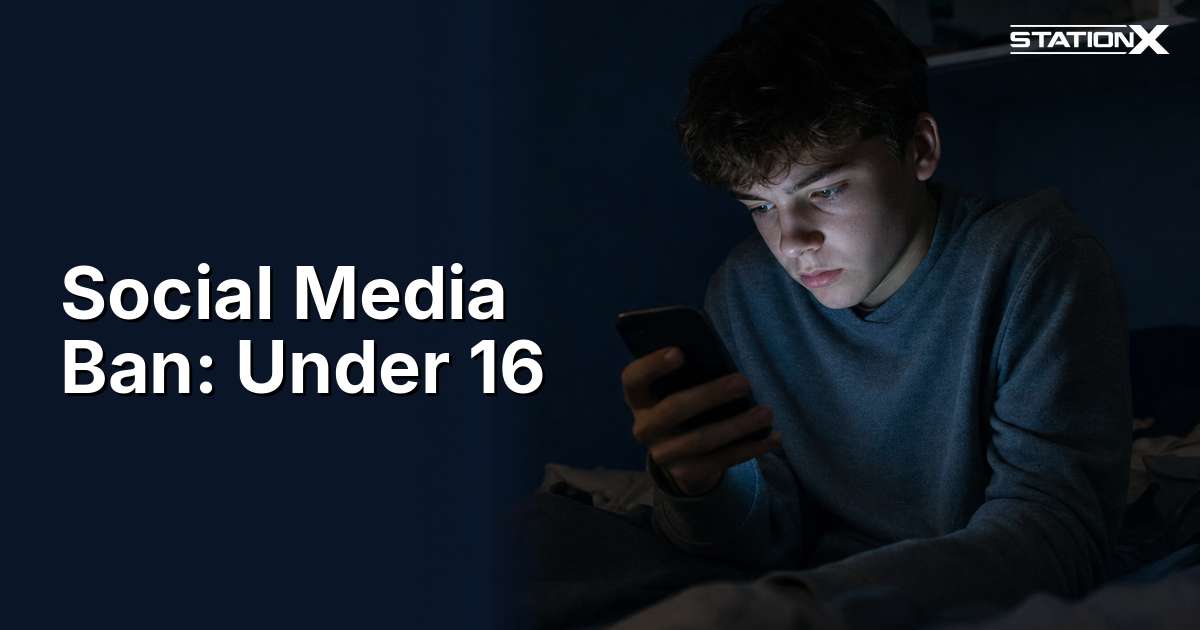
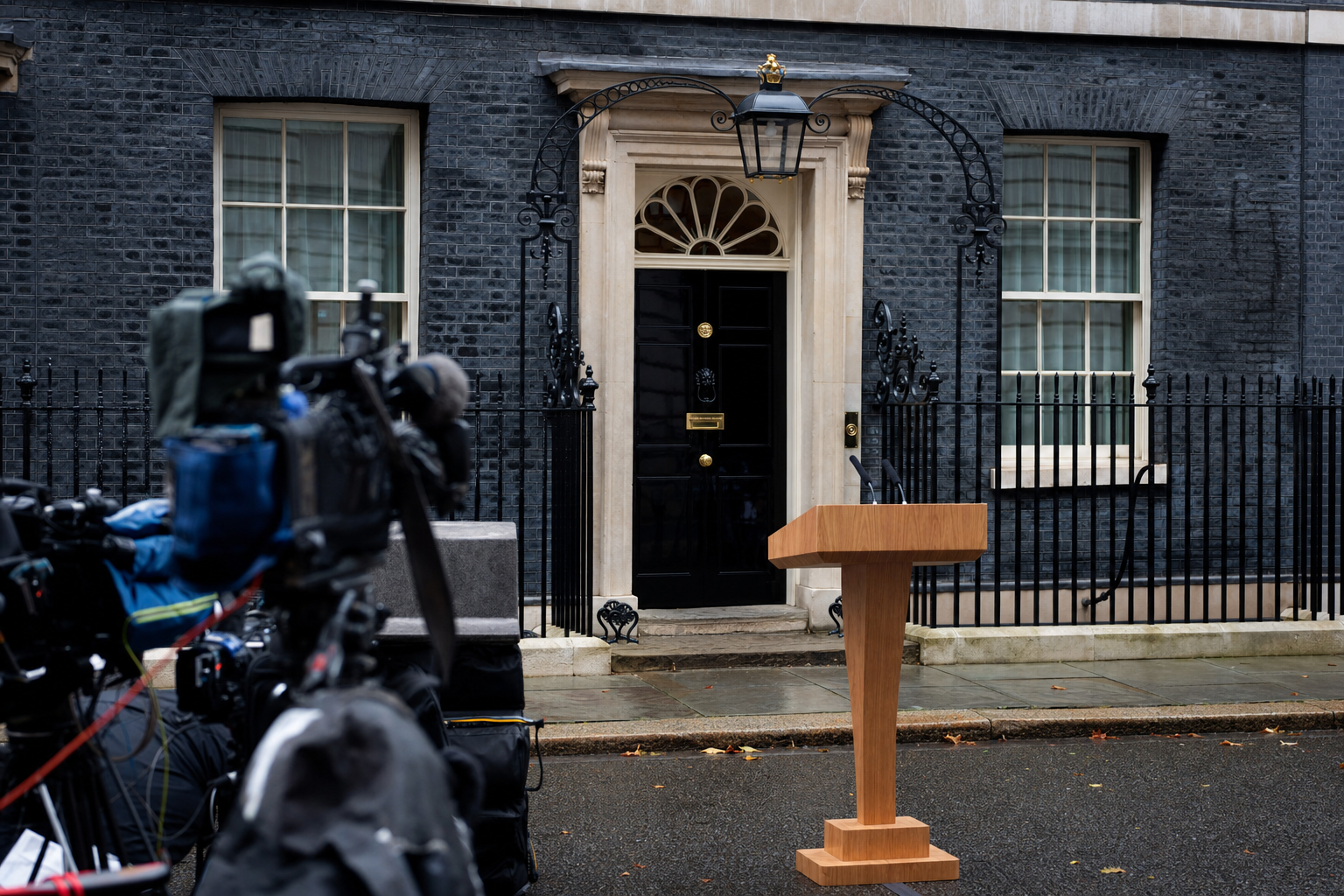
On 15 June 2026, the Prime Minister stood outside Downing Street and said the government will ban social media for every child under 16.
If you're a parent, your first thought was probably relief. Finally, someone is doing something. Mine was different, and I want to be honest about why.
I've spent thirty years in cybersecurity, and I have kids. I block a lot of this stuff at home myself. So I'm not here to tell you the worries are overblown. They're not. But "we should protect children" and "this ban will work" are two very different claims. Only one of them holds up.
So this article does one thing: it follows the evidence. Not my gut, not the headlines, not whichever side shouts loudest — the actual studies, and what the people who research this for a living have found. Does social media really harm children? Will a social media ban under 16 do what parents hope? And what does the research say protects kids instead? Wherever the evidence points, that's where we'll go — even when the answer is uncomfortable.
Why everyone's suddenly talking about a UK social media ban under 16
The UK didn't invent this idea. Australia switched on the world's first under-16 social media ban in December 2025. The UK has now followed with what ministers call an "Australia-plus" model.
Here's what the UK ban covers, based on the government's plan:
- Blocked for under-16s: TikTok, Instagram, Facebook, Snapchat and X.
- Still allowed: messaging apps like WhatsApp and Signal.
- Who gets punished: the platforms, not you or your child. Ofcom enforces it, with fines up to £18 million or 10% of global turnover.
- When: detailed rules land in July 2026. The ban should take effect around spring 2027.
Nine in ten parents backed it. That tells you how real the worry is. So let's take that worry seriously and ask the first question properly.
Does the evidence show social media is bad for children?
Yes. And the honest answer is stronger than the vague one, so let me be precise.
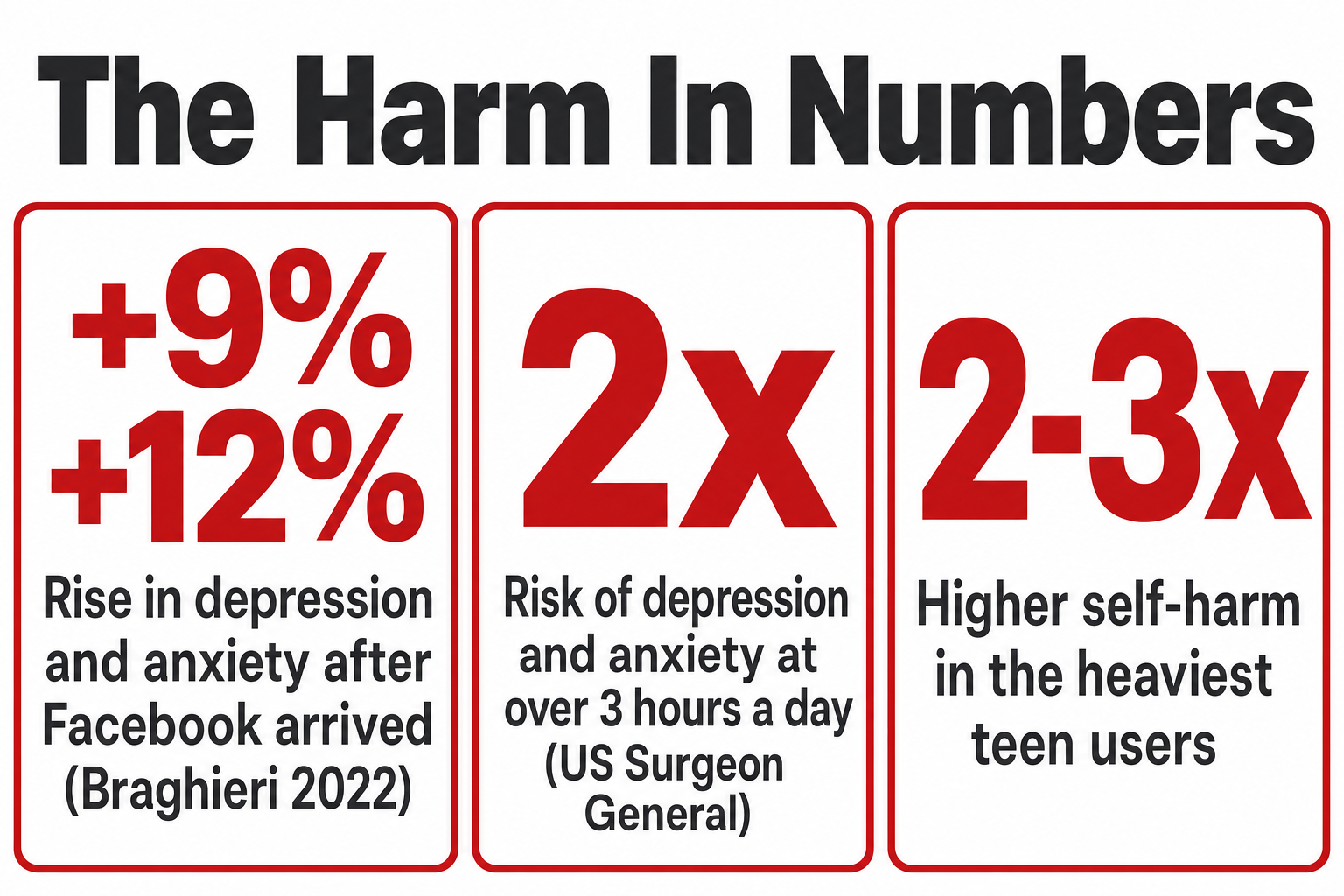
The most convincing study isn't a survey. It's a natural experiment. Researchers tracked what happened as Facebook rolled out across US universities, one campus at a time (Braghieri and colleagues, 2022). Depression rose about 9%. Anxiety rose about 12%. Because the rollout order was basically random, this points to cause, not just a link — though it's worth noting it studied university students in Facebook's early days, not under-16s on today's video feeds.
And it doesn't stand alone:
- The US Surgeon General (2023) found teens on social media more than three hours a day faced double the risk of depression and anxiety.
- A UK study of thousands of British 14-year-olds (Kelly and colleagues, 2018) found the more time they spent on social media, the more depressive symptoms they reported — a much stronger link for girls.
- The World Happiness Report 2026 said social media is harming teenagers "at a scale large enough to cause changes at the population level."
The worst harm hits teenage girls: anxiety, depression and self-harm, two to three times higher in the heaviest users. So when a parent says this stuff is hurting their daughter, the evidence agrees.
That's the case for doing something. Now the part most news coverage skips.
Where the harm case gets complicated
A serious group of researchers pushes back. Ignoring them would turn this article into propaganda, so let's be fair to it.
Two scientists, Orben and Przybylski (2019), found the average effect of screen use on wellbeing is tiny. They said it's about as predictive as whether a teen wears glasses or eats potatoes. Other reviews found the results "mixed." And for some kids — LGBTQ+ teens in unkind homes, or disabled and rural children — online groups can be a genuine lifeline.
Here's how both things can be true at once. The harm is concentrated in one thing: passive scrolling through endless algorithm-fed videos, like TikTok and Instagram Reels. It does not apply to messaging your friends, watching a how-to video, or building in Minecraft. The same app can help one child and hurt another. An anxious girl spirals on Instagram. A lonely boy finds his people.
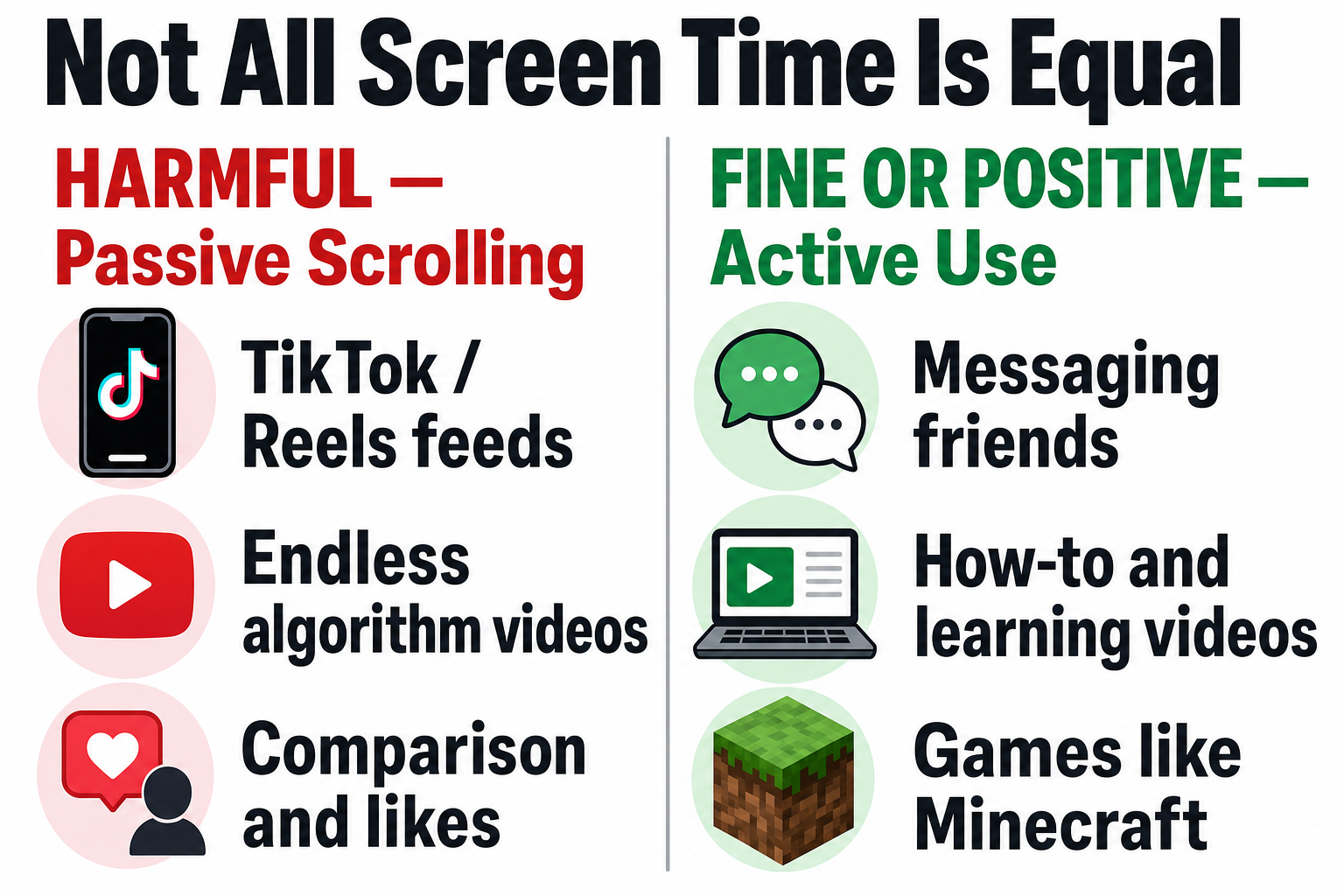
So the pushback doesn't cancel the harm. It sharpens it. It tells us what harms, and which kids are most at risk. That matters a lot when you're judging a blunt, one-size-fits-all ban. Which brings us to the real question.
What the under-16 social media ban actually involves
A ban only works if children can't get around it. So how is this one enforced?
Platforms must run real age checks. Not the old "tick this box to say you're 16," which stops nobody. They'll need things like ID checks, outside age-checking services, or age locks built into the phone or app store. Ofcom has been told to study which of these actually work.
The plan copies Australia on purpose. That gives us something rare: a real test already running. So let's look at it.
Why did Australia ban social media for under-16s — and is it working?
Australia banned it for the same reasons we've covered: rising teen mental-health harm, addictive design, and pressure from grieving families. The intent is good. The early results are not — and this is the heart of whether a ban works.
The headline sounds huge. Platforms "removed" 4.7 million under-16 accounts. But that number includes dead and duplicate accounts — it's nowhere near 4.7 million children. The Molly Rose Foundation's poll of 12-to-15-year-olds found 61% of those who'd had an account still had at least one, and 70% of those still using said getting around the ban was easy. Usage barely dropped in the first three months.
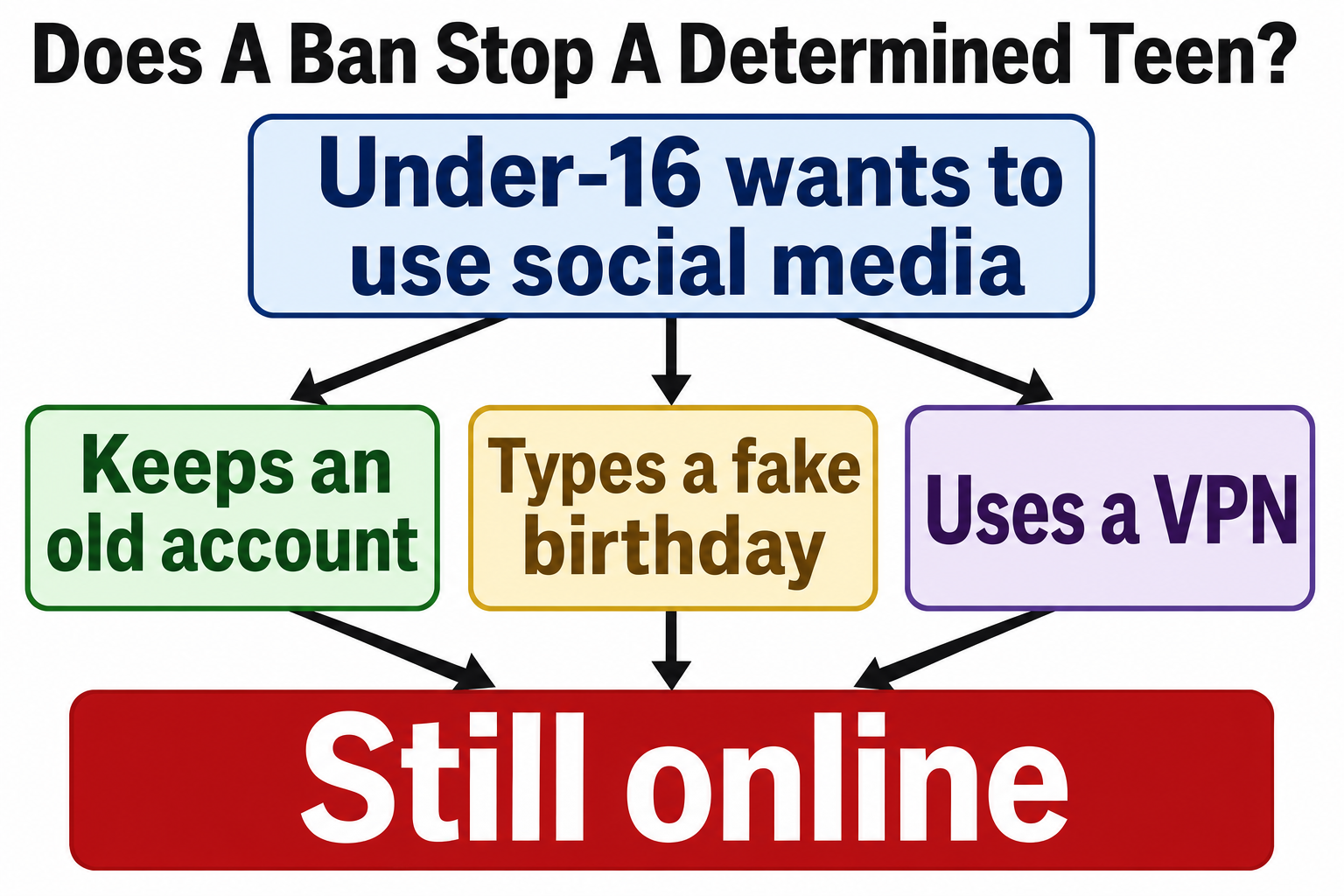
The reasons are simple. Old accounts can't be age-checked. Kids type in a fake birthday. A VPN makes an Australian phone look Canadian. And there's no proof yet that harm went down — the proper long-term study won't report for years.
This isn't just Australia. France passed a law requiring parental consent for under-15s, but it stalled in practice and most children stayed online. South Korea scrapped its under-16 gaming curfew in 2021 because it didn't work. The track record everywhere is weak. The reason is always the same: a determined teenager gets around it in an afternoon.
The case against a ban — and who's making it
If this were just tech firms complaining, you could ignore it. It isn't.
A group of 42 child-protection charities, including the NSPCC and the Molly Rose Foundation, opposes a blanket ban. Ian Russell — whose daughter Molly took her own life after seeing harmful content — calls a ban "the wrong answer to a vital question." He warns it could push children to "darker, unregulated corners of the internet." The NSPCC says a ban could strip support away from vulnerable teens overnight.
Their point isn't that social media is fine. It's that a ban treats the symptom — access — instead of the cause: platforms built to be addictive and unsafe. It lets the companies off the hook. There's a privacy cost too. Civil-liberties campaigners warn that age-checking every user means collecting ID from everyone, adults included. A social media restriction meant to protect kids ends up ID-checking the whole country.
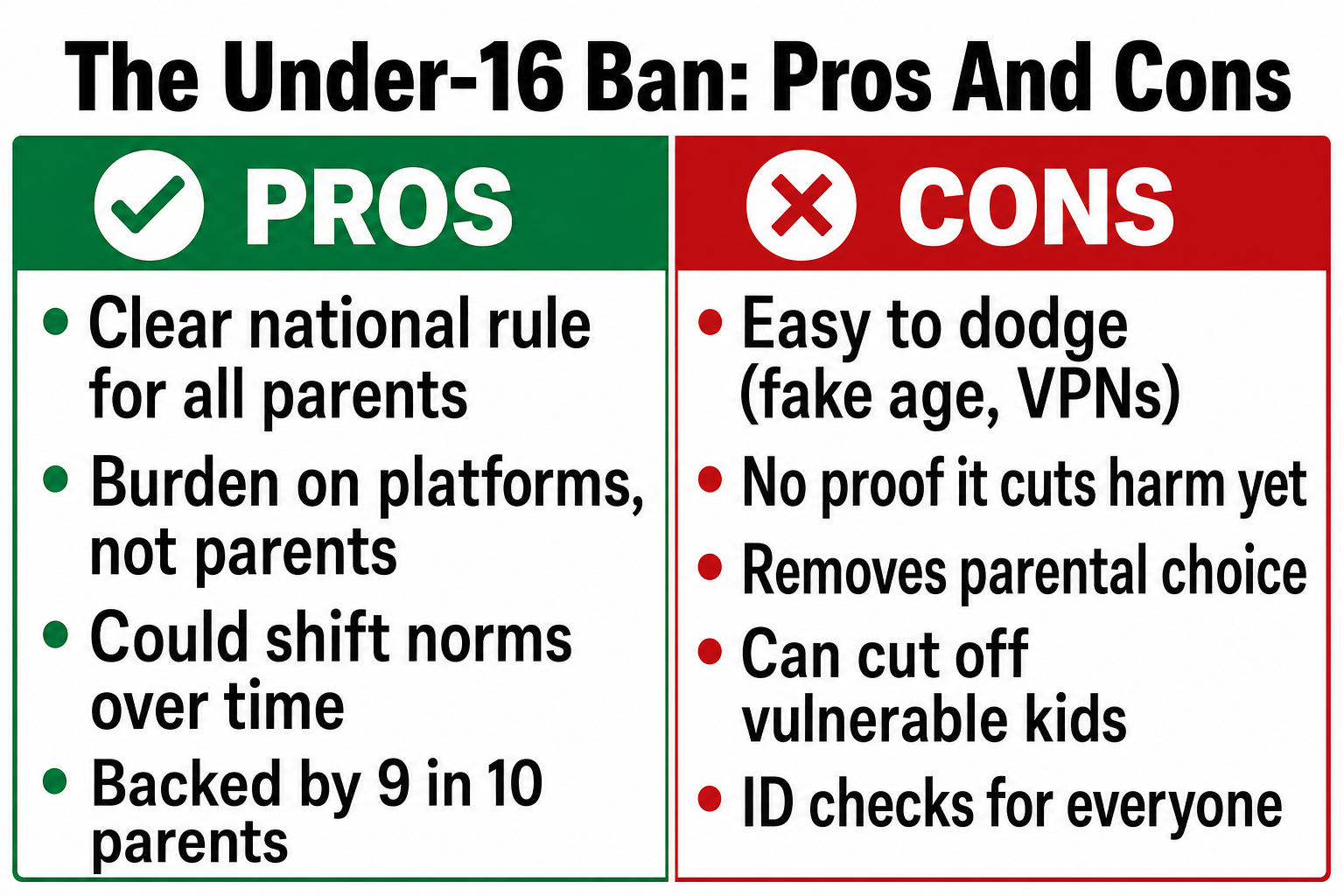
So the people who've fought hardest for child safety online are mostly against this exact tool. That should give any parent pause. To make the trade-offs clear, here's the balance sheet.
What I do at home — and why most parents can't
Let me show you my own setup. Not as a how-to, but to make a point about who a ban really protects.
At home, I filter at the router. I run my own DNS filtering (AdGuard Home, pointed at Cloudflare's family-safe resolver) so that blocking applies to every device on the network, not app by app. It mostly works. But its limits prove the bigger problem. If you want to try something similar without running your own server, the easier routes are a service like NextDNS or simply setting your router to Cloudflare's free family DNS (1.1.1.3), which blocks adult content network-wide.
Take YouTube Shorts — maybe the most addictive format of all. It's almost impossible to block on its own, because Shorts uses the exact same web address as normal YouTube. There's no separate "shorts" address to block. I can filter it with advanced tools, but that means installing special certificates on every device. That's firmly security-professional territory.
And that's the point. I can do this because I've spent thirty years in cybersecurity. Most parents can't, and shouldn't have to. A child's safety shouldn't depend on whether their dad runs a DNS filter. That's exactly why we need an answer at the platform and policy level — just not the one on the table.
So should we ban social media for under-16s? What the evidence concludes
Let's separate the two questions we've kept apart. The verdict falls straight out of them.
Is social media harmful to children? The evidence says yes. Clearly, at scale, and worst for teenage girls — mostly through endless algorithmic scrolling.
Will a blanket ban fix it? Here the honest answer is: we don't yet have the evidence that it will, and there's good reason to doubt it. Every attempt so far — Australia, France, South Korea — has been routed around with fake birthdays and VPNs. Australia's ban is only months old, so no one can yet show it has actually reduced harm. And a ban carries real costs: it removes parental choice, and it can cut off the vulnerable kids who rely on online support most.
I'll be straight about the limits of my own argument: the alternatives I prefer don't have rock-solid proof of harm reduction either — this field is young. But a ban asks us to accept those costs and the easy circumvention for a benefit no one has demonstrated. That makes it, on today's evidence, an insufficient main tool — not a proven failure, but not the safe bet it's sold as. And the experts who've fought longest for child safety are saying the same: tackle the design, not just the access.
What the evidence actually backs is less satisfying than a ban, but it works better:
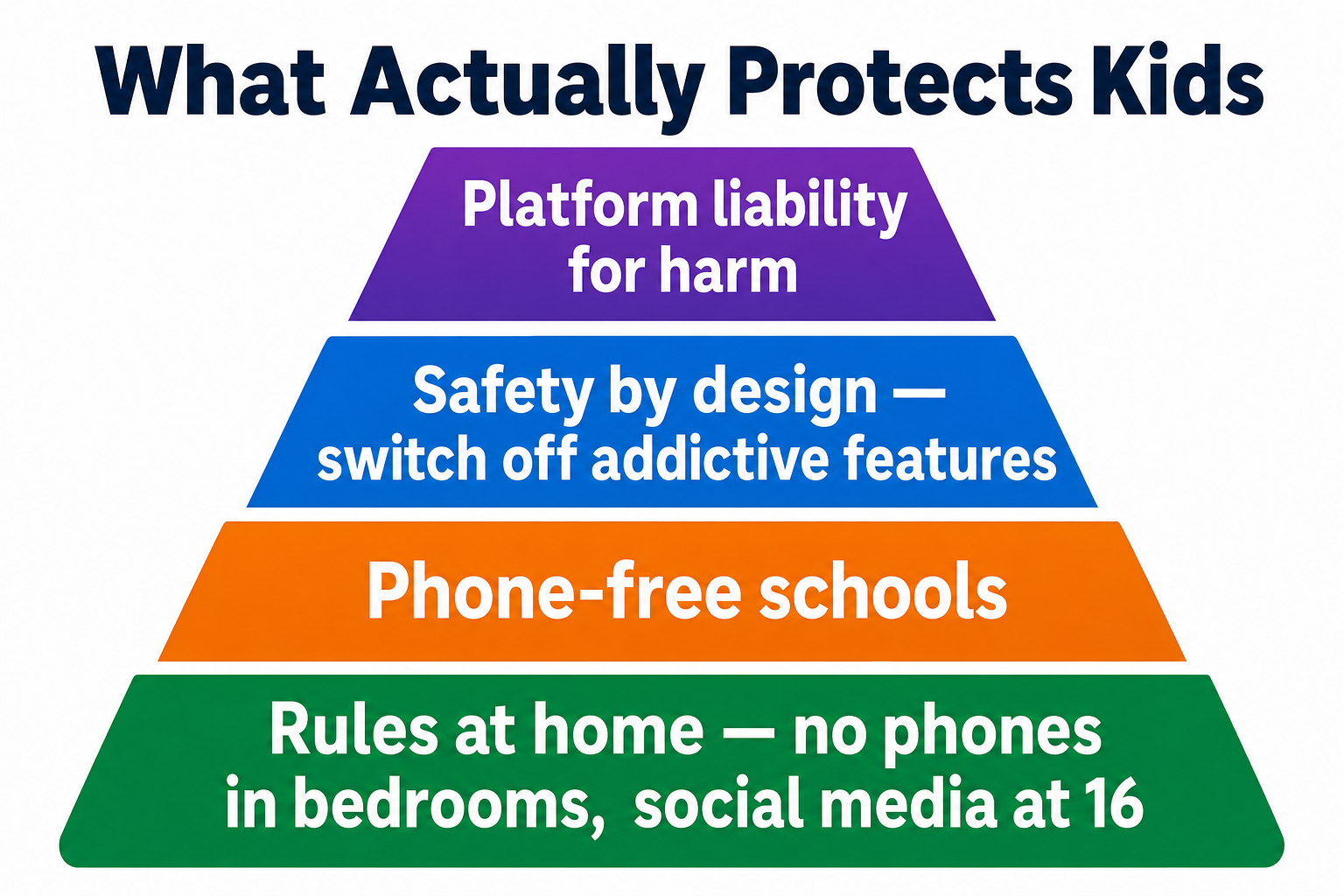
- Safety by design. Force platforms to switch off infinite scroll, autoplay and messages from strangers for under-18s by default. This attacks the cause, not just access.
- Platform liability. Make companies legally responsible for algorithmic harm. The cost lands on the designers, not on parents checking birthdays.
- Phone-free schools. Our strongest evidence. Banning phones in schools lifted exam results, with double the gain for struggling pupils (Beland and Murphy).
- Three rules at home. No phones in bedrooms (sleep matters most). No social media before 16, no smartphone before 14. Back your school's phone-free policy. That's about 80% of the benefit — and none of it needs a router.
The bottom line
A ban lets us feel we've acted. The evidence asks us to actually act — on design, on accountability, and at the kitchen table. That's the harder answer. It's also the right one.
Frequently Asked Questions
Is social media being banned in the UK?
The government announced on 15 June 2026 that it will ban social media for under-16s. It isn't law yet. Detailed rules are due in July 2026, and the ban should take effect around spring 2027. Ofcom will enforce it under the Online Safety Act.
What age will you have to be to use social media in the UK?
Under the plan, 16 for platforms like TikTok, Instagram, Facebook, Snapchat and X. Messaging apps like WhatsApp and Signal aren't included.
Does the Australian social media ban actually work?
The early signs are poor. Usage among under-16s barely fell, most who had accounts still had at least one, and there's no proof yet that harm dropped. Teens get around it with old accounts, fake birthdays and VPNs.
Can a VPN get around the social media ban?
Yes. A VPN makes a device look like it's in another country, dodging a national age check. It's one of the main reasons these bans have struggled everywhere.
If not a ban, what should parents do?
The strongest evidence supports keeping phones out of bedrooms, delaying social media to 16 and smartphones to 14, and backing phone-free schools. On top of that, push platforms to switch off addictive features for younger users.
About the Author

Nathan House, Founder & CEO of StationX
Nathan House has 30 years of hands-on cybersecurity experience and is Cambridge-educated, holding CISSP, CISA, CISM, OSCP, CEH, and SABSA. He founded StationX in 1999 — one of the UK’s first cybersecurity companies — and has secured £71 billion in UK mobile banking transactions and the London 2012 Olympics, advising clients including Microsoft, Cisco, BP, Vodafone, and VISA. He authored the world’s most popular cybersecurity course — a #1 Udemy bestseller taken by over 500,000 students — and was named Cyber Security Educator of the Year 2020, AI Security Educator of the Year, and a UK Top 25 Security Influencer 2025. A DEF CON speaker and featured expert on CNN, Fox News, NBC, and the BBC, Nathan leads StationX’s training of more than half a million students worldwide.