AI Penetration Testing: Is Tempest Hype or Real? (2026)
There's a new AI penetration testing tool making a lot of noise right now, and if you've spent any time in the security corners of the internet lately, you've probably seen it. It's called Tempest, it's open source, it's free, and the headline claim is that it scored around 90% on a professional black-box hacking benchmark. That's the kind of number that makes you stop scrolling.
So I did the obvious: I downloaded it, reviewed its code, installed it, and pointed it at a real target to see what actually happens. This article is what I found — not the marketing, the reality. We'll cover what AI penetration testing actually is, what Tempest really does when you run it, who it's genuinely useful for (and who it isn't), and then the part almost nobody talks about: what you should build instead. Let's get into it.
What Is AI Penetration Testing?
Let's start with the plain-English version, because the term gets used two different ways and it causes real confusion.
The first meaning is testing the security of AI systems — poking at a chatbot to make it leak its prompt, that kind of thing. That's not what we're talking about today.
The second meaning — and the one Tempest is about — is using AI to do the penetration testing for you. You point an AI system at a target you're allowed to test, and it runs the reconnaissance, looks for weaknesses, and tries to exploit them, coordinating the whole process itself. The human sets the goal and stays in charge; the AI does the legwork.
Here's the tension that makes this a hot topic. Attackers are already automating. The tools to find and exploit vulnerabilities have been around for decades — nmap, nuclei, sqlmap, the whole toolkit every pentester knows. What's new is wrapping an AI around them that can decide which tool to run when, read the output, and react. That's the promise of autonomous penetration testing, and Tempest is the tool everyone's pointing to as proof it's arrived. So the fair question is: does it hold up?

Meet Tempest (T3MP3ST): The AI Hacking Tool Everyone's Talking About
Tempest — stylised T3MP3ST — was built by a researcher known as elder-plinius, and it's been getting a lot of attention in the security community lately. On paper, it ticks every box on the modern AI hacking tools checklist.
It's a multi-agent framework. In full mode it runs eight specialised AI agents in parallel — one for reconnaissance, one for scanning, one for exploitation, one for moving deeper, and so on — all coordinated by a master "Op Admiral" agent — an automated red team, essentially.
It's "keyless." This is the clever part, and we'll come back to it. You don't need an expensive API key. It rides on a coding-AI subscription you probably already pay for — Claude Code, Codex, or similar — and uses that as its brain.
The benchmarks are strong and, unusually, reproducible. It claims 90.1% on XBEN, which is XBOW's own 104-challenge suite. On a separate test of 10 real vulnerabilities disclosed after the AI's training cut-off — so it couldn't have memorised them — a single agent pinned 8 of the 10 to the exact file, line and vulnerability class; run as the full eight-agent pack, it surfaced all 10, though the extra two were flagged rather than precisely located. And every number re-derives from committed data with a single command, which is rarer than it should be.
One honest caveat the project itself flags
Those benchmark numbers came from a single AI agent, not the full eight-agent swarm — the swarm is the architecture it's growing into, and end-to-end swarm exploitation is still unbenchmarked. Keep that in mind; it matters more than it looks, and I'll come back to why.
One more aside, because it's a useful lesson in itself. When I first researched Tempest, two of the three AI search engines I used confidently made up wrong answers — one invented a different tool entirely, another described a repository that doesn't exist. Only one got it right. If you take one thing from that: AI-generated summaries are a starting point, not a source. Benchmarks are claims too — so I stopped reading about it and ran it.
I Actually Ran It: An Honest Hands-On Test
Reading about a tool tells you what the author wants you to think. Running it tells you what's true. So here's what happened when I did.
First, I checked the code before trusting it. This is an offensive-security tool from the jailbreak scene, so I ran a multi-agent security review over its source before running anything. The good news: no hidden backdoors, no credential theft, no phone-home to the author, and a clean dependency scan. It binds to your local machine only, and it makes you approve dangerous actions. For an offensive tool, that's a responsible design — but I'd never have known without looking, and neither should you take my word or theirs. Check first.
Then I installed it and brought up the interface. Setup is genuinely about two minutes: install, start the server, open the "War Room" dashboard in your browser. It detected my Claude Code login automatically — no key, no extra bill, exactly as advertised.
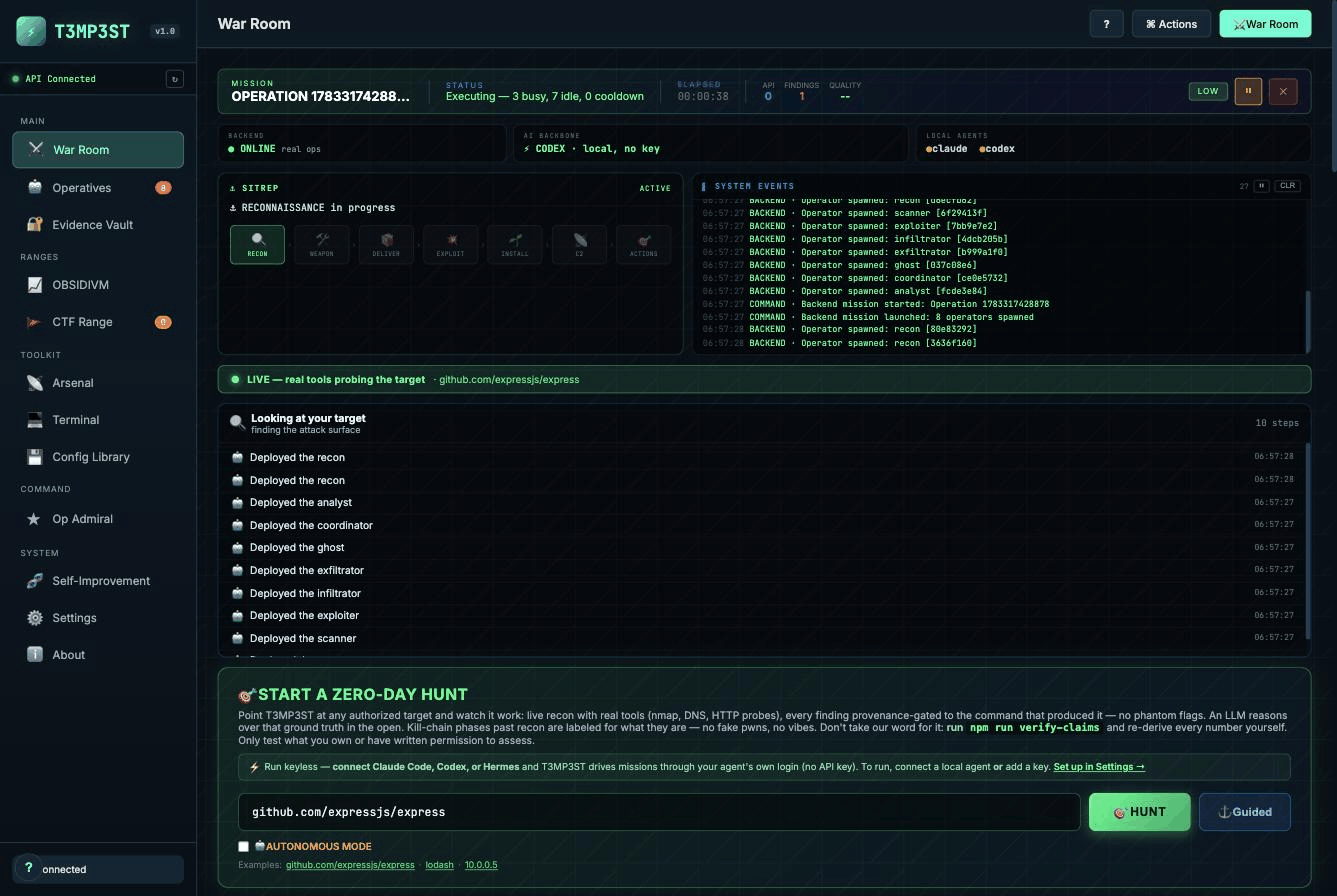
Then I ran a real mission. I pointed it at a public software package and hit "Hunt." The moment it had a target, a scope-approval box appeared — nothing runs until you explicitly approve it. That's the human-in-the-loop safety gate doing its job, and it's the right call. I approved, and the kill-chain lit up: eight agents deployed, recon started, findings began streaming into an "Evidence Vault" with severity ratings.
And here's where a straight review earns its keep. The results were underwhelming — and instructively so. Because I'd given it a bare package name, the tool treated it as a hostname and spent its effort trying to resolve DNS that didn't exist. The one "high severity" finding it produced was an empty placeholder. Every finding carried an honest tag: "model-asserted, unverified." In other words, the AI said it, but nothing confirmed it.
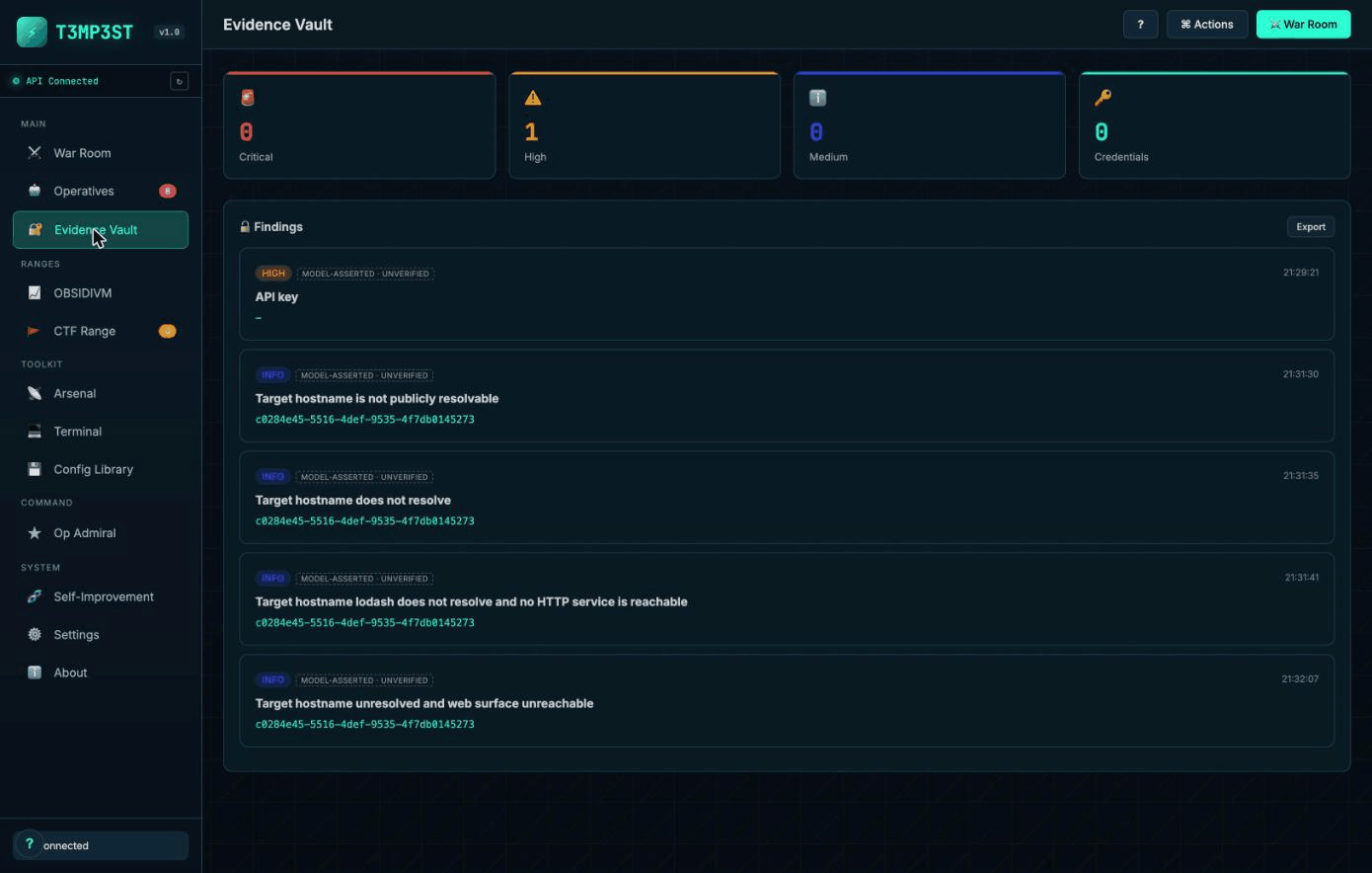
That's not a knock on the tool so much as a lesson about the whole category. To get a genuine result, you have to feed it the right kind of target in the right way — and you have to verify everything it tells you. It is not a magic button. It's a capable, occasionally-confused junior operator that needs supervision. Which brings us neatly to the real question.
So Who Is AI Penetration Testing Actually For?
After running it properly, my answer surprised me a little. This tool — and AI pentesting tools like it — are not really for seasoned penetration testers. A pro like us already has a faster workflow and tighter control, and can't hand a client a report full of "unverified" findings. So who is it for?
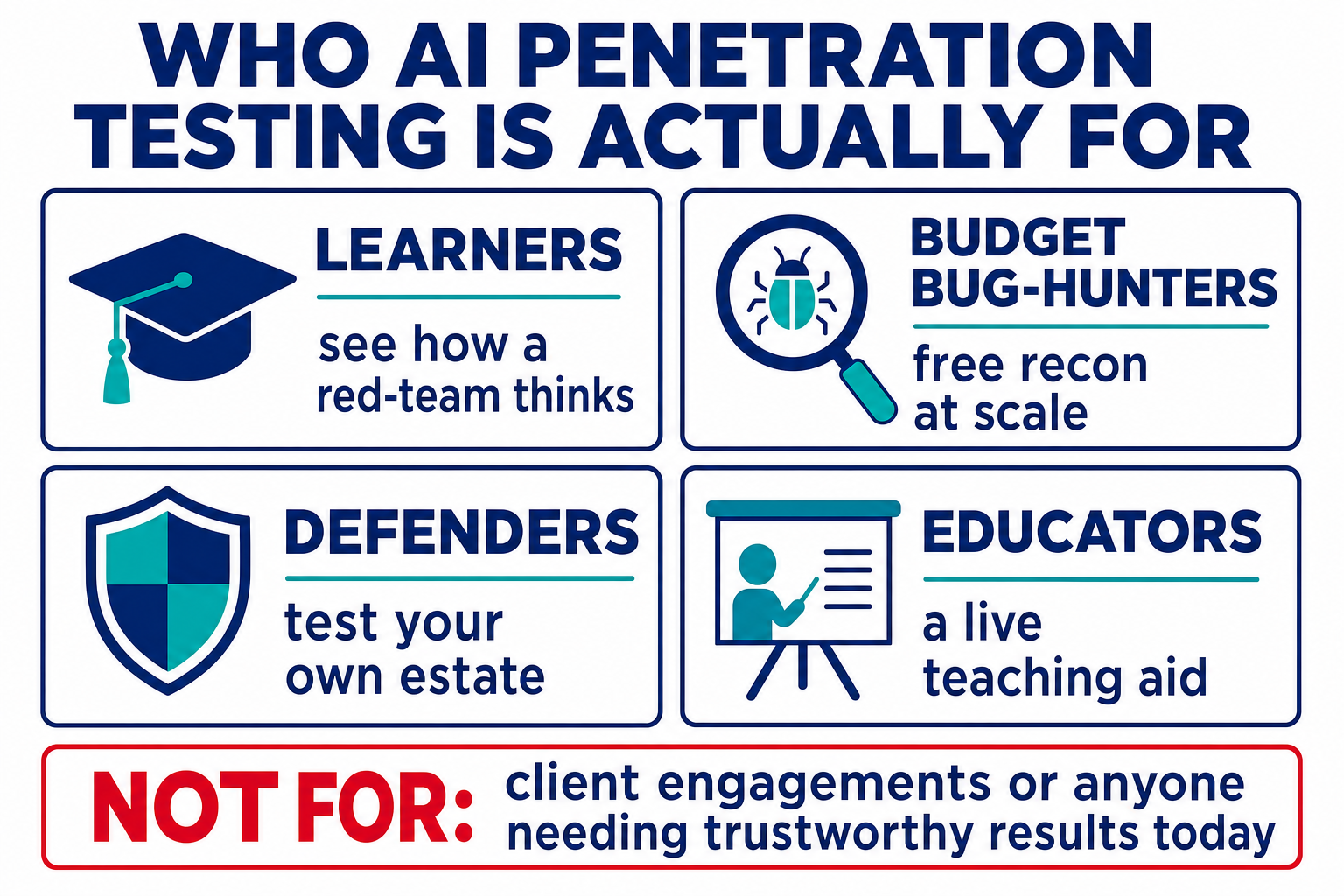
Learners and early-career pentesters. This is the strongest fit, and it's not close. If you already know the tools but haven't internalised the sequencing — what to run next, and why — watching eight agents walk a real kill-chain is a live methodology tutor. You learn the shape of an engagement by watching one happen.
Bug-bounty hunters on a budget. Keyless means free reconnaissance and triage at scale on programmes you're authorised to test. That's a real economic edge for a solo hunter.
Defenders who aren't offensive specialists. A sysadmin or SOC analyst can point it at their own estate and see what an attacker's automated first pass surfaces — a poor-person's continuous pentest.
Educators and content creators. The visual dashboard makes it a genuinely good teaching aid.
And to be straight about the flip side, because honesty is the whole point here: it's not for real client engagements (unverified findings, no accountability), and it's not for anyone who needs reliable, trustworthy results today without checking every one by hand.
Notice the through-line in that list. The people this genuinely helps are people who are learning. Hold that thought, because it's the key to everything.
The Thing Nobody's Saying: It's Not New AI — It's a System
Here's what struck me most after living with Tempest for a day, and it's the insight most of the hype misses entirely.
Tempest isn't new AI. It's the same AI, wrapped in a system.
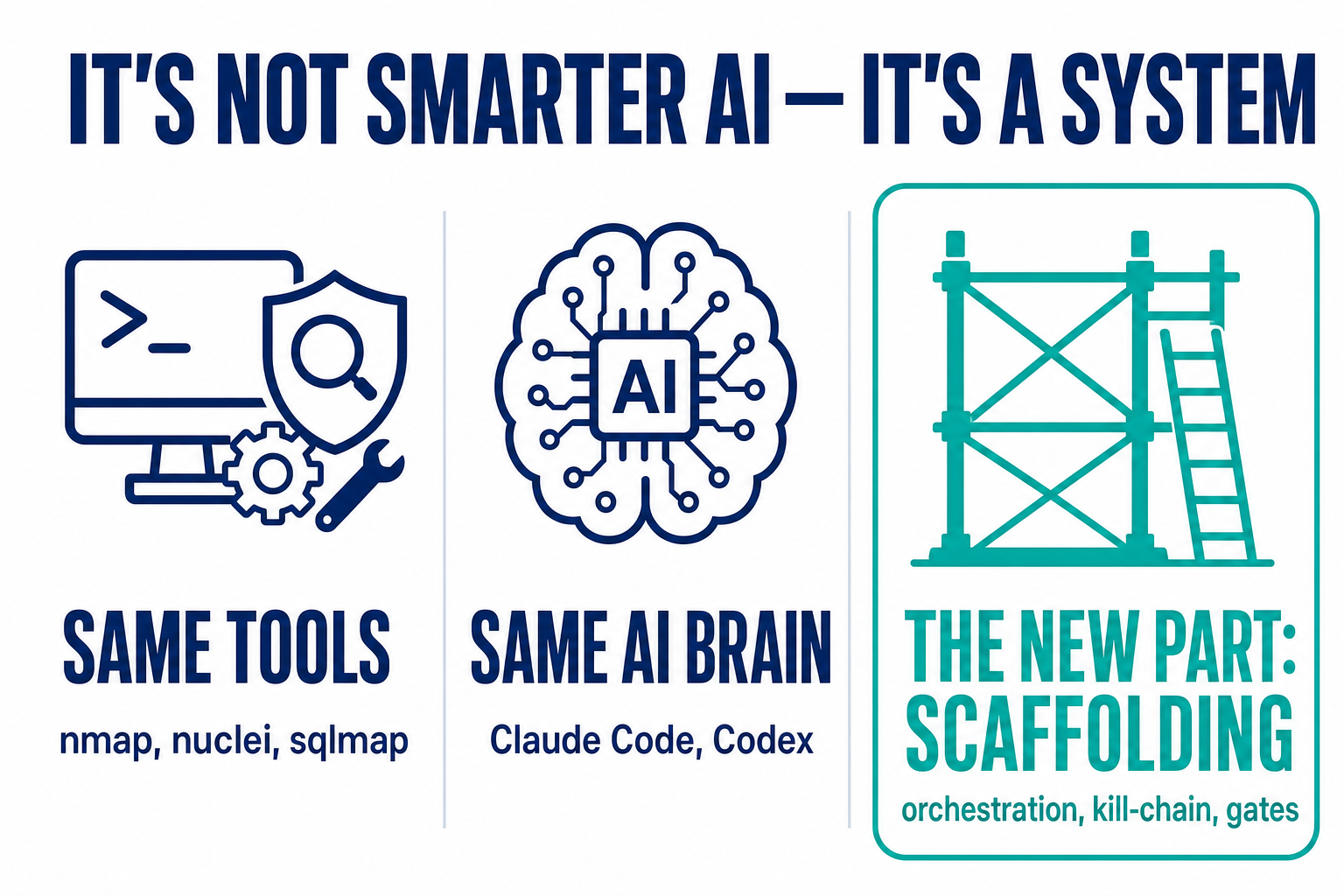
Look at what's actually under the hood. The tools — nmap, nuclei, sqlmap — are the same ones on every pentester's laptop. The "brain" is just Claude Code or Codex, the exact coding assistant you can already talk to. Tempest didn't invent a smarter model or a new exploit. What it built is the scaffolding: the eight-agent kill-chain, the orchestration that decides what runs next, the dashboard, the safety gates, the evidence log.
That distinction is the whole game. We've been trained to think progress comes from a smarter model. But Tempest's results don't come from intelligence — they come from structure. The same AI that gives you mediocre answers when you ask it a vague question gives you a 90% benchmark score when it's wrapped in a well-designed system. A system that tells it what to do, in what order, with what tools — and checks the result.
The pattern, once you see it, is everywhere:
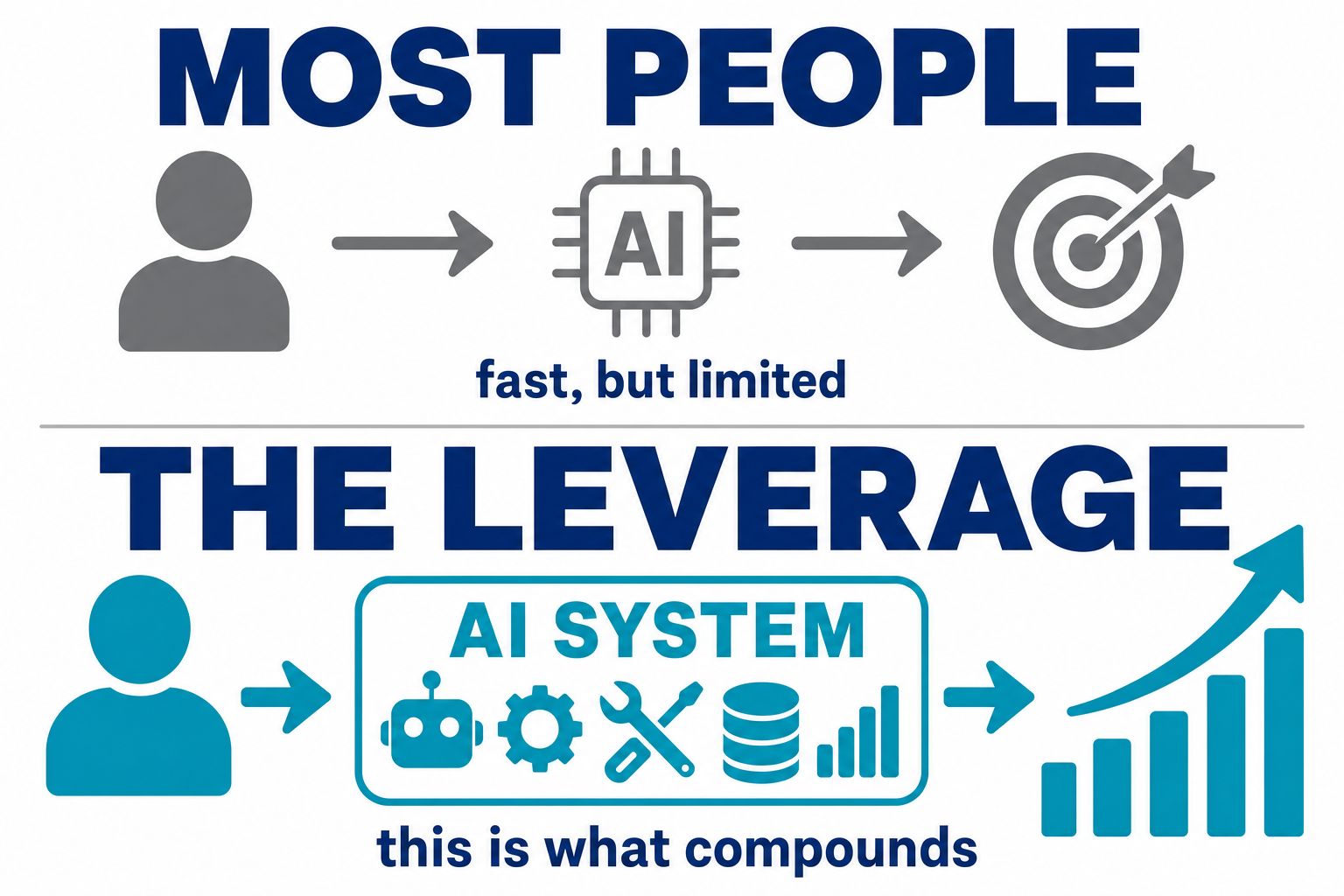
Human → AI → outcome is what most people do. It's fine, and it's limited. Human → AI system → outcome is what actually produces leverage. Tempest is simply a pre-packaged example of the second pattern, aimed at one domain. And that reframes what it's really showing us.
Why "Keyless" Is the Only Real Innovation (and What It Means)
If the tools aren't new and the AI isn't new, is anything genuinely new here? Yes — one thing, and it's not technical. It's economic.
Every previous AI pentesting tool needed a metered API key, so the cost climbed the more you used it. Serious platforms cost real money. Tempest's "keyless" trick means it rides the flat-rate subscription you already pay for your coding assistant. That turns autonomous red-teaming from "an expensive thing enterprises buy" into "free with what's already on your laptop."
That's a real unlock, and it's genuinely why the tool went viral. It opens up a capability that used to sit behind a paywall. Among the AI security tools getting attention right now, that keyless access is Tempest's only genuinely novel contribution — not the AI, the access. The system around it, remember, isn't new at all — and that turns out to be the more important point.
Because here's what "free at scale" really sets loose. Think about the leverage. A security engineer running a system like this does the reconnaissance and triage legwork of several people. A consultant covers more clients in the same week. A one-person shop starts operating like a small team. When a capability like that stops costing money per use, the people who adopt it don't just save a bit — they pull ahead of the people who don't. That's the actual economics of this shift, and it's bigger than any single tool.
So look closely at what Tempest is really showing us, because there's a catch hiding in the excitement. The value was never the tool. The value is the system wrapped around an AI you already had — and Tempest built that system once, generically, and handed it to you. Which raises a sharper question for anyone serious about staying ahead. One worth a section of its own.
What You Should Actually Do: Build Your Own AI System
Here's the conclusion I've been walking you toward, and I held it until now on purpose — because it only makes sense once you've seen that the leverage lives in the system, not the tool.
If you're a security professional today, I think the real move probably isn't downloading someone else's AI system. It's building your own.
Tempest is a fine set of training wheels. But training wheels are for learning to ride, not for the race. The people who pull ahead, I suspect, won't be the ones who found the best pre-made tool — they'll be the ones who built a personal AI system that knows their work, wired to tools they built.
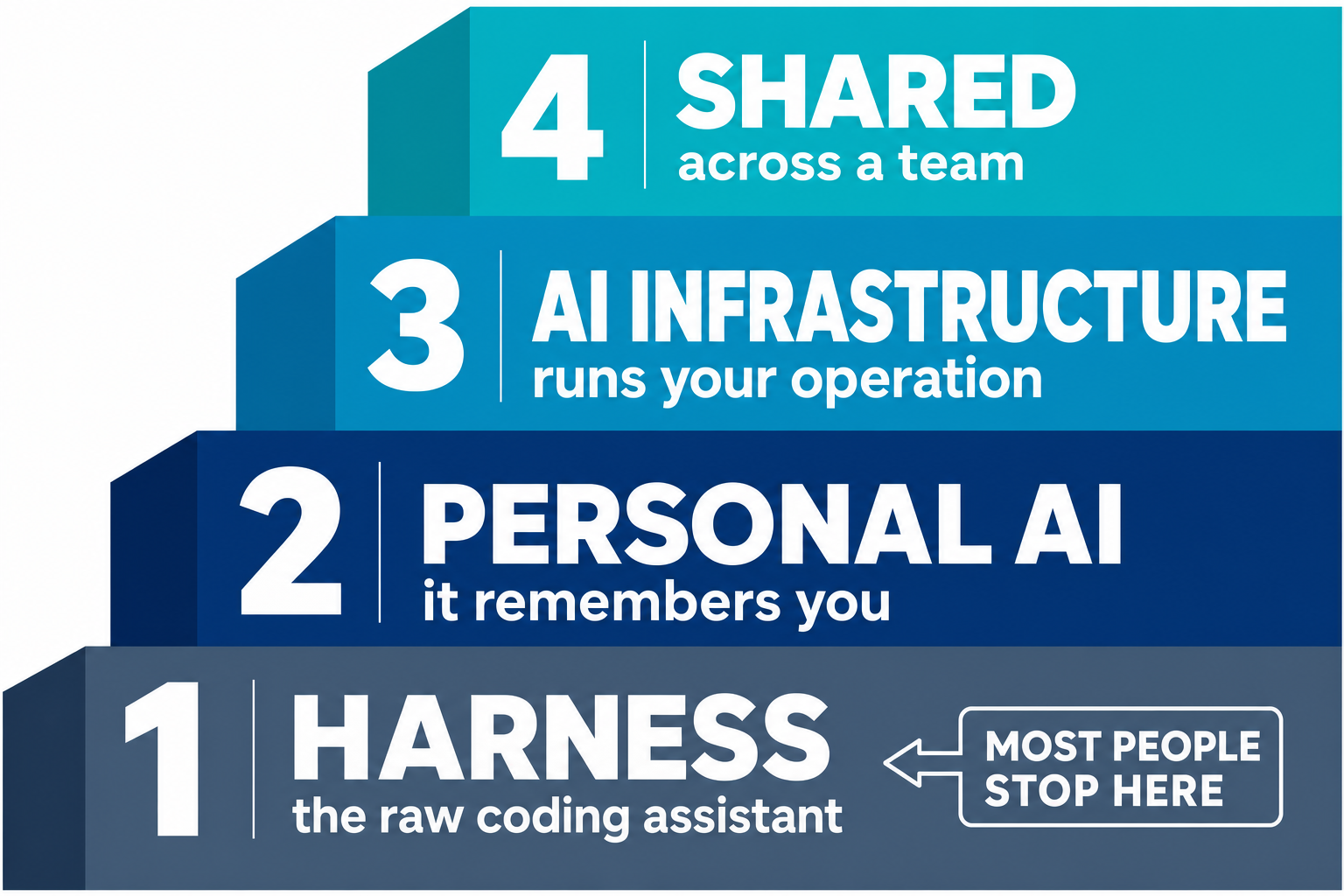
Think of it as a short ladder. At the bottom is the raw coding assistant — Claude Code, Cursor — which is exactly where Tempest users stop and bolt on a generic package. One rung up, that assistant starts to remember you: your context, your methods, your past work, so it compounds instead of resetting to zero. Higher still, it becomes real infrastructure that runs your whole operation and helps you build the next thing — which is where an expert's own red-team tooling actually lives, tuned to their targets and methodology. (Mine is a system I call HAL.) And at the top, that capability gets shared across a team. It's the same ladder behind agentic engineering more broadly — pentesting is just one place it shows up.
One counter-intuitive thing worth sitting with: climbing that ladder doesn't make you safer — it makes you faster, which makes disciplined thinking more important, not less. Raw power without structure is just a faster way to make a confident mess. And it isn't a security-only idea — the same pattern fits a marketer, a consultant, a researcher, a founder. Any expert who can direct AI should probably be building their own system. Tempest just happens to be the version that made it visible for hackers.
The good news is you don't need to leap to the top. You start exactly where you are — with the same Claude Code that Tempest itself uses — and you make it work for you. That first step, from "using AI" to "building a system around it," is the one that actually compounds. It's the difference between renting leverage and owning it.
AI Penetration Testing: The Honest Bottom Line
So, is Tempest hype or real? Both — and the split is the useful part.
It's real as a free, well-built, transparently-benchmarked way to see how an AI red-team thinks. If you're learning, download it this week, point it at a target you own or a practice range, and watch a kill-chain unfold. You'll learn more about the shape of an engagement than a dozen blog posts will teach you.
It's hype if you believe it replaces a skilled penetration tester. It doesn't. It's a capable junior that needs supervision, produces findings you must verify, and gets confused by a badly-specified target. (If you're weighing AI against a real engagement, our guide to the cost of penetration testing puts the trade-off in context.)
And the thing worth more than the tool itself: it's a live demonstration that the leverage is in the system, not the model. Use Tempest to learn the pattern — then go build your own. That's the move that actually compounds.
Want to build your own AI system, not just use someone else's?
That's exactly the skill we teach — taking the coding assistant you already have and turning it into infrastructure that works the way you do.
Explore the AI Master's Program →Frequently Asked Questions
Is Tempest safe to run on my machine?
From my own review of its code: at its default settings, yes — it runs locally, doesn't phone home, and gates dangerous actions behind your approval. But run it only against systems you own or have written permission to test, and don't expose it beyond your local machine.
Does AI penetration testing replace human pentesters?
No. The human is still the strategist, the decision-maker, and the quality controller. The AI changes the execution layer — the legwork — not the judgement. Tools like Tempest produce unverified findings a human has to confirm.
Is Tempest really free?
The tool is open source and free. It uses the coding-AI subscription you already pay for as its brain, so there's no separate API bill — that's its keyless design. You still pay for your underlying assistant.
Do I need to be technical to use it?
You need to understand what you're pointing it at and how to read its results. It lowers the barrier, but it doesn't remove the need to know security fundamentals — which is exactly why it's better as a learning tool than a shortcut.
Is AI penetration testing reliable enough to trust?
Not on its own, not yet. Treat every AI-generated finding as a lead to verify, not a fact. The tools are genuinely useful for speed and coverage, but human verification is non-negotiable.
Does AI penetration testing actually work?
For reconnaissance, triage, and learning the shape of an engagement — yes, genuinely, and it's improving fast. For producing trustworthy, client-ready findings on its own — not yet. Autonomous penetration testing is a capable assistant, not an autonomous replacement. It works best as a force-multiplier for someone who already understands what they're looking at.
Is AI penetration testing worth learning?
Yes — but learn the thinking, not just the tool. Watching an autonomous tool like Tempest work is a fast way to internalise how an engagement flows. The lasting career advantage, though, comes from building your own AI system around the skills you already have, not from mastering this month's product.
What should I learn instead of just using a tool like this?
Learn to build your own AI system. Start with the coding assistant you already have, teach it your workflow, and wire in your own tools. Using a pre-made tool is the first step; building your own is where the real career advantage is.
About the Author

Nathan House, Founder & CEO of StationX
Nathan House has 30 years of hands-on cybersecurity experience and is Cambridge-educated, holding CISSP, CISA, CISM, OSCP, CEH, and SABSA. He founded StationX in 1999 — one of the UK’s first cybersecurity companies — and has secured £71 billion in UK mobile banking transactions and the London 2012 Olympics, advising clients including Microsoft, Cisco, BP, Vodafone, and VISA. He authored the world’s most popular cybersecurity course — a #1 Udemy bestseller taken by over 500,000 students — and was named Cyber Security Educator of the Year 2020, AI Security Educator of the Year, and a UK Top 25 Security Influencer 2025. A DEF CON speaker and featured expert on CNN, Fox News, NBC, and the BBC, Nathan leads StationX’s training of more than half a million students worldwide.